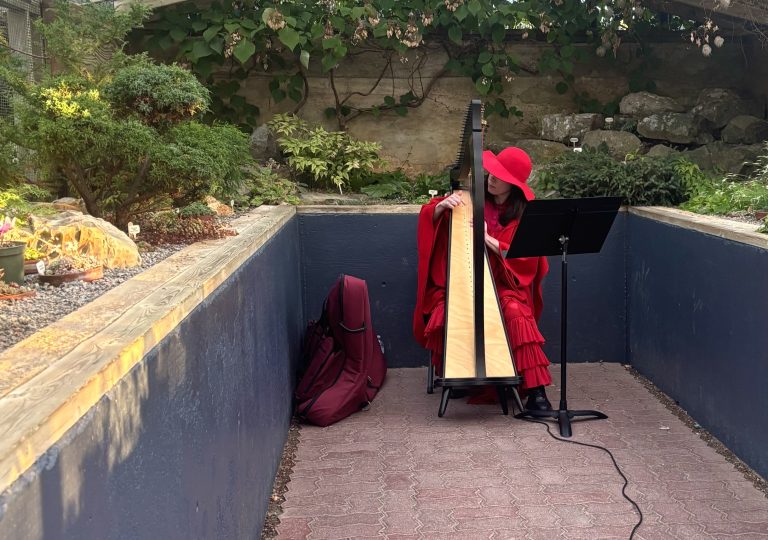

On September 6, Bannerman Park transformed into a treasure trove for the fourth annual ‘Funky Swap.’ Picnic blankets and racks overflowed with a variety of wares, including clothes, trinkets, plants, games, furniture, art, and the event also featured pop-up haircuts by Emyn Hayden and Ali Pike. The only rule? No cash allowed, swaps only.
Bannerman has become the swap’s usual home because it’s free, central, and accessible, welcoming anyone who wants to join the fun. The swap wasn’t about transactions, but about connection; each exchange sparked conversation, celebrated creativity, and left money behind in favor of sharing talents and joy.
“[Funky Swap] is a way to avoid capitalism,” says primary organizer Chloe White. “It’s kind of like a mini protest.”
In a world driven by consumption, Funky Swap aims to offer a playful, sustainable alternative, giving items that once brought someone happiness a chance to find new homes and keeping waste out of landfills.
Running from 12–4, the event wrapped up with a gesture that extended its spirit of sharing. Any items not swapped were piled together for a secondhand free-for-all frenzy where attendees could snag some last-minute finds.
Everything else left behind was donated to the Neighbourhood thrift store, a community-focused shop run in partnership with Choices for Youth, ensuring that what wasn’t swapped still found its way to someone who needed it.
Funky Swap thrives on the connections it fosters. In a queer-friendly, inclusive space, people come together to swap, chat, and celebrate creativity. The event emphasizes accessibility and openness, making it possible for everyone to participate, regardless of their background, financial situation, or ability.
Funky Swap / Rebecca Jennings
As Funky Swap continues to grow, it remains rooted in the same simple idea: bringing people together to share, connect, and give new life to what might otherwise be thrown away.
Beyond the items traded, the real value is in the shared experiences, the joy of sustainable swapping, and the sense of community that lingers long after the tables are cleared, leaving everyone involved a little more connected, inspired, and part of something bigger.
With its mix of creativity, accessibility, and community spirit, the fourth Funky Swap once again showed why it has become a staple event in St. John’s.
Rebecca Jennings is a student writer studying Communication and Media Studies and French. Her work flutters between the nostalgic and the natural, drawing inspiration from pixelated worlds like Kirby, the quiet symbolism of butterflies, and the tactile joy of both traditional and digital scrapbooking. Through poetry, essays, and visual storytelling, she explore softness, transformation, and the small details that speak the loudest.
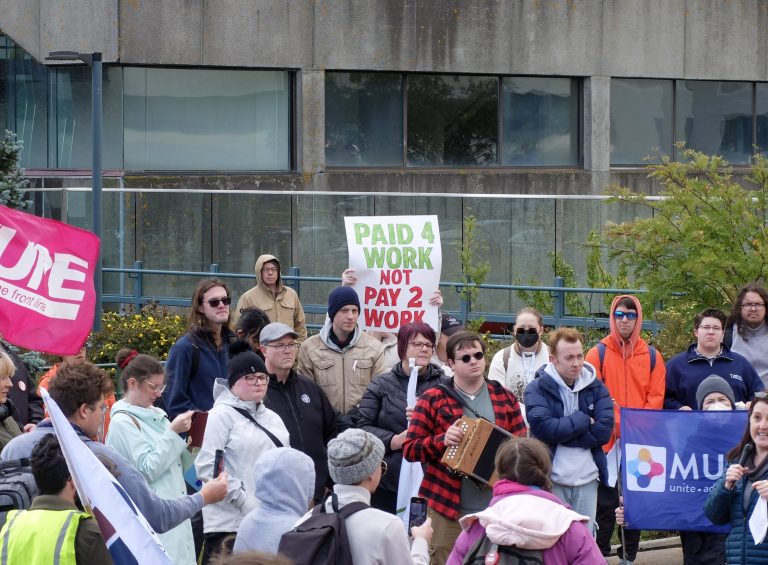
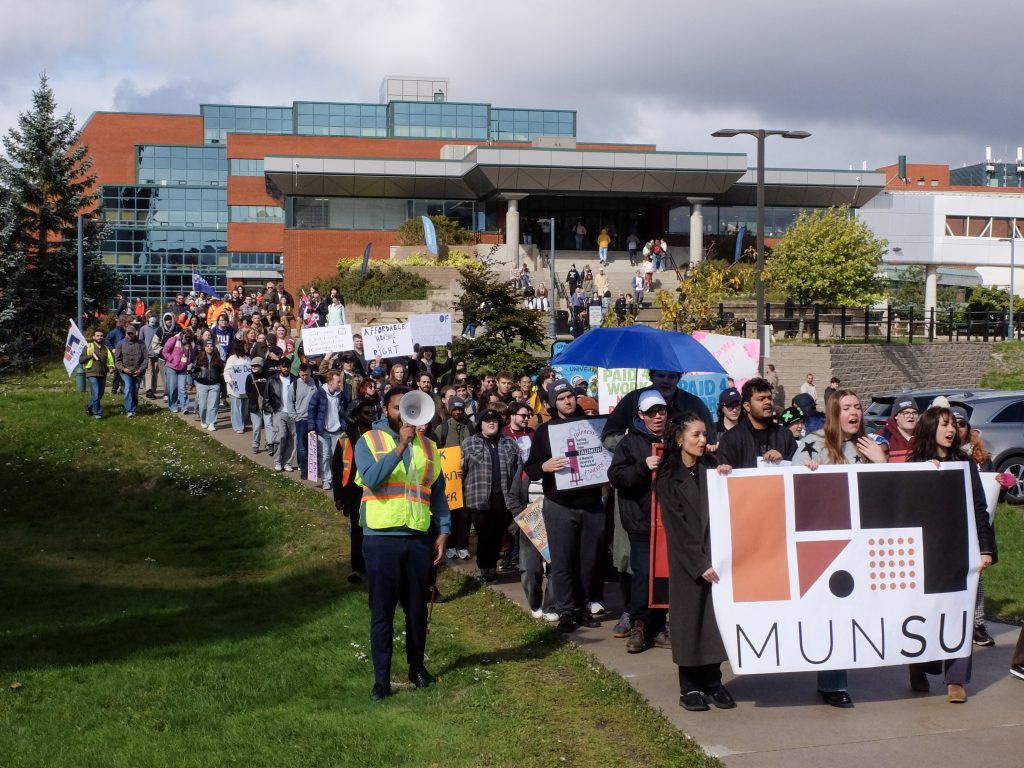
MUNSU and CFSNL have announced that 2025 day of action will be held on October 1st. This happens to fall on a provincial election year – just like in 1999, when over a thousand MUN students successfullycampaigned for a tuition freeze through protest.
Dubbed ‘1999’s Unfinished Business’, the annual “Day of Action” is protesting the increase of tuition fees, unpaid work terms and cost of living. Student activists have long advocated for increased government funding to be allocated to Memorial.
Students Union representatives say that provincial funding is necessary to keep enrollment up, ensure campus is in working order, and avoid student debt post-graduation.
This years protest is reminiscent of 2022’s Day of Action called ‘All Out Like 99.’ in opposition to the $68.4 million reduction of funding to the Memorial by former Premier Andrew Furey’s government which saw the University respond by doubling tuition.
After engaging in direct conversations with MUNSU about students’ various concerns and financial troubles, the government later announced that it would subsidize $10 million for the next academic year to offset the campus renewal fee, saving MUN students $50 per course.
Student union representatives at the time were pleased with the progress, though frustrated that it was only a slight improvement, and continued to advocate for fully reinstated funding.
2022 Day of Action protest / munsu.ca/history
In 2023 another Day of Action also opposed tuition hikes, additional fees, and funding cuts, while the 2024 protest largely focused on deffered campus maintenance despite higher fees.
2024 also saw the establishment of FundMUN, a coalition of allied unions advocating for both the government and the university to reinstate widespread funding to MUN.
MUNSU’s Month of Action Calendar (Facebook)
MUNSU has begun meeting with provincial governing bodies and candidates for the upcoming election to discuss student issues, primarily, whether or not candidates will commit to a tuition freeze.
Generative Artificial Intelligence has become an incredibly contentious topic in the education sphere the past few years, and despite a policy against student use of AI, MUN appears to have used it themselves.
AI images have been found on the official website on the parking page. The most glaring example is the image for the employee parking page, displaying a picture of a distorted “parking by permit only” sign, backwards cars, a strange square streetlight on top of the sign, all displayed on a background that does not resemble Memorial campus.
MUN Director of Communications Chad Pelley responded to our queries on the matter via email:
“Memorial University purposefully avoids the use of AI-generated images on its official design materials. We have reached out to the Parking Office to update the photos they used, and will remind all units to avoid the use of AI-generated images on their websites and other platforms.”
Across Canadian Universities student use of AI in academic work has been highly frowned upon, and MUN is no exception.
The MUN website has an entire page on student use of generative AI, explaining what it is, how it is used, and why it is banned, as well as outlining punishments for using it. Here is what is stated in the policy:
“It is an academic offence at Memorial University to submit work created through the unauthorized use of generative artificial intelligence (GAI) tools and present it as your own original work.”
In recent years, several professional nursing organizations, including the International Council of Nurses, have emphasized that support for nursing is not a cost but a wise investment in the future of healthcare.
This perspective highlights the critical importance of investing in the nursing workforce to ensure the sustainability and effectiveness of health systems worldwide.
Currently, nursing students in Newfoundland and Labrador face significant financial challenges. As noted in a recent interview with the President of the Registered Nurses’ Union of NL, these students have to contribute a minimum of 1500 hours of clinical placements without pay, and also bear the cost of their education.
During their 3 or 4-year programs, students often work the equivalent of full-time hours in clinical settings, leaving them too fatigued to engage in part-time employment.
This situation leads to severe financial instability, as they struggle to meet living expenses and tuition fees, which continue to rise.
Despite the extensive clinical experience gained, these students are expected to perform at the entry level as Registered Nurses but receive no compensation for their contributions.
This disparity raises concerns about the sustainability of the nursing workforce and the potential for burnout among emerging professionals.
In Newfoundland and Labrador, the current bursary system provides nursing students with a modest $750 per course, which is insufficient to cover the costs associated with their education and clinical placements.
To retain locally trained nurses and ensure a sustainable healthcare workforce, Memorial University (MUN) and the provincial government must increase financial support for nursing students.
Such an investment would not only alleviate financial burdens but also contribute to the long-term stability and effectiveness of the healthcare system.
Fall semester is just around the corner, which means campus will be packed with both new and returning students. MUNSU plans to start the new university year with a bang.
Welcome Week is a staple of the fall semester, with plenty of activities planned to both welcome back returning students, and to try and get new students more involved in campus life. With activities booked every day for the first three weeks of the semester, there’s something for everyone – and that was a major goal this year.
We sat down with Blake Colbran, MUNSU’s Director of Student Life, in order to get a better understanding of just what went into planning this year’s Welcome Week events.
“Fall Welcome is 33 events throughout September that balance fun, learning, and advocacy to help students build real community at MUN,” said Colbran.
“From Nick Earle headlining the Breezeway on September 12th to yoga under the whale to Day of Action prep, there’s something for everyone.”
The sheer number of different groups and events at Welcome Week this year is large, featuring everything from Food on the Move and MUN Students for Palestine to Smash NL and a NewFunny Comedy Show.
“It was really trying to build between advocacy and more social events,” said Colbran. “Fall welcome brings so many groups like Silent Disco and crafts groups, the whole month is meant to be a celebration for all the new students.”
Keeping everything accessible for students was important for Welcome Week to gain major traction, with almost all events having free entry, and Colbran stated that this was important. “Most events are free – we don’t want money to keep anyone away. MUNSU is big on having good costs so as many students as possible can join in.”
Big student-led events were also deemed incredibly important, in order to get newer students used to campus life, and to let them know how easy it is to get involved. The annual Clubs and Societies Fair is a large part of this, where many different groups will have booths set up in the UC for students to interact with and ask questions on how to get involved. “September should feel like campus – big shows, student talent, and plenty of ways to plug in”, said Colbran.
Perhaps the biggest surprise on the Welcome Week schedule comes on the evening of September 12th, with a live performance in the Breezeway by Nick Earle and the Reckless Hearts, an event that is sure to bring in a large crowd. It won’t just be him however, as Infrared will be the student opener for the event.
This event is also meant to lay the groundwork for the future of Breezeway performances. “The goal is for Nick Earle to be the start of performances at the Breezeway, and we’re hoping for a steady stream of performances after that,” said Colbran.
MUN Welcome Week is set to start when semester kicks off on September 9th, and MUNSU is looking to strengthen the MUN community in the process. “Community happens when students show up together and have genuine fun.”
Music library looking as dry as this summers heatwave? St. John’s musicians have you covered. Here are some of The Muse’s recommendations from local artists to cap off your end of summer playlist.
big ravine – John Moran
Big Ravine album cover via @johnsnewrecord on Instagram and bandcamp
It’s becoming more and more apparent that all the 20s-30s musicians about town are presently reconciling with change. Particularly, the widening “ravines” between friends and ex-lovers as they part ways to pursue various marked life events.
However, I’m not complaining – in fact, I’ll bet that many students can relate as we watch all our closest pals graduate, maybe leaving the province, starting new jobs, or just idling about town waiting for the next thing.
Independently released on June 13, big ravineis a summer tune that has the broad appeal of lo-fi indie folk with its understated guitar and subtle vocal distortion. John Moran’s pragmatic sense of nostalgia isn’t overtly sad either, it gives the track similar vibes to a fond campfire song above all else — a past tradition that went platinum as far as the friend group is concerned!
Moran describes this ravine as both a tangible and figurative entity – the place he would go camping with friends “every Halloween,” and a symbol of absence between people once so close in proximity and relation.
big ravine is simultaneously acceptance and an existential cry out against necessary change, a plea for people to stay in touch, for old friends and past paramours to make time for those occasional “hey do you remember when…” hangouts when you’ve all moved on.
big ravine is the first track of a new EP from Moran called 3 out of 5.
Purrgatory – Tunnel Vision
Purrgatory album cover artwork, via tunnelvision709 on bandcamp
Oh, how beautiful it is to see talented women make loud and angry music.
Tunnel Vision’s cleverly titled LP Purrgatory came out on July 11, a little over 3 years after the band’s last EP “2022” released in, well, 2022.
Tunnel Vision has been a well-loved fixture in the local punk/hardcore scene the last few years – believe me when I say this album was highly anticipated.
Lead singer Catherine Roberge is a powerhouse vocalist, wailing out expertly re-interpreted riot grrrl ideologies to fit a heavier musical context with the help of band members Becky, Pepa and Walt.
Purrgatory presents listeners with a provocative study of girlhood, self advocacy, and recognizing one’s right to their own anger. Many of the songs appear to confront themes of misogyny, ferociously rejecting toxicity and injustice faced by the speaker.
Though all 11 tracks are fantastic, Night Moves, Boys4Bfast and Tunnel Vision stand out in particular for their refusal to be subject to threats of patriarchal violence, whether emotional or physical.
The recordis a testament to sticking with friends and allies, standing your ground, holding offenders accountable, and voicing righteously felt anger.
Even outside of ideas inferred from the lyrics, Purrgatory is nicely fast, loud, and fun. Quite short at only 15 minutes, it’s a perfect addition to a playlist if you’re into hardcore.
demo 2025 — longmay
demo 2025 album cover artwork by Tanea Hynes // via longmayhurts on bandcamp or @longmay.amv on Instagram
Fronted by locally beloved tattoo artist Jordan Brenton, longmay is a relatively relatively new emoviolence/post–hardcore band that’s been absolutely tearing up the stage at occasional shows at The Ship Pub. Since releasing the demo on August 1, social media has been flooded with praise for the band.
“demo 2025” is a short EP compilation written over 6 months by band members Jack, Damon, Jack, Jordan, and Kris, recorded with help from Swimming’s Liam Ryan.
Longmay’s first project is incredibly evocative in its honesty. Jordan Brenton captures the intricacies of memory, sobriety, and grief so well, having previously opened up to show attendees about losing loved ones to suicide and cancer.
The first song, titled holy heart as an homage to the highschool where Brenton became close with friends and later coached improv, is an notably striking track. Starting off with spoken word, and eventually derails into a distorted-guitar filled dedication to friends lost, wishing for a few more minutes (or even seconds!) with them.
Like many others expressing their gratitude on Instagram and Bandcamp, this EP genuinely left me speechless. To cite musician Liz Fagan’s well-put bandcamp comment: “Incredible. A gut punch and also somehow a hug.”
Little Fauna – Little Fauna
Little Fauna album art by bassist/visual artist Kathy Oke
Femme-fronted garage-rockers Little Fauna released their first full-length LP on May 31 after years of kicking around St. John’s bringing fuzzed-out DIY charm to venues of all kinds.
Another record that was highly anticipated, Little Faunaexists at this delicious intersection of pop and 90s grunge genres, often called “bubble grunge,” offering listeners catchy chord progressions and tastefully distorted vocals that don’t veer into abrasive territory.
Little Fauna has been a few years in the works, but the songs still resonate with thought-spiral lyrics about dealing with burnout, nostalgia, and residual anxieties about relationships gone awry.
Lead singer and guitarist Krys Burton often quips about supporting your community, and holding abusers, or “doo doo men,” I believe they called it, accountable – a similar thesis to Tunnel Vision’s Purrgatory, though quite different musically.
Letter Sent is a particularly notable track on this project. The song is clearly directed towards someone the speaker is close with, who refuses to let on that they’re struggling, but the speaker knows anyways, promising to do their best to help despite the other person’s persistence that they’re fine. It’s the perfect “final” track, as the chorus continues into the final interlude End Credits.
As for some non-local recommendations that have been in heavy rotation in the Muse office, I’d suggest K1 by kmoe, a fantastic hyperpop-tinged alt rock album for if you’re having a burnout kind of summer like myself. Experimental rap record Blush by Kevin Abstract also has great summer vibes, all while being a testament to creativity and collaboration with artist features on every song.
It’s been a big year for local music with lots of releases and more on the way. These are only a few great (albeit a bit depressing) recent releases from St. John’s artists, but I’d encourage you, lovely Muse reader, to go to a show or have a poke around online for some more local bands up your ally – there’s something for everyone!
What did you listen to this Summer? Share with us on social media @themuseyyt.
It has been an eventful few week for both the Newfoundland and Labrador men’s and women’s Volleyball teams. Both teams put up a good fight and played multiple crucial do-or-die games.
Team NL Men Make it to the Quarter-Finals
The men’s team found themselves in Pool A, featuring British Columbia, Quebec, and Saskatchewan. Their first two games were against Saskatchewan and Quebec, where they managed to keep it close, but ultimately lost 3-0.
Their third and final game of the prelims was against British Columbia. Both teams entered the game with a 0-2 record and needed a win to guarantee a spot in the quarter-finals. While a loss wouldn’t have eliminated either team, it would have forced them to play an extra qualification game.
BC beat NL in the first set, handily winning with a score of 25-12. NL bounced back and won a very close second and third set (25-22, 25-23). BC came out on top in the fourth set 25-19, forcing a fifth and penultimate set.
NL would win another very close set, scoring 18-16 over BC, and finishing the preliminary round with a 1-2 record, placing third in Pool A. This secured their spot in the quarter finals, where they had a tough matchup against the reigning silver medalist, Alberta.
Alberta was second in Pool B, finishing with a record of 2-1. They beat both New Brunswick and Manitoba, although neither win was dominant, as the score was 3-2. Alberta would lose their third preliminary game 3-0 to Ontario.
Entering the quarter-finals, the stakes were high. The winning team would go to the semi-finals, where they would be guaranteed a shot at competing for a medal, while the loser would have to play consolation games concluding with a lower stakes final.
Team NL in their game vs. Quebec (Nathan Edwards).
Alberta would ultimately beat NL 3-0, erasing the host province’s hope at a volleyball medal on home soil; however, the game was a lot closer than the scores suggest. The final two sets of the game were only 25-23 and 25-21 wins for Alberta.
NL would ultimately go on to play in the 7 vs. 8 final against BC, losing in straight sets 3-0. Alberta ended up beating Quebec in the semi-finals, earning an opportunity to play for a gold medal, and beat Manitoba in the gold medal game 3-0.
Women Finish Second Place in Pool C
The women’s team also had a very formidable week. They found themselves in Pool C, which featured the Northwest Territories, Nunavut, Prince Edward Island, and Yukon.
NL came out guns a-blazing, winning their first three games of the preliminaries, beating NWT and Nunavut 3-0 each, before beating Yukon 3-1.
Their final preliminary match-up came against PEI. It was a crucial game; both teams were 3-0 and fighting for first place in their pool. While both teams would still ultimately have to play qualification games the following day before locking in a spot in the quarter-finals, being atop of their pool and finishing the prelims undefeated is a huge momentum boost.
This game was very back and forth, as the first four sets were quite close and saw NL and PEI going back and forth with one another. This resulted in a winner-take-all fifth set to decide who would complete the prelims undefeated. PEI would ultimately overcome NL, winning the last set 15-12, and earning first place in Pool C.
Team NL ahead of their game vs. Yukon (Leona Rockwood).
This meant NL would need to play an early morning qualification game the following day against Nova Scotia, where the winner would move on to the quarter-finals and face off against Saskatchewan.
Nova Scotia would win the first two sets with ease, before NL bounced back in a big way, winning the third set 25-23 and keeping their quarter-final hopes alive. Nova Scotia ultimately won a very competitive fourth set 25-20, eliminating NL from a medal for Indoor Women’s Volleyball.
After the game, members of the Team NL women’s volleyball team took great pride in representing their province at home.
Player Julia White said it’s been “nice to show everyone who we are and what this place is all about.”
Coming from Spaniards Bay, she says she felt very proud to “represent where [she’s] from” and to “show [her] community who [she is].”
Kianna Moore said the team’s hard work showed on the court (Leona Hardwood).
Team NL athlete and MUN Student Kianna Moore said the team has “put in a lot of hard work” in preparing for the Canada Games, and that the “time spent together on and off the court is definitely showing.”
Team NL would ultimately end up playing in the 9 vs. 10 final, facing off yet again against PEI, and losing another close one 3-2.
It was an action-packed Canada Games on the volleyball court for Team NL, and they earned multiple opportunities to play in some big games in front of the home crowd.
Along with the rest of Canada, Newfoundland is currently experiencing a housing crisis, and students are especially vulnerable within a volatile and increasingly expensive housing market.
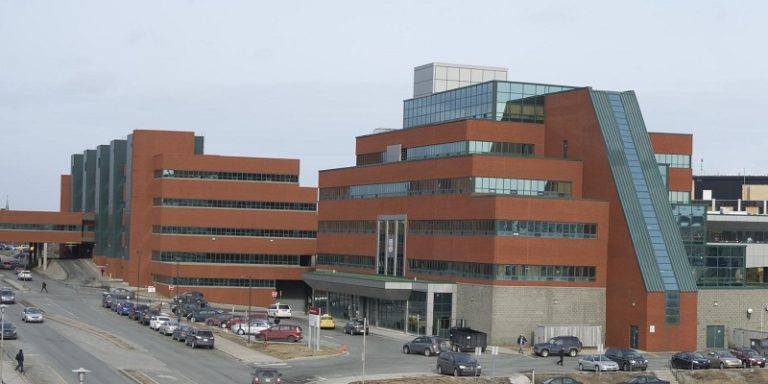
This need for more specifically student-focused housing led to the construction of three new Westerland apartment buildings just behind The Works on campus.
As Fall semester swiftly approaches and construction equipment remains stationed around campus, the question on everybody’s mind is: ‘Will the buildings be done for move-in?’
Construction & expected completion dates
In an official response to The Muse, Westerland stated that Phase 1, which encompasses Buildings B and C, will be completed for the expected move-in date of September 1, 2025. Both Phase 1 buildings are fully leased as well.
However, Phase 2, which encompasses only Building A, is expected to be completed for a later move-in date of September 8, just one day before lectures begin.
Westerland cited high demand for these delays and said that they expect exterior finishing work to continue throughout September. Still they are “pleased to be able to accommodate more students who wish to move in for the school term.”
When asked what happens in the unfortunate event that construction isn’t completed on time, Westerland said they’re confident in these timelines and don’t expect any further delays to move-in dates. They also clarified that this year’s Canada Games did not adversely affect their operations to prepare for students moving in.
Students, however, are quite vulnerable when competing with a broader housing market in an oversaturated greater St. John’s area where everyone is scrambling to find housing.
Westerland outlined 4 main reasons why the construction of student-focused housing is so important here in the province: students are competing with the general rental market like families, seniors, and workers; local universities are growth drivers, they bring thousands of students each year and the current housing supply can’t keep up pace; and, the current rental market isn’t designed for student needs such as shorter leases and furnished units; every bed built for a student frees up a home for a family.
“If a new 200-bed student residence opens, that’s 200 fewer students renting apartments, basement suites, or shared houses in the broader market,” the company said, expanding on that last point. “This can ease pressure on family rental stock and stabilize rents.”
The company also described an emphasis on student involvement within their operations, saying that “hiring students and having students on staff provides us with unique insights into what is truly important to students so we can effectively communicate with our audiences.”
Westerland Apartments
Apartment rates amid a cost-of-living crisis
A Westerland apartment can run you anywhere from $700-1100 per person per month, depending on the type. Each apartment is fully furnished, with utilities included and access to various amenity spaces.
There’s been ongoing discussion and debate between students regarding whether or not it is actually affordable.
Westerland stated that their rates are “very comparable and aligned with market rates… as is the natural process, we’ve done a thorough analysis of the market and set rates based on our findings.”
As of 2024, the average rent for a two-bedroom apartment in St. John’s is around $1130, and MUN residence fees start at $4900 per semester (evening out to approximately $1225 per month, though this does include a meal plan, which negates a egregious grocery costs). Based on these figures, the Westerland student apartments appear to be on par with typical market rates.
Nevertheless, these rates are still hefty for students who must also account for tuition fees and may be unable to work many hours with busy class schedules – though this unaffordability likely speaks to broader cost-of-living and supply-and-demand issues that have affected groceries and rent, all while wages lag behind inflation.
Students often have more expenses and work minimum wage jobs, making them increasingly subject to economic struggles.
Either way, more student-focused housing is ultimately a positive thing, and the construction of these new apartment buildings will hopefully be an example for other entities to prioritize student support overall.
The 2025 Canada Summer Games have officially wrapped up. Week 2 saw a lot of action, here are the highlights.
Team Newfoundland and Labrador won their first gold medal from Gavin Baggs. The gold medal came in Wheelchair Men’s 1500m athletics. That was not the only medal Baggs took home during the week, as he took home two silver medals in the 400m wheelchair and 100m wheelchair. A historic week for Baggs as he takes home 4 of NL’s 6 medals.
Baggs won four medals at this years Canada Games, including a gold in athletics (teamnl_cg/Instagram)
One of the highlights this week was Women’s Baseball, as this was the first time it was played at the Canada Games. Team NL had the first game, taking on British Columbia. The ball from the first pitch of the game was removed and placed into the Baseball Hall of Fame.
Team NL was mercied by a score of 13-0. Team NL would go on to place 8th in a 20-13 defeat against Team Manitoba. Team Ontario took home the gold with an 8-5 win over Quebec.
Photo taken by Matthew Murnaghan
Men’s Box Lacrosse was one of the more anticipated events of the games as well, and it did not disappoint. Team NL placed 10th in this one with a 10-1 defeat at the hands of team P.E.I., as Ontario would take home gold with an 11-5 victory over British Columbia.
Photo taken by Andrew Edwards
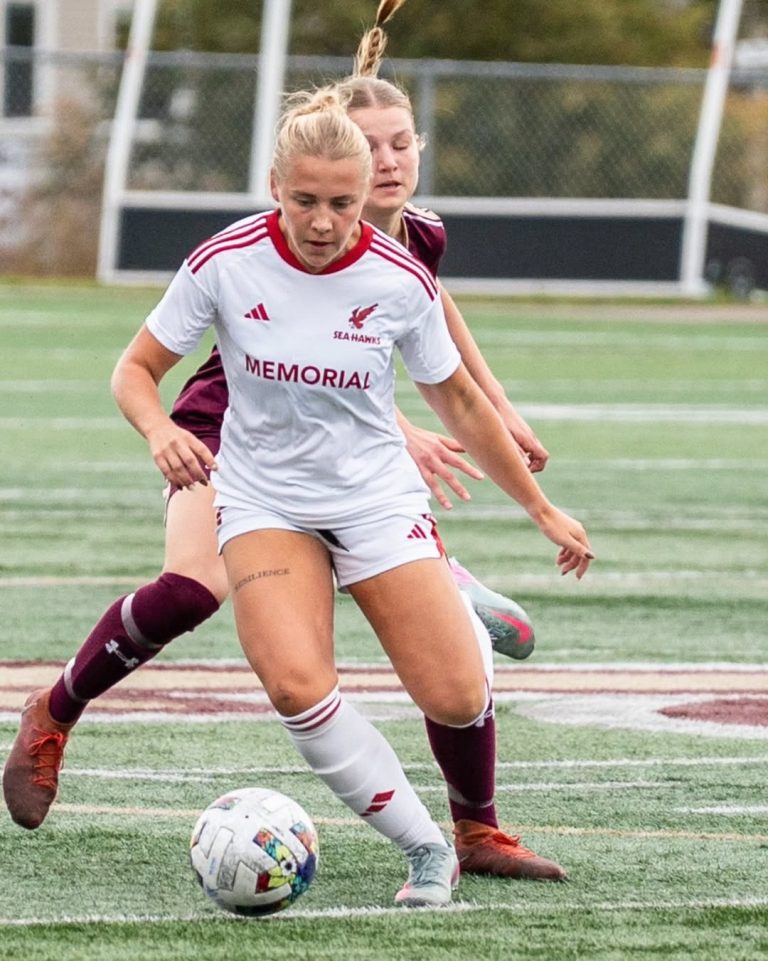
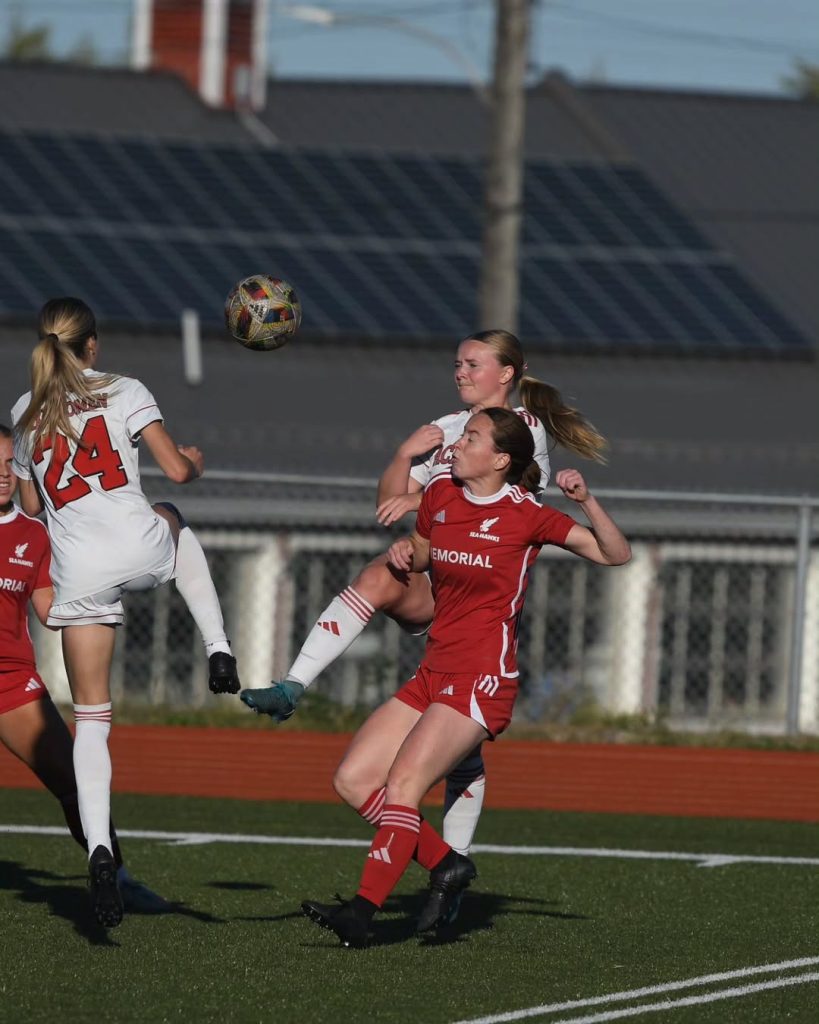
In Women’s Soccer, Team NL got off to a hot start, winning game 1 with a score of 2-1 over Saskatchewan and drawing game 2 1-1 with Alberta.
Unfortunately, the team would lose their qualification in a heartbreaking 2-1 loss against P.E.I, landing them in the 7th/8th game, where they would eventually lose 3-0 vs New Brunswick and place 8th. Ontario would take home gold with a 1-0 win over Quebec.
Photo taken by Leona Rockwood
Men’s Softball was a roller coaster for Team NL. The team would lose the first game 11-0 against Quebec and at one point hold a record of 2-4 before winning their next 2 games against New Brunswick and Alberta by a combined score of 13-2, earning them the right to play in the 5th/6th placement game. Unfortunately, Team New Brunswick would get their revenge in a 13-9 victory. Ontario would take home gold with a 4-2 win over Quebec.
Photo taken by Leona Rockwood
Volleyball saw a lot of action this week. The Men’s team would place 8th after a 3-0 loss to British Columbia. Alberta would win gold here over Manitoba in a 3-0 victory. The Women’s team would place 10th after a nail-biting 3-2 loss to British Columbia. Gold would be captured by Alberta in a 3-1 win over Ontario.
Photo taken by Lumi Xie
The last team sport was wrestling. Team NL’s Men’s team would place 10th in a heartbreaking 27-26 decision against P.E.I.. Gold would go to Ontario as they would defeat British Columbia in a 40-10 beatdown. The Women’s team would also place 10th after a 45-5 defeat to New Brunswick. British Columbia would defeat Ontario 27-24 for the gold medal.
Photo taken by Penny Rogers
The medal table reads that Ontario led all provinces with 175 medals, with 63 being gold. Quebec would finish right behind them with 173; however, like last week, they would have more golds with 58. British Columbia would be the only other province to hit the century mark with 116 and 32 golds. The next closest was Alberta with 81. NL would finish with 6 medals, with one of them being gold, placing 9th at the overall medal table.
On Sunday evening, August 24, a hush fell over the usually lively Ship Pub as attendees carefully listened to readings from the incredible writers featured in toothcut journal’s first issue.
toothcut is an entirely student-led literary journal focused on creative experimentation, emerging writers, and ‘learning by doing,’ hence the journal’s name, which comes from the phrase “to cut one’s teeth.”
Editor-in-chief Caleb Browne appeared on an episode of Muse News in March, alongside toothcut’s “business bro/editor/mascot” Tanner Hudson. The two editors discussed their plans for the journal, issuing an open call for submissions of poetry, short fiction/creative nonfiction, and secrets.
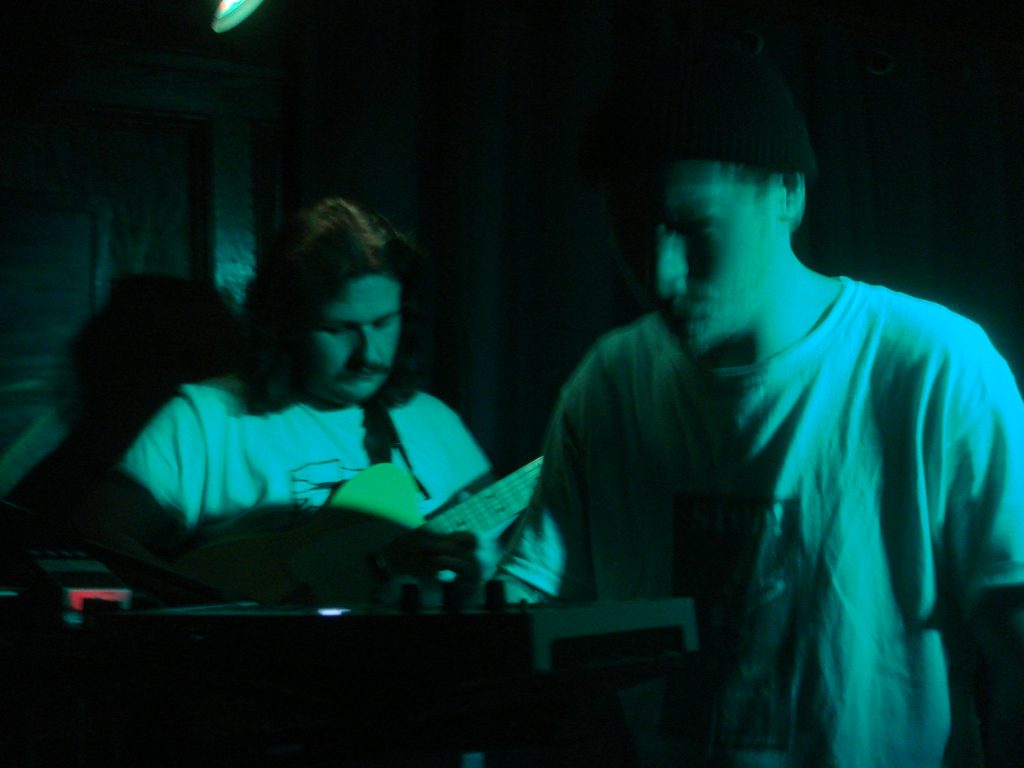
The final first issue was unveiled at toothcut’s beautiful launch event, complete with live readings from contributors and a performance from local musician Lexi Hicks.
When the journal’s editors, Browne, Hudson, Jenna James, and Nick Corcoran initially conceived the idea of a student-run literary magazine, they were unsure if getting it printed would be a feasible venture. Due to book sale fundraisers and eventually becoming a registered non-profit organization, the editors were able to finance the publication of a physical copy of toothcut.
Copies of the journal were absolutely flying off the corner pool table that often houses merchandise at the Ship.
“I’ve been looking forward to this for nearly a year now, so I’m quite happy,” said editor-in-chief Caleb Browne. “It was a much bigger turnout than I expected…we nearly sold out.”
Launch event
toothcut front/back covers. Front cover by David Lynch, back cover by Jess Richardson
Issue no. 1 of toothcut journal features anonymous secrets, poems, short fiction/creative nonfiction, art, and photography, all thoughtfully selected by their editorial board, and delightfully tinged with a bit of the “weird” prospective readers were initially promised. I’m not sure about anyone else, but reading the submitted secrets made me feel a bit more normal as well.
“It’s very strange to walk into the Ship and you could hear a pin drop when somebody’s reading,” Nick Corcoran said. “The audience was very attentive and the readers were fantastic.”
With pieces spanning across genres, some tinged with Newfoundland culture, others exploring religion, sexuality, motherhood, immigration, love, heartbreak, grief, and bees – there is truly something for everyone in this all-encompassing DIY publication.
The journal is also bound with a greyscale cover photo by contest winner David Lynch (not the deceased director, a different individual), and a back cover photo by Jess Richardson.
The Ship was decked out in crafts and decorations for toothcut’s launch as well, hand-made by managing editor Jenna James. “We’re not a big crew, everything we’ve put out has been something that has very few hands on it,” Jenna James said, “it felt like a natural continuation that we’d have tokens, decorations, made in the same way.”
These sweet details really speak to the DIY ethos of the journal as a whole, who’s more resourceful than students with drive and great ideas?
Felt tooth pins made by Jenna James // Lee Hurley
What’s in store for toothcut?
Following the successful launch of the first issue, toothcut journal has big plans for the future.
“We would love to get it into more people’s hands, into more people’s homes,” said managing editor James.
It’s clear that with their first issue, the toothcut editorial staff has created a thoughtful, welcoming environment for emerging writers to share their work and be given due attention for it. Their launch event was nothing short of heartwarming, truly a full-circle moment for these student writers who had a one-off “what if we…” idea a year ago.
“It’s just that sense of community more than anything else,” said Tanner Hudson when asked how it felt for all their efforts to become tangible. “All these names, all these stories we’ve been reviewing for the last little while – it’s always been kind of intangible, but now seeing all these faces, seeing people actually emotingas they’re telling these stories, it just makes it concrete, more real than anything else. I loved it.”
toothcut will begin taking submissions for its second issue (theme to be announced) on January 1, 2026, though the journal accepts secret submissions year-round.
If you’d like your own copy of the first issue, stay tuned. They’ll be available to purchase online and at future events.