Directed by Toronto filmmaker Tricia Hagoriles, recipient of outACTRAto’s ‘Queer Your Stories’ award, Last Call brought Spanglish queer comedy-horror to a St John’s audience.
It capped off St. John’s International Women’s Film Festival (SJIWFF) shorts series “Am I the Drama?” with a bang.
Last Call follows lesbian couple Alex and Nora as they sit in their favourite bar, freshly post-breakup, rehashing their relationship before Nora leaves the city to move back home with her family.
As the bartender announces last call and they get ready to part ways, a sudden zombie apocalypse interrupts both the couple’s break-up and the bar’s closure.
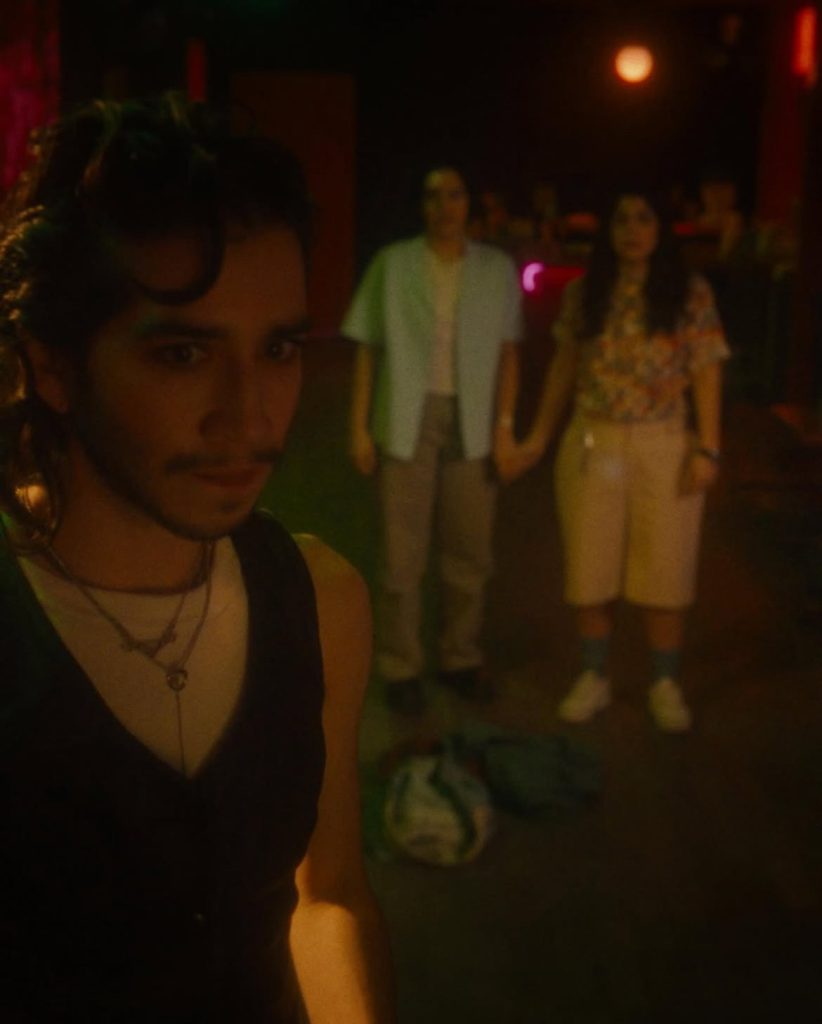
A still from Last Call (@triciahagoriles/@lastcall4zombies on IG)
Alex, Nora, and the seasoned bartender who overheard their whole breakup, are forced to put their grievances aside and protect themselves from the zombie apocalypse raging outside the bar.
Wielding sex toys and Molotov cocktails, and slinging Canadian queer references like nobody’s business, the unlikely trio quests to save the bar from obnoxious zombie-bachelorette-party-attendees in a hilarious ten minutes.
While Last Call hinges on common queer stereotypes, it does so in a way that is self-aware, referential, and develops the comedic aspect of the film exceptionally well.
Rather than poking fun, it pulls from classic horror movie tropes to create a funny and very gay story that captivated everyone at the Majestic theatre for SJIWFF’s shorts.
A short film in the final spot of a late-night screening that can get this many laughs from an audience, despite some attendees being sleepy at the late hour, is indicative of a great movie.
In Last Call, Alex and Nora are forced to confront their communication issues, something universal in relationships nowadays regardless of sexuality, mediated by their new friend and fellow zombie-slayer.
The bartender also recounts past experiences where a small army of drag kings valiantly saved the queer bar from rampant bachelorette party zombies, saying that “it’s the only queer bar left in the area. I’m used to having to fight for it.”
This zombie apocalypse serves as a metaphor for the gradual disappearance and takeover of queer spaces, a relevant issue facing the 2SLGBTQIA+ community.
Hagoriles creates a neon, camp atmosphere that achieves robust social commentary while remaining fun, lighthearted, and supremely funny. Genuinely, so enjoyable.
Matea Radic made her directorial debut on Thursday night at the St. John’s Women’s Film Festival, as part of the “Am I the Drama?” late-night shorts program with her film Paradaïz.
Radic’s ten-minute film animates the debris of the past into something uncanny and alive, merging humour and heartbreak in a surreal collage of homecoming. She fled her birthplace as a child in the summer of 1992, but revisits the disrupted Sarajevo in this captivating animation.
Sarajevo is pinpointed as she makes her return (coffeebrew.com)
The film’s janky, hand-drawn style and pastel palette aren’t flaws, but rather evocative tools, perfectly matching the fragility of Radic’s subject matter. She frames this return as an uneven, nontraditional journey toward healing, one that unfolds in fragments rather than in a straight line, mirroring the way memory and recovery truly work.
Nothing in this world feels quite right: tomatoes swell and pulse in the fridge, slugs crawl toward her as if seeking safety, and a cake sits covered in cigarettes instead of candles. Her childhood home looks like a box with holes — something meant to hold an animal — but she covers the holes with yellow smiley stickers, a small act that feels both tender and sad.
The cake topped with cigarettes (cartoonbrew.com)
Radic’s decision to strip away dialogue and rely on the rhythm of footsteps and ambient sounds gives Paradaïz an almost meditative quality. It invites the viewer to listen closer, not just to the film, but to their own reactions.
What stands out most is how Radic balances humour and heaviness. The slugs hiding alongside her, the smiley stickers patching up her childhood home, these moments walk the line between absurdity and tenderness, revealing how people sometimes soften pain through playfulness.
The slug following Radic around for safety is arguably very precious (coffeebrew.com)
The film isn’t just about closure or finding a sense of peace with your past; it’s about learning to live within the in-between. Through her surreal and personal imagery, Radic reminds us that healing is not a straight line but a conversation with the past, one that slips, hides, and resurfaces in unexpected ways.
If Paradaïz is any indication, Radic is an artist to watch, her bold, imaginative approach makes it exciting to see what stories she will explore next.
Memorial recently updated self-service early this month, and now that we have had time to get accustomed to it, we can safely say it is better than before.
Granted, that bar wasn’t exactly a high one. The old self-service functioned fine enough, but it was agonizingly dated. It was laid out like a relic of the 90s, with everything being left aligned on a blank white background.
Additionally, due to how dated it was, it simply was never going to work on modern smartphones. It was nearly impossible to navigate, requiring constant zooming and panning to access anything.
Course registration also barely functioned on mobile, requiring an infuriating number of refreshes to properly view course offerings.
In contrast to the dated form factor of the original, the new and improved self-service feels like it was made in the 21st century – and to make it even better, it actually works.
It has now become part of my.mun.ca, which likely also saves money, due to there only being one website to maintain.
MUN Login (Memorial University)
It sits in its own tab at the top of the screen, above things such as the Brightspace login and student services. Five main functions are present, giving students easy access to their personal information, student hub, payment centre, registration, and exam schedules.
In each of these tabs, you can easily view all important information you may need. Your student ID picture is shown alongside your student number, allowing you to access them in case you forget or lose your ID.
Perhaps the single biggest improvement over the old self-service, however, is that it actually works on mobile now.
It still is not the greatest experience, and could use improvements in some areas. The mobile formatting is not ideal, with odd zooms and being unable to clearly see the full text of a box, especially on the registration screen.
Furthermore, navigating the new website can be confusing.
The student hub section feels like it was a catch-all, and is incredibly packed with information, especially when compared to the other tabs. Having the final exam schedule take up a whole section on its own also feels strange.
Overall, despite the strange allocation of information and services across tabs, the new self-service is a step up from the original.
It was clearly made primarily for usage on a computer, and it does work incredibly well there. It’s clear that, in order to make the mobile experience better, they would have needed a lot more time, and maybe even a separate mobile self-service app to accomplish.
Hopefully this change is a sign that MUN is trying to push its digital infrastructure into the modern day.
Both elevators on the north side of MUN’s University Centre had been “out of order” since last Friday, around 7:00 p.m, however one of the two elevators has been returned to service Thursday afternoon.
For students unable to use the stairs, this had left four of the six floors completely inaccessible and cuts off in-person access to several vital student services.
Among the currently inaccessible services are the Blundon Centre on the 4th floor, the Disability Information and Services Centre (DISC) on the second floor, the MUNSU office on the 2nd floor, and the Student Wellness and Counselling Centre on the 5th floor.
Though the first and third floors had remain accessible, just with detours, accessing their services is exponentially more difficult for those who rely on elevators.
In general the impact of the elevator closures is not limited to MUN’s community.
The University Centre is open 24 hours a day and serves as a pedestrian overpass for Prince Philip Drive, a busy road notoriously risky for pedestrian crossings. It also houses convenience services and fast food restaurants, accessible to the community at large.
The University Centre MetroBus stop — a point where many routes converge — is also located on the north side of the UC. Students who take the bus and require the use of the elevator are left looking for an alternate way to access the rest of campus after arriving at the bus stop on the first floor.
For those looking for alternate accessible routes to and from the UC in the meantime, here are a few options:
Core Science Facility – connected to 3rd floor UC by skywalk
Chemistry-Physics Building – connected to 3rd floor UC by skywalk
Earth Sciences Building – connected to 3rd floor UC by skywalk
Munnels from QEII Library – connected to 1st floor UC (south side) by indoor walkway
All routes to the 1st floor UC (north side) from the south side of campus require outdoor travel. To avoid crossing any roads, exit through the Core Science Facility.
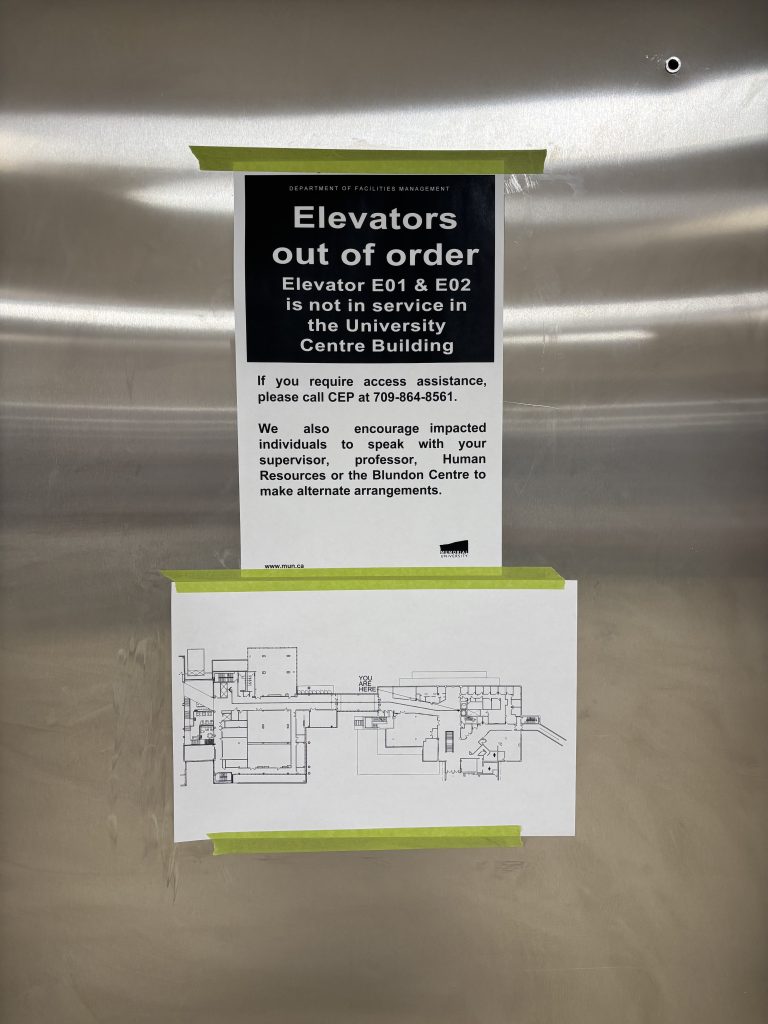
“We also encourage impacted individuals to speak with your supervisor, professor, HR, or the Blundon Centre to make alternate arrangements” (UC Elevator sign/The Muse)
Some students believe it is unacceptable for both elevators to be closed down while campus is fully operational, especially during midterm season when accessing campus services is not only helpful, but necessary for many students.
Extended outages like this can be a detriment not only to the lives of the students and staff directly affected but also to the quality of MUN’s essential services.
DISC staff member Sanaa Mrad made a post on the MUN Students Come Together Facebook group, saying that the outages are “causing major difficulties for students, especially those with disabilities or mobility challenges.
“This issue limits students’ accessibility across campus, making it harder for students to attend classes, participate in events and activities, or even just moving around between floors safely.”
UPDATE:
Facilities Management provided a statement and corrected the previous version of this article.
“This unplanned issue occurred while the other elevator was down for planned upgrades and maintenance. Unfortunately, the other elevator was too far into the planned maintenance process to put back into service immediately. It also occurred while the only certified technician in the province to address the situation was out of the province, leading to this unexpected and challenging situation.
“We recognize the impact this outage had on students. The Blundon Centre and Student Wellness and Counselling Centre worked with students to find alternative accommodations where possible.”
“Currently, campus users can use the elevator located next to the one that’s out of order. Updates will be provided via the accessibility channel in MUN Safe. Please subscribe for the latest information.”
CORRECTION: A previous version of this article failed to reflect that one of two elevators was put back in the UC was put back in service on Thursday afternoon. The Muse apologizes for this error.
Nadia Duman is an Ecuadorian multidisciplinary artist based in St. John’s, Newfoundland. Being a newcomer to the film industry, Duman is making their debut this evening as part of the 36th annual St. John’s Women’s Film Festival (SJIWFF).
Conceptualized and directed by Duman through an Introduction to Film Production course administered by Newfoundland Independent Filmmakers Co-operative (NIFCO), Mudder’s Mess weaves together music, visuals, and the dramatic landscapes of Newfoundland to explore the power of storytelling and the dangers of misinformation.
With a background in music and visual arts, Duman’s transition into filmmaking felt like a natural evolution of their creative practice. “Taking a course on film was a natural next step,” they said, reflecting on how their experience composing and designing sound informed the visual rhythm of the project.
Duman touched on the benefits of independent festivals like SJIWFF, especially their importance to women and gender-diverse artists.
“It felt like the right place… I think that seeing all the incredible women and other people that were around us… it made me feel less alone,” they expressed regarding the festival, emphasizing that the experience itself and demonstrations of solidarity are foundational as a young artist.
(Rebecca Jennings / The Muse)
Rooted in the province’s folklore and coastal mystique, the six-minute film captures the tension between truth and perception, between what we hear and see, and what we choose to believe.
The film’s concept was inspired by a real beachside encounter, when a friend of Duman’s spotted the infamous “blob” that had been circulating in local news stories. The elusive “Newfoundland Blob” mystery has been around for a long time – a blob found in the early 2000s even has a page on Cryptid Wiki.
“A friend shared an article about these things appearing on the coasts of Newfoundland. I go to the beach all the time. So it definitely impacted me,” they recalled.
The real-life event became the catalyst for exploring how myths and misinformation can spread through communities, morphing as they pass from one storyteller to the next. The “blob” is almost working as a metaphor for these concepts.
The rugged beauty of Newfoundland plays a central role in Mudder’s Mess, shaping both its tone and atmosphere. Duman described the province’s landscapes as mystical and otherworldly, noting that “every time I go around the bay, I feel that I’m in a very mystic place.”
The inspiration for the film, took place on The Placentia Bay Shores where the blob appeared. (lovelocalplacentia.ca)
This sense of wonder and unease seeps into the film’s visuals, creating a cinematic language that, similarly to our province, feels both intimate and haunting. The result is a film that mirrors the tension between the familiar and the uncanny, reflecting how misinformation can distort what we think we know.
At just six minutes long, Mudder’s Mess demonstrates the narrative precision required of short films.
“Since you have less time…you need to think about how you are going to be impactful to your audience,” the director explained.
Captivating viewers within a short time constraint is an impressive skill, one that Duman has achieved through illustrating Newfoundland’s eerie beauty and unique culture in their film.
Mudder’s Mess will be screened on Thursday, October 23rd, 9:30 pm at The Majestic Theatre as part of the short film series feature ‘Am I The Drama?’
After the immense success of Ghost of Tsushima (2020), Sucker Punch Productions has finally released the sequel, and based off what I’ve played so far, it’s an absolute slam dunk.
As a quick disclaimer, I have not beaten Ghost of Yōtei at the time of writing. It is a massive game, so this review is based off of roughly 20 hours of playtime. And not to worry – free of any major spoilers.
Atsu, the main character of Ghost of Yōtei. (Eurogamer)
While this game is a sequel, it is not a direct one.
Its predecessor was set on the island of Tsushima, Japan in 1274 during the first Mongol Invasion, while Ghost of Yōtei takes place in Ezo, Japan (known as Hokkaidō) in the year 1603.
You play as Atsu, who seeks revenge against the infamous Yōtei Six for killing her family 16 years prior, setting her on a journey across Ezo.
Atsu is a solid lead character, and feels way different than Jin Sakai from the first game. The side characters are likeable, particularly Taro, the child scavenger who upgrades some of your consumables.
Ghost of Yōtei‘s storyline is not quite as strong as Tsushima, but still respectable, with strong, emotional character work.
This story of revenge is well done, just not the most original, especially compared to other PlayStation titles, and the first game, which set the story bar incredibly high as (arguably) one of the best stories in gaming.
While the storyline may not fully live up to its predecessor, everything else is either on par, or surpasses it. The world of Ghost of Yōtei is absolutely stunning. Ezo is a gorgeous, diverse, incredibly dense world that is easy to get lost in. Each distinct region offers gorgeous vistas to take in.
One of the many stunning vistas that Ezo has to offer. (TechRadar)
The locations each offer mechanical bonuses as well, with many returning from the first game, such as the fox dens for acquiring new charms, plus bamboo strikes and hot springs for upgrading spirit and health respectively.
Exploring is similar to the original, but with some added twists. The wind still guides your path, allowing you to explore and find locales without ever opening your map. However, there are new ways to use this wind, such as using your shamisen, a three stringed musical instrument.
Learning songs allows you to find locations by playing music. Traveller’s maps, gained by talking with NPCs, also help you find locations by identifying geography on your map.
On your travels, you will find yourself interacting with the new camping system. You must camp to restore your spirit outside of combat, so you’ll be doing it often.
Here, you can cook foods to provide different buffs, practice your shamisen, and craft consumables. You can even call other characters you’ve met to your camp, allowing you to upgrade and buy gear without having to stop your current journey by fast traveling to them.
A small camping break from the exploring and fighting. (GamesRadar)
The combat of Ghost of Yōtei is just as good as the first game, while taking it in a very different direction. The combat is significantly harder than the first game, with Atsu being fast but fragile, often dying in just two or three hits on medium difficulty. The parry timing also seems more strict, so you have to be ready for anything at all times.
The main thing differentiating combat from Ghost of Tsushima, though, is how Atsu fights. As opposed to Jin switching his stance for different enemy types, Atsu switches weapons.
Throughout the course of the game, you’ll unlock many different weapon types, such as dual katanas, the yari (a spear), metsubushi (blinding gas), and both the hankyu and yumi (two different types of bow and arrow), and more that I haven’t found yet. This gives Atsu the ability to fight completely different depending on context, creating constantly changing moment-to-moment gameplay.
The best addition to combat, however, is perhaps the most unexpected. Upon defeating an enemy, they will sometimes drop their weapon, and Atsu throw them for big damage. I’ve found myself not using my weapons on occasion, finding it far more fun to turn into prime Tom Brady and throw weapons around with deadly precision.
Atsu wielding one of the brand new firearms. (Gameranx)
Overall, Ghost of Yōtei is an absolute delight of an open world game.
Exploring the land of Ezo is an almost magical experience, with stunning art direction and graphics bringing this land to life. Exciting, diverse, and difficult combat breaks up the exploration in the best way possible, as Atsu works her way through a well-written, albeit relatively standard, story of revenge.
It comes together to make one of the best games of the year, and a worthy sequel to a modern classic.
St. John’s has no shortage of great places to eat, but for those who are vegetarian or vegan, the options can feel a little limited.
Adding the challenge of finding something reasonably priced, and dining out can quickly become a hassle. This article highlights a handful of local spots that make plant-based eating both accessible and delicious.
Poyo + Sprout
To begin, and based on my own experience, Poyo + Sprout is a fantastic place to indulge in very tasty plant-based options. It is Newfoundland’s first vegetarian restaurant, it opened June 2005.
The prices tend to teeter on the higher side, but definitely worth checking out as a little treat every now and then. Another fun aspect of The Sprout, is they have a customer scrapbook filled with drawings, poems, writings, consisting of heartfelt and silly messages.
Autumn Salad prepared with local vegetables and Tuscan Kale from Lester’s Farm Market. (@poyo.sprout on Instagram)
Piatto Pizzeria + Enoteca
If you’re searching for a spot that truly understands how to make a good vegetarian pizza, I would point you straight to Piatto.
Their wood-fired ovens bring that authentic, slightly charred crust that pairs perfectly with their fresh ingredients and rich tomato sauce. They’ve got gluten-free options to accommodate more dietary restrictions.
Peaceful Loft
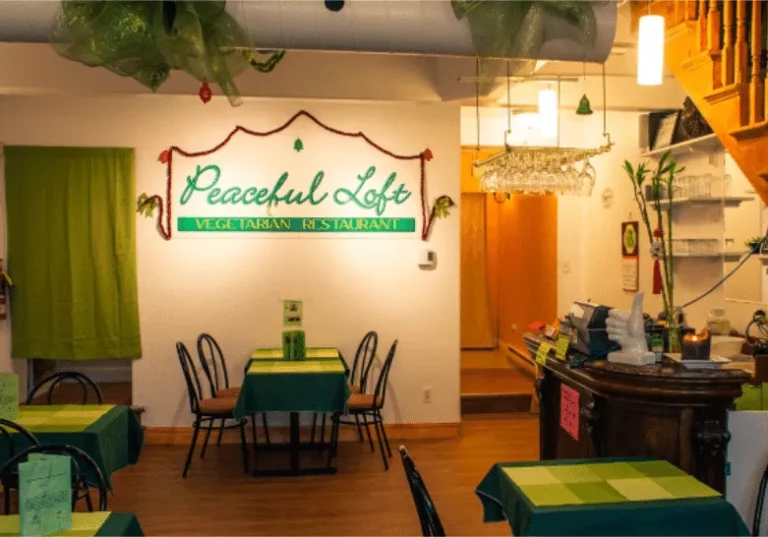
Another spot worth checking out is the peaceful loft. The restaurant is fully vegan, with gluten free options available as well. They are well-known for their stir-fried & pan-fried noodles, as well as their generous portions.
The restaurant is on the smaller side, which means if they are busier, they only have time to prepare takeout orders at times. Keep in mind to be patient and kind! The owners are known for being warm and wonderful, which makes the dining experience much more special.
Mixed Vegetable Stir Fry from Peaceful Loft (tripadvisor.ca)
Sushi Maki
For sushi lovers, sushi maki is an excellent choice for vegetarian dishes. The menu offers many tasty vegetarian options, ranging from sushi rolls to appetizers. The shop has been proudly ran by one man for many years. The interior is beautiful, and an old arcade game of Pac-man provides entertainment while you wait on your dish!
Rocket Bakery
A cafe option for those who want a mix of coffee and lunch, Rocket Bakery has many options. Along with vegetarian and vegan options, they offer gluten free options as well.
In terms of prices, Rocket is generally fair for the portions and the ingredients used. As well, many of their menu options are made in house daily!
Vegan tomato basil soup from Rocket Bakery (@rocketbakery on Instagram)
Gingergrass Thai and Vietnamese Restaurant
Gingergrass Thai and Vietnamese Restaurant is another family-owned restaurant. The name ‘Gingergrass’ stems from their two main ingredients used – Ginger and Lemongrass. Their dishes are heavily inspired by their original creator Nira.
Nira passes on her legacy through these dishes, which are meant to be shared with loved ones. The prices are average for an eat-in restaurant, and offer gluten free options as well. Plus a location is opening soon at the University Centre!
Tofu dish prepared with fresh vegetables (@gingergrass on Instagram)
India Gate
India Gate offers many delicious vegetarian options, though the prices are on the higher end. The service is very professional, and the portions are generous.
This restaurant is a strong recommendation from myself for anyone looking for a special dish as a treat; every paneer dish on their menu is worth a try.
Vegetarian and vegan restaurants have definitely become more common around St. John’s over the past few years, giving locals and visitors alike a growing list of options to suit their dietary needs.
It’s refreshing to see more restaurants embracing plant-based dishes, making it easier than ever to find something both delicious and mindful of different lifestyles.
Since 1991 Noreen Golfman has been bringing thoughtfully curated lineups of films to theatres in St. John’s at the MUN Cinema Series.
Starting at the now-decommissioned Reid Theatre, eventually moving to the Engineering theatre, and now residing at Cineplex Theatre in the Avalon Mall, MUN Cinema Series offers weekly screenings at affordable price points to students and community members.
Currently, the series screens selections at 7pm on Wednesday evenings. Student/senior admission is $10, and general admission is $12, though tickets are first-come first-serve, so be sure to arrive early!
Golfman told the Muse that she tries to diversify each semester’s lineup as much as possible, taking great care during the film selection process.
“I’m looking for films with strong stories for adults,” she said.
Dr. Noreen Golfman founded the St. John’s International Women’s Film Festival in 1989. (Memorial)
“I will rarely get anything that has much CGI. My crowd – and that’s young and old and everything in between – are interested in the stuff that wins awards, a TIFF or Cannes or Venice, where you get critical audiences.”
Golfman defines a critical audience as “people who really understand the history of cinema, love movies, understand the directors, are story-driven, character-driven.”
Focusing on quality rather than theme, and prioritizing Canadian indie, these are the types of films Golfman seeks for the series’ programming.
She also prioritizes keeping film accessible for students despite rising costs of theatre rentals and licensing fees. Golfman said that she hopes she’s not forced to raise the prices anytime soon, and she’s “not interested in profit margins, [she’s] interested in breaking even.”
Here are the remaining Fall Semester screenings:
October 22 – Jane Austen Wrecked My Life (2024)
Genre: Romance/Comedy
Director: Laura Piani
A lonely author on a Writer’s retreat in England with a Jane Austen obsession becomes entangled in a tumultuous love triangle with an old friend and a charming professor who hates her favourite author.
October 29 – DJ Ahmet (2024)
Genre: Drama/Comedy
Director: Georgi M. Unkovski
A 15 year old boy living in rural Northeren Macedonia experiences coming-of-age in a remote, traditional community, finding salvation from grief and isolation through creating music.
November 12 – On Swift Horses (2024)
Genre: Romance/Drama
Director: Daniel Minahan
Starring familiar faces such as Jacob Elordi and Daisy Edgar-Jones, On Swift Horses details married couple Muriel and Lee’s quiet life following the Korean war which gets upended when a rowdy brother-in-law unexpectedly returns home, disrupting their domestic utopia with gambling, sex, and secrets.
December 3 – The Divine Sarah Bernhardt (2024)
Genre: Romance/Drama
Director: Guillaume Nicloux
This biopic offers viewers a fantastical rendering of the French actress Sarah Bernhardt’s spectacular rise to frame, and legacy as one of the first “celebrity” actresses. The film focuses on her lavish life, her leg amputation at 70 years old, and the lasted impact she had on friends, her community, and the film industry.
December 10 – Eleanor the Great (2025)
Genre: Drama
Director: Scarlett Johansson
ScarJo’s feature-length directorial debut, this film follows senior citizen Eleanor Morgenstein as she wanders to NYC searching for family following the death of her best friend. When relatives-by-blood falter as a new support system, Eleanor finds herself becoming friends with a group of Holocaust survivors, deceptively presenting her deceased friend’s story as her own.
Memorial University has made changed to its email policy for new students and staff. After 16 years, email “access for life” after leaving Memorial is over.
Access to your Memorial email after graduating or departing a staff position had been part of the deal for a long time. This perk is even advertised on the Graduate Studies page: “Email for Life: Continue using your @mun.ca email account, ensuring seamless communication and access to university updates.”
This access is now being stripped back and will seemingly be provided only if the email is regularly used. Access to the services your Memorial email provides, such as access to Google Suite, would also be lost.
Students enrolled at Memorial before the change comes into effect will still retain lifelong access – only incoming students who enroll after the policy implementation will be impacted. There is currently no set date for this new framework.
Notes at the bottom of the page state that “Memorial will create retention schedules for inactive mailboxes. If current or previously departed students and staff are using their Memorial email account, access will continue as long as it remains accessed regularly.”
The frequency that constitutes “regular” email usage is once per year, according to communications manager for the Office of the Chief Information Officer, Sandy Woolfrey-Fahey, in an interview with the Telegram.
Reasoning for policy changes
Memorial has attributed the scaling back of lifelong email access to multiple factors. It says that email for life usage comes with “security, information management, privacy, compliance and reputational risks.”
This has been seen firsthand by many students, as Memorial emails have been hit with several scams and cybersecurity attacks in the past year. Rising costs of licensing and storage models were also listed as grounds for the policy changes.
The website suggests that departing students and staff can access free email alternatives instead, such as Gmail and Hotmail.
Additionally, the new policy is separated into two separate models for students and staff, due to factors such as different purposes and retention requirements, and employee governing legislation not being relevant for student emails, per the website.
Halloween is just around the corner, and the city is buzzing with spooky fun. From themed markets to family events, here’s what’s happening to get you in the Halloween spirit.
Pumpkinfest at Lester’s Farm Market
Let’s start with a local favourite, Lester’s Farm Market at 173 Brookfield Road. For something family-friendly, Lester’s is celebrating its 25th annual Pumpkinfest on Saturday, October 18th, starting at 10 AM.
Expect games, contests, pumpkin picking, and plenty of festive photo ops among the hay bales.
Admission is $10 per person, $45 for a family of five, and free for children under two, seniors 60+, and individuals with disabilities. It’s the perfect day to sip hot chocolate, pick the perfect pumpkin, and enjoy the farm’s cozy fall atmosphere.
Lester’s pumpkin patch (@lestersfarmmarket on Instagram)
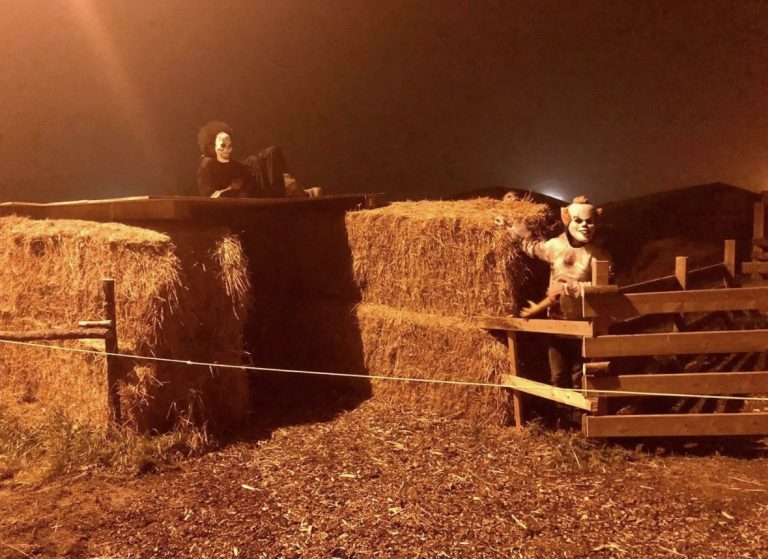
Farm Haunt at Lester’s Farm Market
Every year, Lester’s will transform their peaceful trails into a world of screams and shadows for their Farm Haunt.
This year’s walks will run on Thursday, October 16th (7–9 PM), Friday, October 17th (7–10 PM), Thursday, October 23rd (6:30–10 PM), and Friday, October 24th (6:30–10 PM).
It’s a must for anyone who loves jump scares, eerie lights, and the thrill of wandering through the dark not knowing what’s waiting behind the next tree.
Hallowe’en Howl at MUN Botanical Gardens
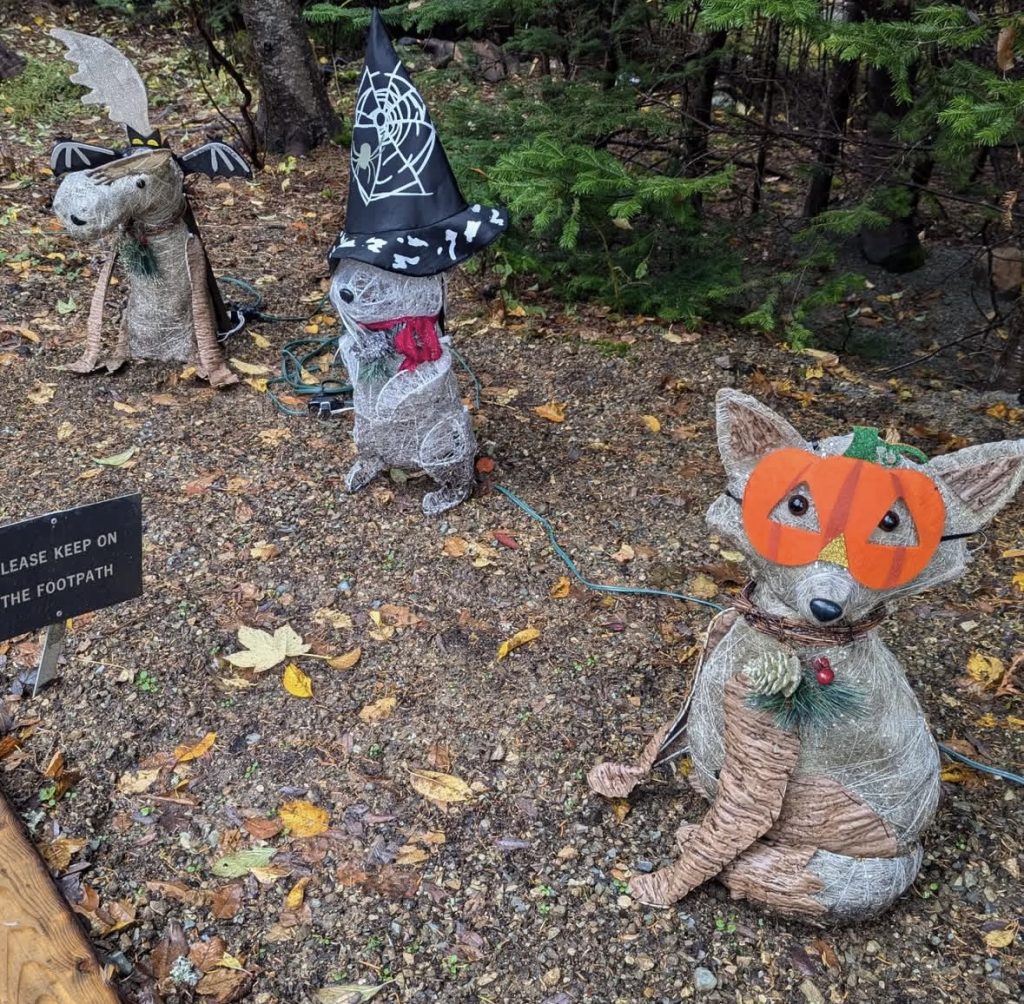
Another family-friendly event will take place at the MUN Botanical Garden on the weekends of October 18–19 and 25–26, running from 10 a.m. to 3 p.m. each day.
The ‘Hallowe’en Howl’ is designed for families with children aged 1–10, offering fun, age-appropriate activities in a welcoming setting.
General admission rates apply, but children who come in costume get in for free. This is a non-scary event, perfect for families with younger kids. Meanwhile, adults can explore the garden’s “poisonous plant” tour to learn all about its collection of eerie, yet fascinating, flora.
Festive decorations from last years Hallowe’en Howl (@mun_botanical_garden on Instagram)
Sugar Rush Spooky Market at the St. John’s Farmers’ Market
If you prefer your Halloween with a side of sugar, mark your calendars for the Sugar Rush Spooky Market at the St. John’s Farmers’ Market on Saturday, October 19th, from 10 AM to 3 PM.
Local vendors will be serving up baked goods, candy, and other sweet treats inspired by the season, plus, admission is free! It’s the perfect weekend stop for those who love supporting local makers (and indulging their sweet tooth).
Halloween-themed baked goods from last years market. (@sjfmnl on Instagram)
Halloween Masquerade at The Rockhouse
For night owls and music lovers, The Rock House is throwing its annual Halloween Masquerade on Saturday, October 25th, and it’s shaping up to be an unforgettable night.
The event features “ritual sacrifices” from HAG and SMOKE SIGNALS, with special guest PARANOIA taking the stage.
Doors open at 9 PM, and the show starts at 10 PM. The cover is $10, but if you show up in costume, you’ll only pay $5, so go all out! Expect pounding music, wild energy, and a room full of creative costumes under flashing lights.
Annual Queer of Halloween Drag Competition at the Bella Vista
For those who love drag and dazzling performances, The Bella Vista is hosting its 4th Annual Queer of Halloween Drag Competition on Sunday, October 19th, starting at 7:30 PM.
This 19+ event promises killer looks, fierce performances, and plenty of spooky glamour. Tickets are $22.63 (fees included), and it’s one of the most exciting nights of the season for the local queer community.
Bella Vista Venue (bellavista.ca)
The Boo Ball at Quidi Vidi
And to wrap up Halloween night, Quidi Vidi will host The Boo Ball on Friday, October 31st, at 35 Barrows Road. Featuring performances by Irma Gerd and /garbage file, the event promises great music, energy, and a lively way to end the spooky season.
Antonio Shano Quidi Vidi Brewery on Facebook
Have fun and be safe exploring the city’s Halloween events this October!