
Home Blog Page 4

OPINION: No, you don’t need to charge $200 for a used pair of Carhartt’s

0

In the summer of 2024, I hosted a yard sale. The sun beamed on me as I ate a frozen treat while chatting with the friendly folks who stopped by.

I was gleaming when someone picked up an armful of my clothes, shoes, and accessories. We both agreed they’d give me $20 for the multiple articles of clothing, and happily parted ways. The items served me no good anymore – didn’t fit, style changed, you know the drill.

A couple of weeks later, a friend and I ventured into a downtown boutique, hoping to find some trinkets. While browsing the clothes, I stumbled upon a couple of articles of the same clothing that I had sold just weeks before. One blouse in particular was priced at $45. I originally thrifted for maybe $7.

From that moment, I had a bit of an epiphany about the realities of secondhand shopping and how unfairly overpriced it had become. This goes for any second-hand shopping as well – thrifting, yard sales, boutiques, the works.

IMG 5516

Before I delve into the goods, I do want to highlight the major difference between reselling something because it did not fit, versus reselling something because you want to make money off someone who may not know any better.

Second-hand shopping is meant to be affordable and accessible. It is used items, for god’s sake.

Sure, it may have a brand new tag on it, or you can call it “vintage”, but that does not mean you need to, or should resell it for an insanely high price.

If I’m being honest, the pure greed from these people makes me sick. And it’s not because I could have sold that shirt for $45, too. That isn’t my goal here. I thought I was giving this person a good deal for multiple items of clothing and accessories, just for them to resell them and scam other people.

It’s very common to see a piece go from the thrift store to Facebook Marketplace, a consignment boutique, or Depop for usually triple the price.

It sucks the soul out of second-hand shopping for those, like myself, who love doing it. And in turn, these prices absolutely skyrocket. It’s a never-ending cycle that I am just beyond tired of. I’m seriously thinking I might need to take a loan out when it comes to thrifting a pair of jeans now.

For context, the overalls down below were being sold at $60 PLUS shipping.

IMG 5517

Yes, I understand Carhartt is a reliable brand, and no, a couple of paint splatters or rips won’t affect the overalls’ durability. But this is a prime example of how and why the prices in the second-hand shopping industry unfairly increase.

A 2025 study by Retail Insider stated that 77% of adult Canadians who were surveyed said that they purchased at least one pre-owned item in the past year. The article highlights the supposed newfound novelty of second-hand shopping while merely stating why individuals are resorting to these money-saving methods.

I understand the hardships of today’s climate, I really do. Money is tight. I can acknowledge and understand that reselling is how some people get by. Though I do have an issue with the surge of resellers that will greedily leave these places bare, limiting options for people who are in need of clothing, toys, furniture, and so much more.

This is why individuals like myself, and many, many others, turn to thrift stores, or other means, to buy ourselves something nice that won’t cost as much as the stores in the mall.

I’m not saying I am in need by any means, I recognize that I have a privileged background. But folks like myself should also be able to thrift without resellers looming around like ghosts up and down every aisle. You seriously can’t escape them!

OPINION: CHMR isn’t perfect, but voting to close it would be irrational 

0

MUNSU has recently announced that after surveying students about their use of MUNSU-run services, its executive committee unanimously voted to recommend the discontinuation of MUN’s campus and community radio station, CHMR-FM. 

The motion is intended to address MUNSU’s nearly $300k deficit. 

This is to be voted on at a Board meeting on April 1; however, I believe this decision to be a reckless cop-out and in direct opposition to the union’s commitment to cultivating a positive, well-rounded student experience at Memorial. 

I must first acknowledge my unique position regarding this matter as Managing Editor of The Muse. I cross paths with CHMR frequently; we have a show on the station called Muse News, and I have worked with its full-time staff before as well. 

Because of this, I have unique insight into CHMR’s operations and the value they provide to our campus and larger community. 

This all being said, I do contend that CHMR could be doing more. 

They could have better outreach, adapt to changing media consumption habits of students, and more student involvement both on campus and around St. John’s to drum up interest.

An enthusiastic, unavoidable community presence is necessary for any university organization to flourish, especially considering the steady decline in broadcast radio, but that can be extremely difficult if you don’t have the resources to do so. 

I caution the MUNSU executive against voting in favour of the station’s closure, a decision that would be anti-community and based on insufficient evidence. 

Insufficient survey sample 

The first, and most glaring issue with MUNSU’s recommendation is their student survey. 

The Membership Advisory, posted to Instagram, states that “this recommendation comes after prolonged consideration of MUNSU’s current financial and operational capacity, with an assessment of membership utilization suggesting a lower level of utilization compared to other student services.”

The survey results indicate that CHMR is the third least-used MUNSU service among students at 13.1%. However, if you zoom in, at the top of the page, you’ll see a very tiny “n=84.” 

This means that only 84 students responded to the survey.

MUN’s St. John’s campus has approximately 12k students enrolled. This sample size amounts to about 0.7% of the student body at the St. John’s campus.

Basing the decision to close an entire organization on less than 1% of the campus population would be irresponsible and would not accurately reflect students’ true feelings or metrics of MUNSU service use. 

Lack of funding for media

The second issue concerns the lack of funding allocated to media services. 

Both The Muse and CHMR are funded through a $4 media levy included in your annual tuition, meaning that each on-campus media organization receives $2 per student per semester. This fee has not been adjusted for inflation since 2001. 

For example, The Muse’s 75th Anniversary print issue was entirely funded by generous external organizations and individuals who purchased advertisements in the magazine. We did not make any money from it. Our base funding does not have the bandwidth for regular print publication, and this, combined with our now-digital culture, has spurred our heavy social media presence. 

This funding must cover employee salaries and operating expenses, and leaves little, if any, left over for additional initiatives. 

Outlined in MUNSU’s Constitution, the Station Manager’s salary is exempt from this and is instead paid by MUNSU’s regular budget, and the CHMR Board of Directors is welcome to apply for additional operating grants. 

MUNSU’s Membership Advisory outlines that an additional $23.8k is required to “modernize the service,” however, this fails to disclose that CHMR received external grants from national community radio organizations, meaning that MUNSU would not actually incur this expense.

In addition to this, a former Station Manager retired last year, meaning that the station currently has 2 full-time staff members instead of 3, saving on salary expenses.

If MUNSU were to fund student media sufficiently and avoid scapegoating the arts to amend their own financial issues, perhaps CHMR would have the financial means for increased community outreach, programming, and marketing, or even a wider station broadcast range that extends beyond St. John’s city limits.

Taking away professional development and skill-building opportunities for students

This province is home to some genuinely incredible journalists, many of whom got their start at The Muse or CHMR. Memorial’s media organizations have long been an incubator for journalists to learn skills to aid them in their careers, especially since MUN does not have a journalism program.

Countless notable alumni have taken to social media to voice their concerns.

Newfoundlanders and International Students wanting to pursue a career in the media industry deserve to have opportunities available to them as students. 

Coupled with continuous course cuts, removing more student services will potentially drive students away from choosing to attend Memorial – why pay the same tuition as another university for fewer opportunities? 

The National Community and Campus Radio Association (NCRA) has over 120 members nationwide. It’s not ridiculous to expect student unions to maintain their campus’s radio station. 

Closing CHMR would be an anti-community decision

If you didn’t know, CHMR-FM is a community radio station in addition to a campus one. 

This means that any St. John’s resident can avail themselves of their services and start their own radio show.

While stations like HOT 99.1, OZFM and K-ROCK provide value and cultural contributions to Newfoundland and St. John’s, there is so much humanistic value in a radio station that isn’t privately owned. Most of the music played on CHMR is from independent artists, local acts, or alternative genres.

It is imperative to preserve this channel for students and community members in St. John’s to learn broadcasting skills, have a voice, a platform to discuss issues, and to share in a love for music.

Musings

As far as I know, MUNSU did not engage in productive discussion with CHMR to explore other potential options instead of closure. Reported by Abby Cole with CBC, the staff appears to have been completely blindsided by discussions that were occurring.

Surely other solutions could have been reached – perhaps MUNSU and CHMR could have worked together to at least try to increase involvement before deciding to vote on its closure.

I completely understand there are cuts that need to be made, but as a student union, MUNSU should recognize the value in facilitating community and platforming student voices. 

MUNSU repeatedly criticizes the immense administrative bloat seen in Memorial’s upper administration and vehemently opposes their decisions to reduce courses, programs, and services within the university. GSU has recently come under fire for similar issues.

However, MUNSU seems to be following a similar path, reducing student services to amend their debts while voting to retain their own course reimbursement perk, which incurs an annual cost of up to $35k

I strongly urge MUNSU executive to listen to journalists’ concerns before making this decision, be more collaborative and transparent going forward, and conduct more comprehensive surveys that accurately reflect the student body.

Got an opinion? Send your letters or opinion piece pitches to editor@themuse.ca

Serving up the season: Sea-hawks volleyball season recap

0

The MUN Sea-hawks women’s volleyball team wrapped up their 2025-2026 season, finishing the regular season with an 11-9 record. The Sea-hawks placed second in standings, securing a spot in the postseason competition.

Over the course of the year, the team remained competitive in a strong conference and showed steady development.

The team had a season marked by both strong winning streaks and tough losses.

October began with a slow start, as the Sea-hawks lost their preseason opener at Ottawa and fell in their first match against Dalhousie. However, the team quickly found their footing, earning back-to-back wins against Dalhousie and Acadia to close out the month on a positive note.

November presented a tough stretch for the Sea-hawks. After a three-match losing streak to start the month, including losses to Acadia and UNB, the team rebounded impressively with a three-match winning streak.

This included two victories on the road at Moncton and a closely contested win against Saint Mary’s at home, showcasing their ability to respond well after setbacks.

The team’s performance in January was mixed. They opened the month strong with two wins over Moncton but then split a pair of matches against Saint Mary’s, winning at home but narrowly losing on the road.

The team struggled against UNB later in the month, dropping both matches in straight sets.

IMG 5549
Photo credit: Udantha Chandraratne

In February, the Sea-hawks closed the regular season on a high note, with back-to-back wins over Dalhousie including a straight-sets victory, before splitting their final road matches at Acadia.

The team’s resilience was evident as they bounced back from a narrow loss to earn a 3-1 win the following day.

Finishing second in standings, the Sea-hawks secured a spot for the 2026 Bell AUS Women’s Volleyball Championship. When entering the competition, the Sea-hawks hosted the Saint Mary’s Huskies for their best-of-three series semi-finals.

Despite a hard-fought effort, the team dropped the opening two games of the series (3-2, 3-1), ultimately leading to the end of their season. 

The Sea-hawks’ season was shaped by contributions from both experienced veterans and newer players. Leadership from returning players helped establish consistency, while newer members of the roster gained valuable experience and continued to develop in their roles.

IMG 5550
Photo credit: Udantha Chandraratne

Commenting on the team’s performance, Head coach Sydney Rohm said,

I’m incredibly proud of our Sea-hawks women’s volleyball team this season. Hosting our first playoff match was a huge step forward for our program. While we’re disappointed we didn’t get the result we were hoping for, our goal was to be playing our best volleyball by the end of the year, and we did exactly that on Friday night.

There’s no question we’re still gaining experience but we’re continuing to move the needle. We’re setting a standard and building a foundation that brings us closer everyday to the program and team we know we can become.

Our senior athletes showed incredible leadership all season long. They’ve set the tone for what this program is about, and while we’ll miss them next year, they’ve done an outstanding job passing that torch to the next group.

With the season now complete, the experience gained provides a solid foundation moving forward. With a number of players expected to return, the Sea-hawks will look to build on this year’s progress heading into the next season.

Romance is my Muse: ‘Be careful, don’t like that post’

0

There are certain things a person signs up for when they first start dating someone. The butterflies? Yes. The late-night conversations? Absolutely. But no one talks about what follows when they call it quits; the sudden urge to look up your ex online “just to check.”

If you don’t know what I’m talking about, congratulations. You are probably one of the most emotionally stable people on the dating market.

But if you do know what I’m talking about, then you’ve probably typed their name into a search bar at least once… purely for research purposes, of course.

Let’s call it what it really is: the post-break-up ritual of stalking your ex online (and just online…don’t be creepy).

We tell ourselves we’re “just checking.”

Checking that they’re okay.

Checking that they’re miserable.

Checking that they haven’t suddenly developed a personality.

Or even the dreaded confirmation that they have moved on and are now dating someone who laughs at all of their bad jokes, and isn’t as hot as you.

It almost always begins innocently. We click their profile. We scroll a little. Then, oh no, a photo we haven’t seen before. Who took that picture?

Before we know it, we’ve scrolled through their entire photo gallery, accidentally followed one of their friends, and are now debating if looking through their mom’s profile is “too far.”

Spoiler alert… it is.

Of course, online stalking isn’t limited to just one platform; people have gotten surprisingly creative, and some treat stalking like their own personal application for the F.B.I.

The options MUN students reported using were endless, with a few methods commonly recurring.

I was told of the classic Instagram scroll, carefully checking posts, stories, and religiously scrolling the “friends” reels, trying to see how they’re doing based on their liked videos.

Others take the Spotify route, casually glancing at playlists to see if their ex is suddenly into sad music or suspiciously romantic love songs.

Snapchat detectives can be found stalking snap scores to see how much they have increased in the last hour, while others rely on the tried-and-true method of gathering intel through mutual, but not always reliable, friends.

And then there are the truly dedicated investigators who go the extra mile with a fake account, just to take a look without leaving any evidence behind.

Whichever way it’s done, the goal is usually the same: a quick peek into a life you technically aren’t a part of anymore, whether you want to be or not, or really not…depending on the ex.

Checking up on an ex is something that most of us do, even if we pretend it’s not true.

Sometimes it’s curiosity, sometimes it’s nostalgia, and sometimes it’s just to confirm that their questionable life choices have caught up with them…if dreams do come true.

When I asked MUN students their opinion on stalking your ex, the responses were… mixed, to say the least.

Some were quick to point out the downsides; it’s emotionally draining, keeps you stuck in the past, and can sometimes spiral into an unhealthy obsession, hoping for karmic retribution. Others, however, joked that it’s basically free entertainment, like watching a reality TV show starring someone you once knew way too well.

It’s clear that for some people it’s no big deal, while for others it’s better to take a step back and move on.

So what’s the right approach? Honestly, who cares?

If you block your ex and move on peacefully, gold star for emotional maturity. But if you decide to keep scrolling, make some popcorn, enjoy the show, and follow the tried-and-questionably-true rule, “be careful, don’t like that post.”

LETTER: The GSU in debt, again

0

My first thought, when I learned of the current financial situation of the Graduate Students’ Union, was ‘Not again.’

Then I remembered that the GSU, like many other organizations, has been in, and out, of debt for much of its history.

And while the history of the GSU’s debt in the late ‘90’s may be buried in papers collecting dust in Feild Hall, I remember when the union sold the original Grad House downtown and signed the long-term lease of Feild Hall … and how that turned out. 

At that time, the GSU Board’s intention was to make the organization much more visible on Memorial’s St. John’s campus, and thus be better able to serve the growing number of graduate students.

The terms of the lease between the university and the GSU included significant renovations to the building at the GSU’s expense. The renovation plans included the creation of graduate student housing and Bitters pub, both of which were to eventually generate additional revenue for the GSU.

Thus, the GSU began spending the proceeds from the sale of the Grad House, and then some, to renovate Feild Hall.

Unfortunately, this endeavour was, in my opinion, poorly managed, and ultimately plunged the GSU into debt. By the time Feild Hall reopened its doors, the GSU’s accounts were near empty, and the organization was in debt to the university and the bank for more than $100,000. 

When I joined the GSU Board as a departmental representative that fall, I investigated the debt situation. I asked a lot of questions and reviewed what records were available to me. In the end, I did not discover some hidden financial malfeasance on behalf of any members of the GSU Board.

Rather I learned that there were few financial controls with respect to who, within the organization, was authorized to make decisions, including approving expenditures related to the renovations and the creation of Bitters.

In the end, I concluded that the entire debacle was the result of inexperience, exuberance, and an unfettered vision of how outstanding the GSU’s new facilities would be, as no expense was being spared. 

The following spring, I joined the GSU Executive and decided to put the turbulence of the recent past behind us so we could focus our efforts on three key roles: Advocacy, services, and restoring financial solvency for Memorial’s graduate students’ association.

There was one aspect of the graduate student experience, however, to which I limited my involvement and that was the growing call for collective representation of graduate student teaching assistants.

While I, as a TA myself, agreed that we needed coordinated efforts to improve the working conditions of TAs, I also thought that there needed to be a separation between the overall graduate student life at Memorial and graduate student work.

In my opinion, we needed to maintain a line between the work the GSU did on behalf of all graduate students and the need to represent and negotiate for those grad students who also happened to be teaching assistants and research assistants.

And despite “union” being in its name, I tried to lead the GSU as an association representing and serving all graduate students at Memorial and not a labour union representing graduate student workers.

In fact, more than once I suggested changing the GSU to the Graduate Students’ Association of Memorial University, in order to clarify this separation.

While I tried to provide support, encouragement, direction, and advice to the graduate students who were laying the groundwork for TAUMUN, I focused my efforts on advocacy and services for all graduate students at Memorial, and getting the GSU out of debt. 

During this time, our advocacy work brought about student course evaluations, the proposal for a University Ombudsperson, which unfortunately failed to pass, enhanced health and dental coverage for graduate students, and the Graduate Research Integrity Program (GRIP).

We also negotiated increased funding for historically under-funded graduate programs, and graduate student travel for research and conferences. 

On the services side, we restructured our operations board, which focused our efforts on potential revenue generation from our businesses in Feild Hall.

We invested in our student housing facilities, graduate workspaces, and Bitters pub, which lead to a full residence upstairs, and our pub becoming the premiere destination for a working lunch on Memorial’s campus.

We also negotiated revised terms for the Student Development Fund, the origin of which is an entire story to itself, that included an agreement that balanced long-term debt repayment to the university and investment in graduate student life. 

The rest of our executive team’s time was spent restructuring our finances so that the GSU could continue providing effective advocacy and sustainable services to our membership and reducing our debt.

When we were unsure about how to best achieve our goals, we consulted with, and learned from, those who knew more about such matters than we did. Being surrounded by experts is one of the benefits of being part of a university community, and we took full advantage of this fact.

And while the GSU debt we inherited in 1998 was not fully resolved when I stepped down from the GSU in 2001, we had made a significant dent in it. Two years later, while I was working up the hill, I received a phone call from the GSU’s General Manager, who informed me that the measures, which we had put in place five years earlier, had finally led to the GSU becoming debt-free once again. 

I’m sharing these memories with you because I think that knowing the GSU’s history can help to put its future into perspective. Yes, the GSU is in debt again, but the creation and implementation of sound financial measures can lead the organization out of debt.

It has been done before. This should be the focus of the current GSU Board and those to come. Figure it out. Learn from those who know how to achieve this goal. Put measures in place and adhere to them.

Most importantly, as I learned back then, accept that the efforts you make now will mostly benefit those who have yet to arrive. The GSU is more than any one of us and must continue to represent all Memorial’s graduate students, those there now, and those who will come. 

Yes, the GSU may be an imperfect association, and it has a history of financial mismanagement, but it is, in my opinion, still worth keeping.

Just fix it again. 

Lastly, I suggest that TAUMUN remain focused on the distinct needs of its membership, and I encourage its current leadership to support the entity from which it emerged.

Lend your power to the GSU to help lift it back up, rather than giving it the boot. 

I wish you all the very best during this challenging time. Perhaps there will be a time when I share my memories of the many times MUNSU was in debt. 

Launch forth, 

Darren S. Newton, MA Sociology, and President of the GSU from 1999-2001

Notable moments in Sea-Hawks history, as reported by The Muse

0

*This article first appeared in The Muse’s 75th Anniversary Print Supplement magazine, published January 2026.

1969: Year of champions

The Muse sports reporters must have had a blast covering sports in 1969.

The men’s soccer team was accepted into the Maritime Intercollegiate Athletic Association (MIAA), where they completed the season with a perfect 6-0 record and won the MIAA championship in their first-ever season.

Not only was MUN the top team in Atlantic Canada, but The Muse reporter who wrote this story believed that MUN could have competed with the very best teams in Canada, writing: “It is unfortunate that Memorial didn’t get a chance to play the top teams from the rest of Canada, but soccer is apparently considered a minor sport, and no national playoffs are held. Memorial may not have the best university soccer team in the country, but if not, they aren’t far from being the best, and we hope that next year they might get a chance to prove it.”

Men’s soccer was not the only team at MUN to see high levels of success.

The women’s swimming team was the Atlantic Canadian champion, led by captain Brenda Duff. As The Muse reported, coach Levinson said she was “very impressed with the team’s performance,” which consisted mostly of first-years.

Memorial’s men’s wrestling team also had an excellent year, winning its third consecutive MIAA championship, securing the title convincingly over the Dalhousie Tigers.

unnamed (1)
MUN Fencing Team (The Muse, 1969).

1969 was also the year of… fencing? MUN completely swept both men’s and women’s maritime fencing championships. Tina Mardel led the
way with an impressive showcase, winning a gold in her individual competition, and Keith Kelloway also placed first.

Swimming dynasty of the 80s

In the 1980s, Memorial was the program to beat in men’s swimming.

Entering the 1986 Atlantic University Sport championships, MUN was looking to win its fourth straight title. The team did so in a heated
road environment hosted by its rivals, Dalhousie. MUN men’s swimming coach Ralph Wheeler told The Muse before they headed to Halifax that it was “going to be tough for Memorial.”

Dalhousie had a full team of 18 swimmers, 11 of whom had competed in the championships before, giving them a massive advantage over Memorial’s team of nine swimmers, three of which competed previously.

While Wheeler was expecting a challenge, he was confident in his team’s ability to persevere and come out on top, which is exactly what Memorial would go on to do.

Memorial won its fourth consecutive AUS men’s swimming title, proving to the rest of Atlantic Canada that its athletes were among the best in the country.

Women’s basketball dominance

unnamed (2)
MUN Women’s Basketball Team (The Muse, 1995).

Between the mid-90s and late 2000s, the Memorial Sea-Hawks women’s basketball team was an absolute force to be reckoned with. A consistent playoff team, they won seven titles between 1994 and 2008.

Their first-ever championship came in the 1994-95 season, where they defeated the University of Prince Edward Island Panthers. MUN finished the regular season with a 12-8 record before upsetting the first-seeded Dalhousie Tigers in the playoffs, which helped them advance to the finals.

Their matchup against UPEI was a close contest, where MUN ultimately won 60-57, thanks to a 20-point performance from league MVP Michelle Healey. After the game, she told The Muse what it meant to win both a championship and an MVP: “the number one goal was to win the championship. This was just icing on the cake.”

This win jump-started an extremely successful stretch of Memorial women’s basketball dominance and is one of the most impactful moments in Sea-Hawks history.

New century, new championships

The Sea-Hawk women kicked the 2000s off with a bang, as both the women’s basketball and volleyball teams took home respective championships.

After finishing the regular season with a 9-11 record and clinching the second-to-last playoff spot, the Sea-Hawks entered the playoffs as underdogs. They ultimately won their second championship ever, defeating UPEI in the final 53-39.

They were led by playoff MVP Erica Coultas, while Ann Murrin scored 18 points in the final.

In a recap of the final game, Muse sports writer Colin Farrell said that “MUN put forth a gutsy effort in knocking off the defending champs.”

A few weeks prior, the MUN women’s volleyball team won its third-ever championship, after it completed the regular
season with a perfect 18-0 record, placing first in the league.

This first-place finish gave MUN a bye straight into the semi-finals, something Sea-Hawks head coach Karen Murphy told Muse reporter Chad Holloway offered “little advantage,” explaining that “we could be playing any one of three teams, which makes preparing for Saturday tough.”

Nonetheless, the Sea-Hawks managed to persevere in a close 3-2 win over Acadia, before defeating the University of Moncton in the finals,
3-1. Both Susan Mosher and Susan Penney were named tournament MVPs.

Women’s soccer wins first championship

In 2014, the Sea-Hawks earned another AUS banner, thanks to their women’s soccer team claiming their first-ever AUS title.

They did so by finishing in second place in the AUS and earning a bye into the semi-finals, winning a thrilling penalty shootout over Cape Breton in the semi-finals, and defeating the top-seeded UNB Reds 3-1 in the finals.

This win allowed MUN to participate in the Canadian Interuniversity Sport women’s soccer tournament, where they would lose their first
matchup in an overtime thriller to the Fraser University Cascades 2-1.

Muse sports editor Scott Wood recapped MUN women’s first-ever CIS tournament game, saying that the season “came at last to a close
– but not without a ferocious effort from each and every player on the pitch.”

Following MUN’s loss to the Cascades, Wood wrote, “It was a jarring end to the competitive season for the Sea- Hawks, who really laid it all on the line in this match.”

Moncton Wildcats take both games against Newfoundland Regiment in weekend series

0

The Mary Brown’s Centre was packed for a two-game series in which the Regiment dropped both games against the Moncton Wildcats.

Regiment fans were treated to watching one of the NHL’s top prospects in Wildcats captain Caleb Desyoners. Desyoners was the 4th overall pick in the 2025 NHL draft.

Game 1 took place on Saturday night. After a scoreless first, the Wildcats would go into the second intermission up 1-0 thanks to Gavin Conforth’s 12th of the year.

Moncton would add to their lead before the midway point of the third before the Regiment would pull off 2 goals in the final 1:32. The comeback was short lived as the Wildcats would end the game in overtime off a powerplay goal from the stick of Gabe Smith.

Desyoners recorded 2 primary assists in the outing.

DSC2042
Regiment players skate over to celebrate with their goal scorer, Marek Danicek, who scored with only 32 seconds left on the clock. (The Muse/Anuoluwapo Abosede)

Game 2 of the weekend series was a Sunday afternoon matinee. The Wildcats came out scorching with a 4 goal first period and headed into the intermission with a 4-1 lead.

Marek Danichek would score his 31st and 32nd goals of the season to give the Regiment life, including one with 32 seconds remaining. However, there would be no miracle comeback today as the Wildcats would hold on for a 4-3 victory.

DSC1830 (1)
Dawson Sharkey (No. 81) of the Newfoundland Regiment and Eerik Wallenius (No. 38) of the Moncton Wildcats engage during a heated exchange at the Mary Brown’s Centre on Sunday, 15th March. A referee intervenes as tensions rise between the two teams. The Muse/Anuoluwapo Abosede

The Regiment currently sit 3rd in the eastern conference. They will host the Mooseheads on March 20th and 21st in their final games of the regular season. These games will determine the Regiment’s first round opponent with a possible outcome being the Mooseheads themselves.

MUNSU elections to begin soon – nominations closed

0

MUNSU elections are coming up, giving students the chance to choose who they want to represent them. The deadline for nominations has now passed, and the nominations will be announced later this week.

All positions are up for election, falling under four categories: Executive Directors, Faculty Representatives, Constituency Representatives, and Housing Representatives.

Representatives running for any of the Faculty, Constituency, or Housing positions must be a part of the corresponding faculty, constituency, or residence.

Executive positions are paid at a rate of $22.99/hour, and require 35 hours a week, making the five executive positions full-time jobs. Positions from the other three categories fall under the Board of Directors and receive a biweekly stipend of $50.

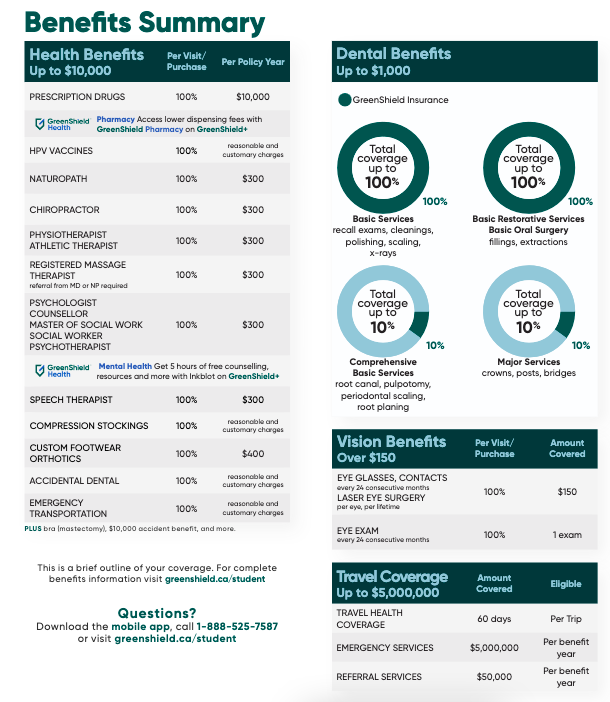
On campus, MUNSU is responsible for the Attic, the Breezeway, 93.5 CHMR FM, and Health and Dental Insurance through GreenShield. They also provide services for ratified Clubs and Societies.

MUNSU also organizes the annual Welcome Week, Winter Carnival, and student advocacy events, including the Day of Action protest. Because of all these contributions, MUNSU is critical in the lives of many undergraduate students in one way or another.

The elections come at a time when MUNSU is between a rock and a hard place financially. Their latest audit totals a deficit of over $200,000, making cuts necessary.

The problem hasn’t been deciding whether or not they need to make cuts; that much is known; the problem is deciding where to cut.

A recent motion to remove the Executive Director course reimbursements failed by just one vote.

The five executives each get one course fully covered by MUNSU every semester, which can be especially helpful for international students, who pay over three times more for courses than domestic students.

With many services beneficial to different facets of the student body, cuts are a difficult question to address. Due to these economic challenges, the next Executive Directors will likely have their work cut out for them and may need to make difficult decisions.

The deadline for applications was March 16th. Once nominations are released, voting will take place using paper ballots – not the Self-Service portal like previous years.

Nominations will be released on the 19th, and the election will take place from March 30-31.

The Muse will provide updates as the MUNSU election cycle progresses.

OPINION: ‘Only pussies destroy art’

0

*This article first appeared in The Muse’s 75th Anniversary Print Supplement magazine, published January 2026.

In the old science building, in a lesser-used hallway on the third floor, there’s a chalkboard. I walk by it most days.

The smooth green surface has never shown signs of use. I’ve wondered before why it was put there originally, and how long it has been since it became just another part of the wall.

I was with friends one morning when I noticed something out of place — a small pink heart drawn on the board. Two pieces of chalk were sitting on the edge, just begging to be used.

We didn’t hesitate.

In only a couple minutes, we filled the board with drawings. Nothing elaborate, just some doodles.

It was nostalgic, but also a reminder that amidst the stress-filled monotony of academic life, this campus exists to be occupied by its community.

Kate McKnight (The Muse)

We put the chalk back in hopes that other students would add to our creations. If the board filled up and our drawings were erased to make room for something new, that would be okay.

It wasn’t the drawings themselves we were attached to, but the space for casual creation. It was a bid for connection. an acknowledgement that we are not just student numbers, GPAs, or passing figures, but that we all exist here as people.

But no more than 90 minutes later, the board was wiped completely clean and the chalk was gone. Not even a smudge or grain remained.

People create. No matter where, when, or how, people find ways to leave clues of their existence — something to say “I was here” — a sticker on a doorframe, a signature on a whiteboard, a doodle on the corner of a desk; it doesn’t matter if they’re given the space or the permission to do it, it’ll happen anyway, and it’s vital that it does.

Without these smaller forms of memory — these informal, day-to-day histories — what remains of student life? Of student culture? Yearbooks, award plaques, and newspapers reflect the academic lives of students, but what of their lives outside the classroom? Students are not the sum of their academic accomplishments.

Some students spend more time on campus than they do in their own homes, and their campus should welcome them as people, not just as students.

Kate McKnight (The Muse)

Despite efforts from Facilities Management to contain it, the QEII study rooms are covered with confessions, grudges, and drawings.

Many of the drawings are quite explicit, and I’ve found myself trying to settle on a video call angle where nothing unprofessional makes an unwanted cameo.

That being said, there’s a timeless culture of comedy that’s undeniable in these drawings and writings.

It’s a bizarre form of history, and one that cannot be dated. There’s no telling how long “ur mudder” has been written on the study room wall, or when the list of song recommendations began in the bathroom stalls.

In a December 1969 issue of The Muse, an anonymous author called these writings and drawings “wall pollution” and opined that students must “take the responsibility of protecting the washroom walls.”

It’s not an uncommon sentiment, and it’s reflected in the way facilities are managed on campus: bathroom stalls are painted to cover conversations between students, corkboards are exchanged for clipboards, incapable of displaying more than one thing at a time; and chalkboards are not only erased, but wiped clean so no one notices any traces at all.

image
Kate McKnight (The Muse)

But in January 1970, in The Muse’s very next issue, a response by S. Phipps read: “For God’s sake, don’t supply the janitors with iron brushes! There is nothing drearier than an undecorated lavatory. The decorated lavatory, on the other hand, is a haven… the possibilities are limitless.”

And fifty-five years later, I’m writing to argue the same.

Some things are meant to be fleeting — the erasing of a chalkboard is not the problem — it’s the refusal to allow self-expression. Why not let people draw on a chalkboard that’s no longer in use? Why not give people the space to leave proof of their existence?

It’s so much more than small acts of vandalism; it’s the memory of student life from below.

image
Kate McKnight (The Muse)

Opinion: Now is the perfect time for CANZUK

0

On February 20th, the Supreme Court of the United States struck down President Donald Trump’s tariffs, reigniting the debate for many in the United States. However, for countries these tariffs affect, such as Canada, the conversation never stopped. The United States’ tariffs have dominated every aspect of our political life.

Canada’s response hasn’t been bad; we’ve seen a willingness to bring down interprovincial trade barriers and shift our trade to other nations, reducing our trade reliance on America—but if we want a true game-changing shift, CANZUK is the answer.

CANZUK is a proposed economic and military alliance between Canada, Australia, New Zealand and the United Kingdom, which would see a massive reduction or elimination of tariffs between the countries. CANZUK International—a nonprofit organization that advocates for CANZUK—described it as “a comprehensive multi-lateral free trade agreement between Canada, Australia, New Zealand and the United Kingdom,” and a harmonization of regulation. 

CANZUK would also mean full freedom of movement between citizens of CANZUK countries, resulting in visa-free travel and work. Similar to the long-existing Trans-Tasman Travel Arrangement currently in place between Australia and New Zealand. The plan would also include deeper integration and cooperation of the countries’ military alliance.

CANZUK would have a positive effect on all four of these nations’ economies at any time in history, so just imagine the effects in the face of this new age of an unreliable United States as a partner on the world stage.

This isn’t just a fantasy; the support for CANZUK is there.

CANZUK International’s polling shows large support for CANZUK across all four potential member nations, with support for the program at 76% in Canada, 73% in Australia, 82% in New Zealand and 68% in the United Kingdom.

On top of that, the will from those in government in our country seems to be there with CANZUK. The program was officially endorsed by Canada’s Conservative Party in past elections and Conservative Leader Pierre Poilievre in his most recent trip to London. “The time has come for a new partnership among Canada, the United Kingdom, Australia, and New Zealand—a modern CANZUK—a pact to open our economies further, remove barriers, recognize credentials, expand skilled labour mobility, and deepen capital markets,” said Poilievre.

Support for CANZUK was also signalled by Prime Minister Mark Carney in the Liberal leadership debate back in 2025, and although not an official endorsement, the Prime Minister did highlight the need for middle powers to come together during his speech at the World Economic Forum in Davos.

The establishment of CANZUK policies isn’t unreasonable, with CANZUK being similar in scope to the European Economic Community (one of the main predecessor organizations to the European Union), as well as the freedom of movement already partially in place with the previously mentioned Trans-Tasman Travel Arrangement between Australia and New Zealand.

The idea of CANZUK isn’t so far-fetched, especially with an increasingly unreliable United States.

So with all that in mind, yes, the efforts we have made in the face of Trump’s tariffs have been positive, but if the alliance between Canada and the United States is truly over—as Prime Minister Carney has put it—and we want to actually distance our trade from the United States, now is the perfect time for CANZUK.