MUNL hosted its first “Whale Of A Day” event at the Core Science Facility last Saturday (May 14th, 2022), and it’s safe to say- its attendees had a whale of a time.
Memorial marketed this event as a day of family fun and education under the blue whale skeleton, 1300 people were drawn as they visited 24 various exhibits related to ocean sciences.
Photo Credit: Jenna Reid
Lisa Browne, Vice-President, Advancement and External Relations at Memorial University, provided a statement for the Muse:
We are so thrilled with the turnout for Whale of a Day, which was the launch of our year celebrating all things oceans at Memorial called The Big Splash. Twenty-four exhibitors shared their rich knowledge and expertise about oceans with 1300 visitors. This event was consistent with our strategic pillars Commitment to Communities, Dynamic Research and Proactive Programs. We welcomed people into a new building demonstrating research and programs in a hands-on, meaningful way. In ten years time, I hope a new undergraduate student walks through the Core Science Facility and remembers their visit to a Whale of a Day!”
Lisa Browne, Vice-President, Advancement and External Relations at Memorial University
Exhibit Highlight
One exhibit of particular interest was Andronowski Labs which caught the attention of many children.
Dr. Andronowski’s research team prepared a bone demonstration that compared how the bones of various mammals (e.gwhale, moose, seals, caribou, lynx, etc.) from Newfoundland and Labrador compared to each other (and to humans).
Their presentation further provides attendees with interactive stations that illustrate skeletal differences between human and other animal bones, focusing on those that are similar between species (e.g., femur).
They also taught the public about certain bony features that help discern who an individual might have been during life using forensic anthropological methods (e.g., height, age, sex, etc.) and how they can locate and test some of these features on themselves.
Pictures
Entrance to the event (photo credit: Jenna Reid)Memorial University’s Blue Whale Skeleton (Photo credit: Jenna Reid) Crowds gathered at MUN Core Science Facility (Photo Credit: Jenna Reid)Whale Baleen- learn more: https://uk.whales.org/whales-dolphins/what-is-baleen/ (Photo Credit: Jenna Reid)Ocean Science Centre Touch Tanks (Photo Credit: Jenna Reid)Ocean Science Centre (Photo Credit: Jenna Reid)Photo Credit: Jenna ReidPhoto Credit: Jenna ReidPhoto Credit: Jenna ReidPhoto Credit: Jenna Reid
Earth Day is an annual event that takes place on April 22th. Earth Day is a celebration of mother nature and often leads to corporations and governments promising they can do better.
The annual event was first celebrated in 1970, when Gaylord Nelson, a senator from Wisconsin, decided to hold rallies which were dedicated to raising awareness of environmental issues. Nelson specifically raised awareness among the general public by shining a light on pollution. The senator initially created the idea for Earth Day in 1969 and was heavily influenced by the anti-Vietnam War sit-ins that took place on college campuses in the US. The sit-ins highlighted the success of rallies, and Nelson realized he could draw attention to a cause he held dear to his heart. He hoped that by attracting the interest of the general public, eventually, the federal government would take note that the planet was in a fragile condition.
Nelson encouraged the entire nation to participate and was pleasantly surprised when an astounding 20 million demonstrators participated. Nelson stated, “We had neither the time nor resources to organize 20 million demonstrators and the thousands of schools and local communities that participated. That was the remarkable thing about Earth Day. It organized itself.” The US government took note, and by the end of 1970, it established the Environmental Protection Agency, which specializes in matters regarding environmental protection. The US government followed through on its promises and, throughout the 1970s, ratified laws regarding environmental issues such as the ‘Clean Air Act’, the ‘Water Quality Improvement Act’, and the ‘Endangered Species Act.’ While Earth Day had a clear impact in the US, its global impact is undeniable. By 1990, more than 140 countries celebrated Earth Day. In Canada, Earth Day was first celebrated in 1990 and led to the formation of Earth Day Canada(EDC), a national charity dedicated to celebrating Earth Day. Earth Day has been praised for bringing greater attention to environmental issues and enticing governments to act.
While the impact of Earth Day is undeniable, in recent years, citizens have pointed out the hypocrisy of giant corporations and governments who make a big deal about celebrating Earth Day but act in an environmentally harmful manner. For example, Apple posted about their ‘Earth Day lessons.’ Yet it leaves a bad taste in one’s mouth when Apple claims to care about the environment when its materials from obsolete electronics end up in landfills and cannot be fully recycled. Apple has also been criticized for making it more difficult to update and repair older versions of its electronics, so that consumers feel pressured to buy the latest version, leading to more waste. In April, Canada’s federal environmental minister approved a controversial oil field project in the Bay du Nord, off the coast of Newfoundland. While companies and governments should take steps to mitigate their carbon footprint, it should be a conscious effort and not just a PR stunt to improve the public perception of their brand.
Photo Credit: sekulicn, via Getty Images
Companies have also been accused of ‘greenwashing’- claiming they are more environmentally friendly than they are. In particular, fast fashion brands such as H&M and Zara have been called out for greenwashing. Greta Thunberg, a Swedish environmental activist, called out world leaders in a viral speech saying, “Build back better, blah blah blah, green economy, blah blah blah, net zero by 2050, blah blah blah, climate neutral, blah blah blah. This is all we hear from our so-called leaders. Words. Words that sound great, but so far have led to no action.”
Photo credit: Greta Thunberg, via Twitter
It is clear that organizations and governments need to step up. We all need to do better. Below are some steps on how we can all pitch in.
• Turn off the lights when you leave the room and unplug your electronics. Shutting down a computer when it’s not in use cuts the energy consumption by 85 percent
• Limit water usage through simple steps like shorter showers and turning off the faucet when you brush your teeth.
• Shop wisely and responsibly: buy less plastic, use reusable shopping bags, and thrift more.
While it is clear we have a long way to go, little by little adds up to a lot, as Jillian Michaels stated.
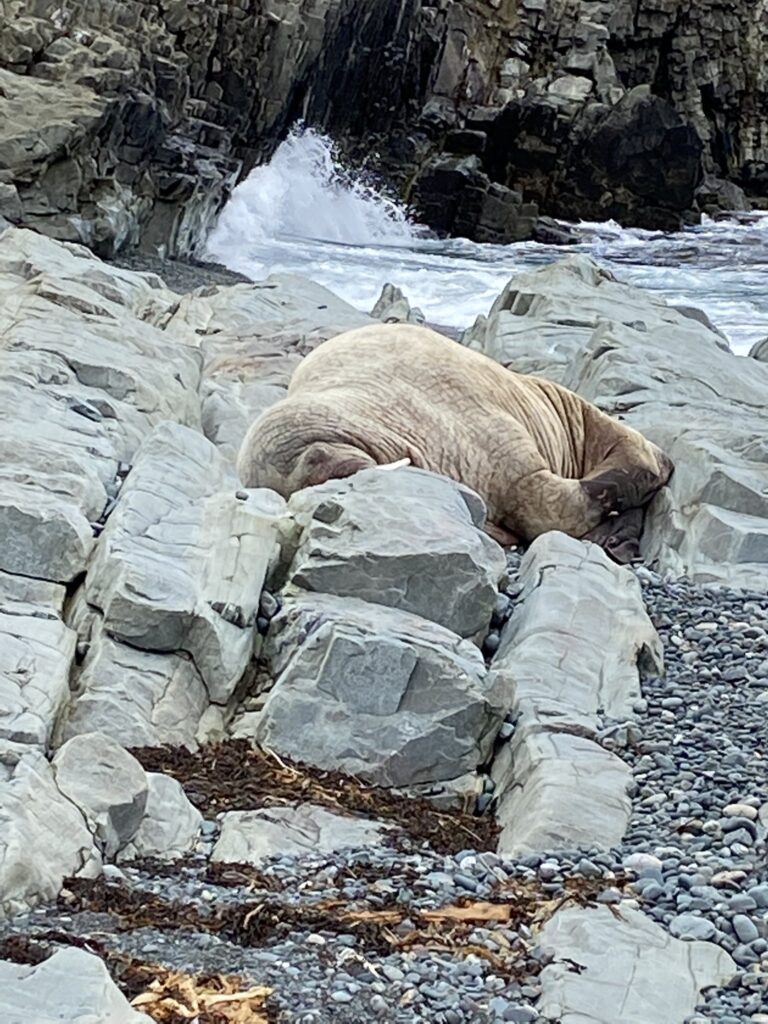
Today, Middle Cove Beach had a special guest (May 5th, 2022).
In the afternoon, a walrus was spotted napping on the rocks.
Photo Credit: Andrea Peddle (@AndreainTorbay via Twitter)
A wildlife officer on sight said, “this is typical of walruses; it just so happened this one decided to pick one of the most popular beaches in the city.”
As word got out on social media, large crowds gathered to observe the walrus and capture the moment.
Photo Credit: Jenna Reid
Although harmlessly sleeping, Edgewise Environmental issued a PSA via Twitter reminding Newfoundlanders to keep their distance for the safety of themselves and the animal.
A Local PSA
There is a walrus on Middle Cove Beach that has attracted quite a crowd. While we always promote curiosity and education please give LOTS and LOTS of space. A selfie is never worth the potential harm to yourself or stress to the animal.#marinemammals#walrus#nlpic.twitter.com/uodZd13wl9
— EDGEWISE Environmental (@edgewiseNL) May 7, 2022
Wildlife officers are on sight, issuing reminders to stay back.
There has been no word on whether or not the walrus is still there.
South Asians are one of the most overlooked minorities in mainstream media. South Asia is a vast region. It consists of the following nations: Afghanistan, Pakistan, India, Nepal, Bhutan, Bangladesh, the Maldives and Sri Lanka. However, South Asians are exhausted from seeing a stereotypical version of themselves on screen. Why doesn’t the mainstream media consider all the rich cultures instead of playing out the same, worn-out character?
As a South Asian female myself, it is exhausting to see the typical South Asian on screen. Typically the role includes an over-exaggerated accent while leaning into nerdy stereotypes. In addition, there is often an abundance of inaccuracies and misconceptions surrounding our culture.
These are all harmful to South Asian culture and lead to discrimination due to inaccurate preconceptions. For example, Apu from the Simpsons is a mere caricature and what’s even more insulting is that he is voiced by a non-South Asian. All of this made Bridgerton feel like a breath of fresh air.
When I read that the two leading ladies of season two of Bridgerton would be played by Indian actresses, I was interested yet apprehensive. Bridgerton is a record-breaking Netflix show about eight siblings known as Bridgerton. They are looking for love during the regency period. Was this just another show that would promise diversity but disappoint our culture? South Asian women are never represented as the leading lady or the focus of love stories. They are often supporting characters who have no sustenance and are tokenized simply for diversity.
Photo credit: Liam Daniels (via Netflix)
When I started to watch the show, I cautioned myself not to get my hopes too high. Instead, I was pleasantly surprised. The Sharma sisters, Edwina (Charithra Chandran) and Kate (Simone Ashley), set themselves miles apart from any other South Asian character. It was refreshing to see that their entire storyline wasn’t solely based on their heritage, yet it wasn’t brushed over either. Instead, the viewer sees glimpses of their culture when they call each other ‘Didi’ (which means sister). As well as through the performance in a typical Indian pre-wedding ceremony known as the Haldi ceremony. It was touching that the sisters were both leading ladies in a romance story. Edwina even bestowed the title of ‘Diamond, which meant the Queen singled her out for her charm and beauty.
As South Asians, we constantly see what the world expects and thinks of us on screen, but we are seldom the main characters in any story, let alone a love story.
Photo credit: Liam Daniel (via Netflix)
Season two of Bridgerton was viewed for a staggering 627.11 million hours. The show successfully maintained its status as the most-watched English-language series. Mainstream media must take notes from Bridgerton. The show took a monumental step by showing complex, realistic South Asian women. It was long overdue, but regardless it’s refreshing to see. Bridgerton was empowering to South Asian females who were told they could never be the main character.
History was made- let’s make sure it wasn’t a one-time event.
Job creation, environmental impacts, and student response.
The Federal Government of Canada approved the controversial offshore oil project on April 6th – Equinor’s Bay Du Nord project.
This occurred after Federal environment minister Steven Guilbeault approved it after reviewing the project’s impact assessment and determining that it would not cause significant environmental effects.
However, many activists still argue against this decision highlighting the recent IPCC Assessment Report that emphasizes the following regarding climate change:
The world is facing unavoidable climate hazards over the next two decades, with global warming of 1.5 degrees Celsius – significantly increasing the risk to society.
Urgent action is required to deal with the increasing risks, including increased heatwaves, droughts, floods and mass mortalities of animal and plant species.
The window for action against climate change is narrowing.
Greenhouse gas emissions need to decline rapidly to achieve climate-resilient development prospects.
IPCC asserts that we have options in all sectors, including energy, to halve emissions by 2030. Still, it will require major transitions in the energy sector, including “substantial reduction in fossil fuel use, widespread electrification, improved energy efficiency and use of alternative fuels.” Furthermore, limiting warming to 1.5 degrees Celsius will require greenhouse gas emissions to peak before 2025 at the LATEST, emphasizing the urgency to reduce fossil fuel usage immediately.
The project remains controversial because it is supposed to begin pumping oil as early as 2028, three years after the IPCC recommends greenhouse emissions should peak.
In an interview with Michael Connors, Federal Minister of Labour, Seamus O’Regan argued that the Bay Du Nord project is essential for the government’s emission reduction plan.
He highlighted that Bay Du Nord is a “lower-emitting source of oil” that will generate thousands of jobs and revenue and keep energy affordable.
This was in response to environmentalists who highlighted the significance of downstream emissions. These emissions are emitted after the oil leaves the company’s control.
Minister O’Regan stated that we could not take an “obstructionist” approach to reduce emissions but rather must be practical. Furthermore, he emphasizes that energy must be affordable, making large energy projects necessary. Equnior is committed to reaching net zero.
In an interview with The Current, scholar and author Angela Carter emphasized that we are in an urgent situation.
The government wants to add more oil, which is not part of a green transition because it will lead us in the opposite direction. She highlighted that “we have heard this before, that jobs are promised but never become a reality.”
She also stresses that oil was supposed to bring us property in its origins. Instead, it has generated very precarious employment and few jobs, as the oil sector jobs only represent 1.4% of total employment.
Furthermore, tradespeople want a just transition and an end to the empty promises and precarity of oil. Finally, the notion that Bay Du Nord offers “responsible low carbon oil” is false because even if it is lower-emitting, it will still generate emissions that there is no room for, given the state of the changing climate.
Responses from Engineering Students
Engineering and the petroleum sector are a significant part of Memorial University.
The Bay Du Nord project is significant to Memorial University. It could provide several job opportunities to Memorial University students. However, the environmental impacts are well-known amongst MUN students. This is evident with the number of Climate strikes that have taken place on campus with Fridays For Future, NL: where students and activists demanded divestment from carbon and a transition to sustainability.
(Photo from VOCM https://vocm.com/2019/09/24/mun-throws-support-behind-global-climate-strike-as-world-watches-un-emergency-summit/0)
I interviewed three engineering students at Memorial University to find out how engineering students are responding to the approval of the Bay Du Nord project.
Note: The respondents will remain anonymous to avoid retaliation from the Engineering faculty.
Abby: What do you know about the Bay Du Nord offshore oil project?
Respondent 1:I have a pretty good understanding of the Bay du Nord project. I have gotten exposure to that industry during my work terms and from family members in the industry. The Bay du Nord project will be a new floating, production, storage and offloading (FPSO) facility offshore Newfoundland that will be connected to groups of wells (called drill centres) using subsea umbilicals. Similar projects exist offshore already with the SeaRose and Terra Nova FPSOs. However, Bay du Nord provides a unique challenge as it will be a deepwater project, with water depths of over 1km below the waves.
Respondent 2:I learned about this project from my class group chat when we were talking about work terms and how they will soon be hiring in the future. This prompted me to look it up on the internet and learn about this offshore project located 500 km from our island; that’s so close!
Respondent 3:I’ve done a fair bit of research on this project. I know it’s an upcoming, recently federally approved offshore oil project that plans to extract up to one billion barrels of crude oil from the seabed about 500km northeast of St. John’s. It was recently approved by the Federal Environment Minister but has been met with backlash and controversy as scientists, environmentalists, and Indigenous activists alike have concerns about the potential environmental impacts of this project.
Abby: Do you support the project, or do you think the government should reconsider? Why?
Respondent 1: I have thought very long and hard about this question. I do support this project; however, I believe that Newfoundlanders and Labradorians need to look at it with a more balanced approach. In my opinion, the Bay du Nord project is a huge grey area. One cannot ignore the financial implications of rejecting it, nor can one ignore the environmental impact that it will cause. I support this project on several different grounds:
1. we have a good pool of resources already in existence in the province. There is excellent technical knowledge present in Newfoundland from our 20+ years of experience with the offshore – building another project is an easy lay-up in terms of risk to the public. It’s highly unlikely that Bay du Nord will lead to a financial catastrophe as Muskrat Falls did.
2. this province does not (yet) have a viable substitution industry to replace the offshore industry. Changing the basis of a provincial economy is a very big ship to turn. I feel we have made immense progress in growing other industries to diversify (see the tech, mining, and tourism industries). However, they are not quite where they need to be for a Bay du Nord rejection to make sense. I don’t see a need for us to cut off our noses to spite our face by rejecting billions of dollars of potential revenues. We can balance the environmental risk through the strict regulatory oversight that the C-NLOEB provides.
Respondent 2: I am neutral on this. Personally, I did not support the oil and gas industry here. However, my view has changed over time as the energy sector is still expanding. The projects are very interesting to work on, especially. Knowing the economy of NL, which gets a big boost from the oil, I don’t see the government not being fully in support of this decision to reconsider. However, proper regulations and imposing fines for exceeding a certain amount of emissions would be favourable. That would be one way I can support this project. I think Newfoundland needs to be less dependency on the oil sector in the future, as this sector is volatile. I lost a co-op to an oil company in 2020, when the pandemic hit, as the oil demand decreased drastically. We need more alternative local projects, which can possibly direct the dependency away from big oil projects.
Respondent 3:I am completely opposed to this project. The government should absolutely reconsider for a multitude of reasons, including environmental preservation, impact on Indigenous communities, and our province’s economic stability as oil & gas become less and less feasible as a means of creating energy. It frustrates me, especially because Indigenous groups and leaders have spoken out against this project and the federal and provincial governments despite presenting as committed to reconciliation.
Abby: Do you think the project will generate jobs for Memorial students? How?
Respondent 1:Historically, the offshore oil and gas industry has been a large employer of students in this province – I myself am on a work term with one of the offshore operators now. This is good – oil and gas work terms can provide multi-disciplinary exposure to all different types of engineering. I feel that Bay du Nord will provide us engineering students with good hands-on engineering experience. However, I’m wary of students doing ALL of their work terms in industry-specific roles. In my role in my work term, I am in a project management division, learning skills that can be applied to any industry. However, a student that does a work term in drilling operations may not be able to transfer those skills when the oil industry tapers off.
Respondent 2: Absolutely. Oil companies hire a lot of students because the work we as students contribute is so valuable to companies. Students will get hired on each team because a project like this will have many teams come together and work to execute.
Respondent 3:I think this project will generate jobs for engineering students, as we know that engineers are needed in oil & gas operations – many of the work terms available to us are oil and gas-based or related to the industry in some way. However, as the Environment Minister himself has stated, the project won’t start producing oil until 2028, long after any current Memorial engineering student is on track to graduate. While there may be jobs for engineers on work term placements, I worry about the long-term feasibility of this project as more and more industries move away from oil & gas as an energy source.
Abby: Do you think the project will boost the economy and benefit memorial students? How?
Respondent 1: The economic benefits of this project are numerous. I think it will be a well-needed boost to the provincial treasury and people’s pockets. A population that can sustain itself through good-paying jobs is more confident. I think this province needs a confidence boost more than anything. More money in the economy doesn’t just benefit engineering students or business students. It means that people will have more spending money to go buy things they like, like a night out for dinner, or maybe some artwork, or a show, or saving up for a home – money talks!
Respondent 2: From my experience, it will definitely boost the co-op scene at Memorial, as companies hire business and engineering students (both of which have a co-op program at MUN). I think there need to be more jobs here in NL to help younger people stay. I personally moved out of the province for my last few work terms, and if I continued working there, I would have to leave NL permanently, a place which I call home.
Respondent 3:The project may indeed boost the economy in the short term, but what seems to be the biggest economic concern is that oil & gas is a clearly dying industry, and while it will technically be needed in the coming decades as we de-transition from fossil fuels, it is worrisome that the provincial government is seemingly not prioritizing growing industries, such as renewable energy and tech, in order to attempt to reap more immediate benefits in natural resource extraction. If we don’t invest in growing industries, we will be left behind economically by the rest of the world.
Abby: Climate activists and environmentalists disagree with the project because of increasing Green House Gas emissions and climate change? What do you think about this?
Respondent 1: The environmental impacts of this project cannot and should not be ignored. There is a tendency amongst politicians and industry pundits to tout that it’s “low carbon oil.” This is only true in what’s known as the upstream (i.e. how the oil is extracted and shipped for export). Emissions are the same due to Downstream, or what happens to the oil when it reaches the market. Gasoline refined from NL oil will produce the same carbon dioxide as gasoline refined from dirtier Saudi or Albertan oil. It’s not an acceptable cop-out, and we have to be honest with ourselves and admit that this project will, without a doubt, contribute to rising greenhouse gas emissions globally. However, considering all factors, it’s a risk and a consequence I believe we must accept – our oil can be used to displace oil from Russia, Saudi Arabia, and even American or Albertan oil. So long as these other places increase and continue to produce, I see no reason for us to back out now. We can simply lead the way and show them how a just transition can be done. A just transition does not mean shutting down Bay du Nord and other projects in the next 5 years. I note a concerning trend in those vehemently opposed to Bay du Nord – they have no skin in the game. They themselves will not be impacted by this decision either way. I’d urge everyone to *really* have a long think about this – to me, it’s about balancing economic consequences with environmental, and at this stage in the game, I believe we must focus on economics.
Respondent 2:And I totally understand their viewpoint. This project would mean that natural resources will get used up and emit greenhouse gases as a result. The oil and gas sector is the largest source of greenhouse gas emissions in Canada, bordering about 30% of total emissions (a very big number!). I think they are right, as it contributes massively to climate change! Without alternative industries creating jobs/projects in Newfoundland, it will be very hard to keep younger people in the province.
Respondent 3: It makes sense that climate activists and environmentalists disagree with this project because it has been poorly planned out, according to scientists. Scientists have expressed concern that oil & gas lobbyists have been interfering with scientific advice and practices to get the project approved and refusing to address genuine scientific concerns about environmental impact. Indigenous groups have expressed concern that they were not consulted early enough in the review process. I worry that by making reckless decisions for short-term gain, the government is making it more and more likely that our province will have to deal with greater economic difficulties in the coming decades. This project is clearly a dangerous one for the government to have approved. I urge them to reconsider it for the well-being of students and all young people in Newfoundland & Labrador.
Student response to the project is mixed, as the jobs and revenue that could be generated by the project are largely needed right now. However, students understand the devastating environmental consequences and the downward trend of the oil and gas industry. Students want the government to re-think these concerns, as students are focused on their career and their futures.
Recently, the provincial government has removed its moratorium on onshore wind energy production that has been in place since 2007. Several companies in the province have shown interest in developing wind farms, increasing interest in clean energy projects. Renewable energy projects could be considered an alternative route for job creation in the province, as research in the US indicates that non-fossil fuel technologies create more jobs than coal or natural gas. The wind industry generates jobs in many skilled and professional sectors, including engineers.
Therefore, the government must consider research on the environmental impacts of continued fossil fuel extraction and the economic benefits of clean energy projects. And the government must consider the interests of Memorial students who wish to have long-lasting careers in the province and have a clean environment for generations to come.
BookTok is a rising book community on Tiktok in which readers share their book recommendations and reviews and their reactions to books using the hashtag: #booktok.
BookTok has been praised for renewing interest in reading, especially among Gen Z’s and younger millennials.
The BookTok community was formed in 2020 after a creator with the handle @caitsbooks created a video using the hashtag, which led to a snowball effect. Videos tagged with the hashtag #booktok have received 50.8 billion views as of April 2022.
Not only did the video inspire fellow readers, it piqued the interest of Tiktok’s 1 billion monthly users. It even led to book stores hopping on the trend. For example, many retailers such as Barnes and Noble include booktok favourites lists on their websites. These videos are short and engaging, inspiring many to read as a hobby.
Photo credit: Tali Arbel via Associated Press
While reading, communities existed beforehand on social media platforms such as Instagram (where the community is known as ‘Bookstagram’) and Youtube (‘Booktube’).
There has been a growthin the number of content creators who focus on content surrounding reading and books. After years of those in the book industry dreading a looming decline in print sales due to a lack of interest and the expected transition to e-books, there was a massive surge in book sales.
In 2021, readers purchased over 825 million print books in the USA (an annual increase of 9%), which created a new record and is the highest since records began in 2004. While the pandemic is also a factor that should be considered, since people had more leisurely time, Booktok’s impact cannot be denied. Industry experts have forecasted that physical sales of books will also increase in 2022.
It is clear that BookTok is here to stay and is just getting started.
Below is an interview with Julia Margaret, a BookTok content creator and a fourth-year MUN student. She is an aspiring author and is pursuing a Bachelor of Arts with a major in English.
Photo credit: @booklovingredhead, from Instagram
What inspired you to start reading? And how has BookTok impacted your reading habits?
Reading has always been a big part of my life. What inspired me to start reading was that I needed a place to escape reality, and books were that escape for me. BookTok has impacted my reading habits in a way. My reading habits have slowed a lot since I started BookTok because I always create content. Creating content does get in the way of reading sometimes, but I would not change it for the world.
When did you start creating BookTok content, and what influenced you?
I’m still new to BookTok, I’ve only been posting on BookTok for about a year, but I have been a book content creator since August 2018. I started on Bookstagram, and this last year I also started a BookTok account. I was influenced to join BookTok because it is another way to express my love for books, and I saw it as another way to help support the authors I love to read. I was also influenced to join BookTok, as BookTok is making waves in the book world, and aspiring authors’ lives are being changed because of BookTok. As an aspiring author, I felt it was important for me to join to help get my name out there.
BookTok has led to the revival of reading, especially among Gen Z’s. What are some advantages of BookTok? And what are the disadvantages, if any?
BookTok has led to the revival of reading, especially among Gen Z’s, that’s for sure. I’m speaking from a romance reader’s point of view, but I would say an advantage of BookTok is that it popularizes or normalizes reading romance. This is such a breakthrough as women were always shamed for reading romance. Still, I feel like, with the growth of BookTok, women are supporting and empowering each other to read what they love. Of course, there are downsides to BookTok as well. The biggest disadvantage to BookTok is that people are quick to jump on the trends that teardown authors and readers who like books that contain darker content which is unfortunate.
What do you think the future of BookTok looks like?
I think the future of BookTok is going to be huge. BookTok is still small as of rightnow, and you can easily see how it is affecting the book industry. BookTok can literally make or break an author right now, so I can only imagine the power it will hold in a few years. I also think that BookTok creators will become the number one marketing strategy for publishing companies and self-publishing authors in the coming years. I can also see being a BookTok creator becoming a full-time job for many people, which is amazing. As BookTok continues to grow, I think we will see more people start to pick up books.
And lastly, for our fellow readers, what are three books everyone should read?
I’m a Romance Reader, so I must recommend romance books. These are all adult romances, so they do contain explicit content. First up is Simmer Down by Sarah Smith, a lighthearted romance book perfect for summer. Hollow Heathens by Nicole Fiorina is a witchy read that involves a secret town and a cursed hero. I also must recommend Distorted by Nyla K. This is an extremely dark MM romance, so I recommend checking for trigger warnings before reading this, but it is seriously one of the best books I’ve ever read. I just love it so much. You can find all these amazing books on Amazon, as they are self-publishing authors.
Canada’s Summer Job Bank is now open on the government website.
The winter 2022 semester concluded on April 23rd, which means many students will be in search of summer employment.
As of April 22nd, 2022, Canada’s Summer Job Bank has been opened and is targeted at youth aged 15-30.
There are thousands of jobs available across Canada and over 2,000 jobs available in Newfoundland and Labrador that will last a minimum duration of 6-weeks with varying wages.
There are opportunities for youth of all skill levels, interests, and levels of education, whether one is in high school, post-secondary, or not.
Full-time and part-time positions are available, and new jobs will be added regularly.
Note: You must have a valid SIN (Social Insurance Number) to be legally entitled to work in Canada.
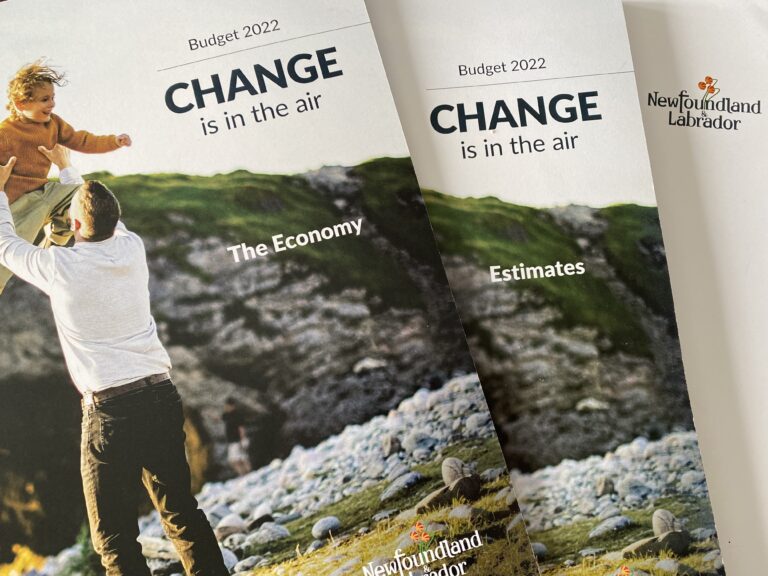
On April 7th, 2022, the Government of Newfoundland and Labrador released Budget 2022, giving the public insight into where government money will be going during this fiscal year.
The theme of Budget 2022? Change is in the air with a focus on resilience- as Minister Sioban Coady states, “Newfoundlanders and Labradorians are born with it.”
However, for Memorial University, Budget 2022 included significant cuts and unexpected changes, which can spark questions regarding the university’s resilience in the coming years.
Funding
The Government of Newfoundland announced Memorial would receive a Core Operating Grant of $305.1M and $53.4M for the Faculty of Medicine in Budget 2022.
This is a decrease of $13.6M from Budget 2021- which is a part of the Liberal government’s plan to cut $68.4 million from Memorial’s budget over five years.
President Vianne Timmons describes Budget 2022 as “tough” for the university.
“For the university it is going to be a tough budget. No inflationary costs were in there but we were prepared for it. The government indicated the cuts we would be receiving”.
Memorial University President Vianne Timmons
In addition to the core operating grant, Memorial will receive $60.7M, phased out over five years, for the annual tuition offset funding: confirming the defunding of the tuition freeze.
Tuition Relief Grant Program
Since June 2021, change has been in the air at Memorial as President Vianne Timmons announced the end of the tuition freeze, imposing tuition increases over the next five years.
Photo Credit: CFS NL (Via CFS NL Website)
While this announcement has not been received well among parts of the student body and MUNSU, the Government of Newfoundland has announced its support for provincial students impacted by Memorial University’s tuition increases by advancing a Tuition Relief Grant Program
This program will provide eligible students with non-repayable grants of up to $3450 per academic year for any Canadian institution if one is a permanent resident of Newfoundland.
Out of province students are encouraged to look into their own province’s tuition relief programs.
However, President Vianne Timmons emphasizes, “our tuition is the lowest in Atlantic Canada.”
International students are not currently eligible for this grant specifically. One must be a permanent resident of Newfoundland. However, consideration for Ukrainian refugees is under review.
When asked about support for international students, President Vianne Timmons claims: “MUNL is below the national average in terms of tuition, so that is what we have done”.
MUNSU Disheartened
Memorial University Students Union Director of External Affairs, Communications, and Research Hilary Hennessey claims Newfoundland’s Provincial government is undermining the importance of accessible and affordable education.
Students are preparing to have their educational aspirations pulled out from underneath them.
In response to a lack of support for international students regarding tuition increases, MUNSU claims to be very frustrated.
International students are viewed as cash cows because the tuition was so high for them, and with it increasing for them again, what message does that send? All students are not prioritized, and education is not a priority in the provincial government’s mind.
Hilary Hennessey (MUNSU Director of External Affairs, Communications, and Research)
Change for Newfoundland Nursing Programs
A fundamental change in Budget 2022 is the amalgamation of four regional health authorities. This means Newfoundland will no longer distinguish between Labrador, Grenfell, Central, and Eastern Health- instead, the province will fall under one regional healthcare authority.
This has sparked concern in the community.
However, for Memorial University students, this amalgamation marks an extensive change.
First, Budget 2022 will provide $3M to Memorial University Nursing to increase the number of nursing school seats by 25%. This will help meet healthcare demands in our province.
Nursing schools will fall under one authority following this increase under the amalgamation of healthcare authorities.
The health authority amalgamation will take 12-18 months. It will likely change the dynamic of this province’s nursing schools, despite each one having its “own flare which draws individuals in,” according to the Minister of Education, Tom Osborne.
New Faculty of Health?
Photo Credit: MUNL Website
The government announced it will also integrate medicine, nursing, pharmacy, and others to provide cross-functional support knowledge in Budget 2022.
Therefore, instead of having a faculty of nursing or pharmacy- it will be something like the faculty of health.
Little information was provided following this announcement, but it did surprise the university- causing many to question whether the government can even do that? What might be amalgamated next?
President Timmons said she was blindsided by the move.
Memorial University wasn’t consulted on the faculty merger, adding it “is the autonomy of the university to determine its schools and faculties, so that is clearly something that is very important to the senate and the university.”
President Vianne Timmons (via The Independent)
Deferred Maintenance
Last year’s budget allotted 13M towards Memorial’s infrastructure- desperately needed funding.
Tubes in the MUNnels labelled “ASBESTOS CONTAINING”
This year, there was nothing, despite the university’s crumbling infrastructure evident around St. John’s Campus.
For example, garbage cans collect what students call “Munnel Juice,” ceiling tiles have fallen to the floor, tarps are the “new” ceiling,” and pipes throughout the Munnels contain asbestos.
i love going memorial university were they r raising tuition while the ceiling r collapsing on us pic.twitter.com/5H2epijO98
President Vianne Timmons stated to The Muse that on March 25th, 2022, 100M will go towards deferred maintenance over the following number of years.
“There will be ongoing work to look at our deferred maintenance. But it is a challenge as we are one of the few universities in the country that doesn’t get targeted deferred maintenance monies from the government.”
President Vianne Timmons
As a result, deferred maintenance costs get taken from the core operating budget, so it is a challenge. Although, it is a challenge MUNL is committed to focusing on in the next few years.
What do you think of Budget 2022’s impact on Memorial University? Feel free to comment or email themusechief@gmail.com
The first annual Scientific Endeavors in Academia (SEA) interdisciplinary conference was organized by Dr. Jacqueline Blundell and the Faculty of Science at Memorial University on April 8th and 9th, 2022.
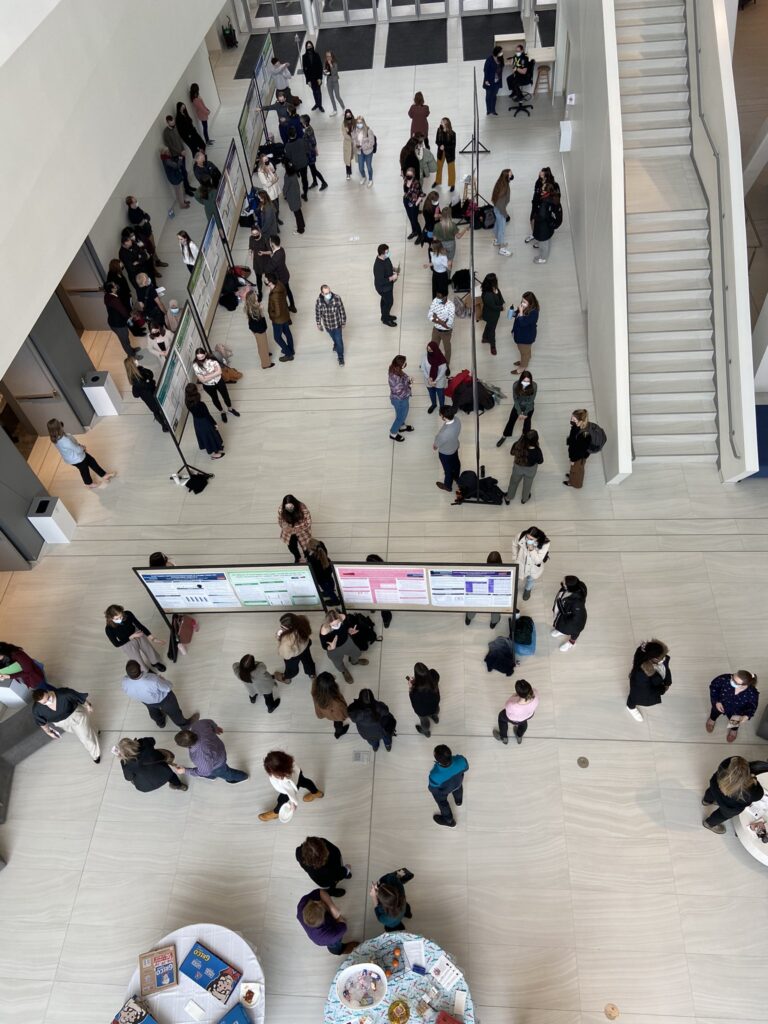
It comprised multiple events, including a series of talks and presentations at the Earth Sciences, Engineering and Chemistry-Physics buildings, poster sessions and socials at the new Core Science Facility, and a keynote speech by Dr. Janice Fitzgerald, the Chief Medical Officer of Health in the Government of Newfoundland and Labrador at the Core Science Facility.
Undergraduate and graduate students, postdoctoral fellows and faculty presented their research under three main themes—’ Climate Change & The Environment,’ ‘Health & Wellness,’ and ‘Innovation, Technology & Exploration.’ A committee of judges from the faculties of Biology, Chemistry, Biochemistry, Earth Sciences, Computer Sciences, Ocean Sciences, Mathematics and Statistics, Psychology and Sustainable Aquaculture assembled. These members adjudicated the 80 posters and 65 presentations at the conference and awarded prizes.
The interactive presentation sessions and the social events during the conference provided students and faculty members an excellent opportunity to learn about new research projects and connect with one another in person.
CMOH Speech Highlights
In a humorous and illuminating speech on Friday evening, Dr. Janice Fitzgerald spoke about her time as a student at Memorial, her journey in the field of public health and her responsibilities as Chief Medical Officer of Health in the Government of NL during a pandemic.
Dr. Fitzgerald completed her undergraduate degree in Biology at MUN in 1990 before attending the MUN School of Medicine and starting work as a family doctor in Springdale. She spoke about the challenges of working in rural medicine. This topic is especially relevant in NL today, with many communities in the province facing a shortage of doctors.
“Working as a rural family doctor is really hard work, and work that often doesn’t get enough credit. You’re often the only doctor in the community. You have to deal with whatever comes your way, often with minimum support from staff.”
Dr. Janice Fitzgerald (Newfoundland and Labrador’s Chief Medical Officer of Health)
As her work in medicine continued, Dr. Fitzgerald recognized deeper issues that were posing a risk to people’s health. “Keeping people healthy is really hard—not because of their genes, diet or lifestyle choices, but because of bigger, ubiquitous determinants of health, like childhood experiences, poverty, housing and education.” Her first experience with a pandemic was during the H1N1 crisis in 2009 while working in family medicine.
To further explore the deep-rooted factors that impact health: Dr. Fitzgerald pursued a Master’s degree in Public Health part-time at MUN in 2016. She then started at the Department of Health and Community Services in 2017.
“Public health is part of the health system that focuses on promoting health and preventing disease,” Dr. Fitzgerald stated.
“The purpose of public health is to achieve optimum health and well-being for all people in the province. We use policy and legislation; surveillance, preventative measures, health promotion and population health assessments to achieve this goal.” While working towards equitable health outcomes, Dr. Fitzgerald’s work involves identifying and rectifying disparities by working with partners in the government and the community.
“The results of public health can be seen in the outbreaks that did not happen, the traumatic injuries that did not occur and the drug overdoses that were avoided.”
Dr. Janice Fitzgerald (Newfoundland and Labrador’s Chief Medical Officer of Health)
Remarkably, she was appointed as the Chief Medical Officer of Health after two years, in September 2019– just 2 months before the first novel coronavirus case would appear.
The emergence of the COVID-19 pandemic brought new challenges to the Department of Health and Community Services. The staff had to rapidly adapt to the developing crisis. According to Dr. Fitzgerald, the pandemic also exposed gaps in our society– primarily related to healthcare access for marginalized communities– that must be addressed.
Photo Credit: @HCH_GovNL (via Twitter)
“The declaration of a public health emergency allowed us to respond to the pandemic quickly and efficiently,” she noted. She also spoke about the onerous responsibility of making and implementing policies that were distressing for many families, like the travel restrictions in NL.
Dr. Fitzgerald recalled learning about Labrador’s first case in the province just before a press briefing on Saturday, March 14, 2020. The team notified local Public Health in Labrador, traced contacts and rewrote speech notes for the briefing within the hour.
“Public fear was compounded by the lack of information,” Dr. Fitzgerald said, “We learnt so much information that went against what we previously knew. We had to put aside our preconceived notions and egos to respond to the information in front of us. Sometimes that meant changing advice, and sometimes it meant admitting that we didn’t have the answer.”
In expressing her appreciation for the Public Health team, Dr. Fitzgerald said, “There is nothing in the last two-plus years that I or anyone has asked them to do that they have not delivered. Their role in the response to COVID has been immeasurable and our province has been so fortunate to have them.”
COVID-19 has affected each individual person in various different ways. For example, the pandemic has forced loved ones to miss out on each other’s significant milestones; those immuno-compromised cannot safely leave their homes. COVID-19 caused disrupted the daily ‘normal’ life that we used to know.
For medical students (Nursing, Pharmacy, Medical School) at Memorial University, the effects of COVID-19 remain palpable; learning continues to be impacted.
For example, some students were forced to enter the workforce due to Newfoundland’s dire need for people in the medical field. Still, they cannot acquire the proper hands-on learning taught in previous years because of COVID rules and regulations.
Nursing students specifically have been significantly affected in their clinical learning.
Clinical is a hands-on learning experience that all nursing students must complete during their studies. Some clinical placements include working alongside experienced nurses in hospitals, long-term care, and other jobs they could be hired for after graduation. This type of learning is exceptionally crucial in the nursing field. However, COVID regulations have tainted this experience in the past two years.
During the Winter 2022 semester, COVID-19 outbreaks caused semesters to start online. This impacted MUNL Nursing and CNS (Centre of Nursing Studies) students as they could not begin their clinical training in January as they were supposed to. As of now, there are no plans to make up for this lost month.
Nursing students also missed out on an array of physical examinations (nose, mouth and throat; anything with cranial nerves related to the tongue), as COVID-19 regulations prohibited the performance of such exams due to mask mandates and social distancing rules.
Photo Credit: MUNL Faculty of Nursing (via MUNL Website)
Medical school students have been facing similar challenges to those in nursing.
Traditionally, the clerkship programs require students to shadow medical professionals in fields such as; Psychiatry, Obstetrics/Gynecology, Surgery, Pediatrics and Internal Medicine. However, COVID regulations partially compromised these clerkships.
Medical students have also had to compromise the social aspects of their studies. Typically, in the 4th year of Medical School, students get to pick electives in different schools across Canada and travel across Canada for the entire semester. This is no longer available because of travel restrictions.
Photo Credit: Robina Weermeijer (via Unsplash)
The loss of hands-on learning is crucial in the new process of medical education. However, the loss of social opportunity is unfortunate, as it highly contributes to one’s university experience- something relevant for everyone.
It is no shock to anyone to say that COVID regulations have affected the entirety of university education and social experience. Online learning has not been ideal for many people. Every student’s university experience has been compromised in some shape or form.
However, hands-on learning is an essential necessity for students in the medical field. It is challenging to teach and learn everything they need to know correctly.
Universities have done their best with COVID regulations to accommodate such rules and still teach students everything they need to know.
Still, it is hard not to wonder how this will affect the future of medical students and their real-life experience in the medical world. Although this hindering could be seen as a disadvantage to those students, it could also be an advantage.
Medical science is advancing with the COVID-19, and students within the medical field are watching and learning as it is changing:
“The COVID-19 epidemic may represent an enduring transformation in medicine with the advancement of telehealth, adaptive research protocols, and clinical trials with flexible approaches to achieve solutions. There are many examples whereby learning from difficult experiences (e.g., emergence of HIV, response to disasters) changed discovery, science, and patient care. Students and educators can help document and analyze the effects of current changes to learn and apply new principles and practices to the future. This is not only a time to contribute to the advancement of medical education in the setting of active curricular innovation and transformation. But it may be a seminal moment for many disciplines in medicine.”
(Suzanne Rose, MD; Medical Student Education in the Time of COVID-19)
Today’s students learning medicine are learning with the changing times, which can be seen as a massive advantage. COVID-19 rules and regulations have hindered some aspects of learning in the medical field. However, medical students are also witnessing the making of history.
Their education is essential as upcoming essential workers.