In anticipation of results, many students have been on edge, waiting to find out if there will be a strike. The uncertainty has been overwhelming, and many questions have been raised across campus about what this may mean for students, the potential timeline, and how this could impact our studies moving forward. While there is a lot of unease surrounding the possible halt of classes, the majority of students continue to stand in solidarity with MUNFA, no matter their decision.
On Jan 29th, MUNFA and MUNL reached an impasse in negotiations. After collectively bargaining for nearly a year, an agreement has yet to be reached, and so MUNFA has decided to take appropriate job action.
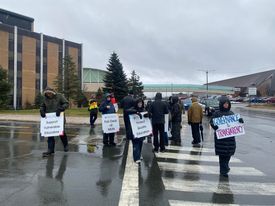
As of Jan 30th at 12:01am, MUNFA is officially going on strike. All courses led by MUNFA members will be paused, and picket lines will be formed in surrounding areas on campus. MUNFA members will no longer have access to their accounts and all social media platforms run by faculty members will be paused until further notice.
Arts and Admin. loop Education parking lot Elizabeth Ave. near residence (away from residents and child care) Westerland Road (Opposite field house) UC, next to the engineering building
MUNFA has already picked their picket captains, and many preparations have been well underway.
We had a great morning here at @MUNFaculty Strike HQ! Huge attendance for picket captain training, and so many students came over to design posters that they finished in under an hour! We are ready to win a #FairDealAtMUN ✊ pic.twitter.com/dTCpxeizgQ
Twitter has been flooded with messages of support from students and faculty using the hashtag #FairDealAtMUN. After a story call out was tweeted, many students took to writing messages of appreciation for the MUNFA members who have played major roles in their success at Memorial University.
Story call out: Memorial University students, what professors positively impacted you and why? Are you in solidarity with @MUNFaculty? @MemorialU@themusenl
In light of these events, it is important to keep in mind that all courses taught by Non-MUNFA members will continue; however, academic amnesty will now be discussed for students who do not wish to cross the picket lines. If you are unsure whether a course will continue visit the following website:
As of 27th January 2023, the internationalization office (IO) released information about the impact the Memorial University Faculty Association (MUNFA) strike may have on international students at MUNL.
The strike is scheduled to begin on 30th January 2023 at 12:01 am, and international students are only at significant risk if the strike lasts beyond 150 days.
This means issues regarding their study permits will only be in jeopardy if the strike goes on longer than that time frame.
According to the Communications Manager for the Office of the Provost and Vice-President at MUNL (2023), no Canadian university has ever experienced a strike of 150 days or longer, and it is “an extremely unlikely scenario.”
International students don’t need to worry, as the Internationalization Office sent out that information to make them aware of what could happen if the strike went on for that long.
This information is crucial to international students as they have one of the highest vulnerability levels at Canadian universities because of their temporal immigration status. Below is some of the information that the IO shared.
Information shared by the internationalization office shared
One can stay in Canada on their study permit for 150 days while classes are paused. Only beyond 150 days, will one need to return to their country of residence or apply for another status to remain in Canada.
The university will try to extend and/or condense the semester, to make up for the lost weeks/classes. If classes do not resume, international students may have to register for the spring semester to maintain their study permit and the privileges it comes with.
One can continue to work normally until classes return or for the next 150 days. This strike will not affect any international student’s eligibility for a post-graduate work permit as it is an action beyond the student’s control.
If one’s study permit will expire soon, they must apply for an extension before its expiry. The extension application must include an enrolment verification letter and a letter of explanation about Memorial’s strike situation (more information on the IO Website).
One can travel outside Canada if they have a valid study permit, temporary resident visa (TRV) or electronic travel authorization (eTA). The student(s) must also be prepare for questioning from a board officer about why they wish to return to Canada during a strike at their university (that is if the strike is not over).
Overall, there is still no new information about whether the strike will happen, but it is valuable for students to be aware of some of the real consequences they may face if the strike does occur.
For more information about the impacts of the strike on international students, one can contact the internationalization office at international@mun.ca, visit the IRCC website, or the University Labour Relations for more information about MUNFA strike.
In a recent communique to Memorial Students, the administration issued a set of suggestions to MUN students who will still be enrolled in courses taught by lecturers and professors not striking due to union affiliation (e.g., per course instructors).
However, the university was essentially accused of breaching its own code of conduct enforced on students- with many having good reason to believe that the university “cut and pasted” a list of suggestions on how to cross the picket line and continue attending classes unaffected by the strike.
The notion of crossing the picket line is controversial to many on campus (given the lack of protections for students not attending classes to strike with teachers). However, the list of suggestions drew more controversy over its similarities to a post by another university.
LOL it looks like someone googled "Tips for crossing a picket line" and cut and pasted from Loyola College. Beauty work, no notes! or they are contracting the same consulting firm …https://t.co/xR43as9CDepic.twitter.com/rS4AmSHrh7
The observation appears to be first noted by MUNL Political Science Professor Dr. Sarah Martin in response to MUNSU’s Resource Coordinator, Katherine McLaughlin.
Similarities between Loyalist and MUNL
For context, in a March 17th, 2022 post from Loyalist College, there are eleven suggestions listed in their “Tips for Crossing a Picket Line at Loyalist College”:
Respect the picketers’ right to slow down both walking and driving traffic crossing the picket line.
Expect delays, especially if you are crossing the picket line in your car.
Walk or drive carefully through the picket line.
Do not jeopardize your own personal safety to cross the picket line.
Be calm and courteous.
Do not take comments or events personally.
Avoid confrontation or provocation when crossing the picket line.
Do not try to rush or push through the line.
If you are approached in your vehicle by a picketer who is not wearing a mask, and you do not feel comfortable rolling down your window, please ask them to put on a mask before doing so.
Don’t react, argue, or become provoked.
Recognize that stress levels are high for everyone.
Similarly, in a recent January 2023 post from Memorial University, there are eleven suggestions listed in their “Tips for safely crossing a picket line”:
Respect the picketers’ right to slow down both walking and driving traffic crossing the picket line.
Do not jeopardize your own personal health and safety to cross the picket line.
Allow extra time, especially if you are crossing the picket line in your car.
Walk or drive carefully when crossing the picket line.
Be calm and courteous.
Do not take comments or events personally.
Avoid confrontation or provocation when crossing the picket line.
Do not try to rush or push through the line.
Don’t react, argue, or become provoked.
Recognize that stress levels are high for everyone.
If you are having difficulty crossing a picket line, try an alternate route, or leave the scene and try again in a few minutes.
The two lists present nine of eleven identical points, repeated by Memorial and no prior referencing to Loyalist College. In response to the similarities, MUNL provided the following comment to The Muse:
This was a clerical error with the wrong file uploaded to the site. We are working very quickly to provide information to students, faculty and staff and, in this case, the attribution was missed. We regret the error and we apologize. A new version has been uploaded to note the source.
Dave Sorenson Manager, Communications, MUNL
As of January 27th, 2023, the post was updated to include a hyperlinked disclaimer at the bottom of the post, “SOURCE: HEALTH AND SAFETY RESOURCE FROM THE LOYALIST”.
Crossing the picket line
MUNFA recently pointed the university to other institutions in Canada where students are granted the right to respect picket lines:
As suggested by MUNFA, York University provides protections to students striking with faculty from penalization, maintained in its current state since its approval in 1999.
Students who do not participate in academic activities because:
a) they are unable to do so owing to a Disruption, or
b) they choose not to participate in academic activities owing to a strike or lock-out on campus
are entitled to immunity from penalty, to reasonable alternative access to materials covered in their absence, to reasonable extensions of deadlines and to such other remedy as Senate deems necessary and consistent with the principle of academic integrity.
Section 2.2.1 of “Senate Policy on the Academic Implications of Disruptions or Cessations of University Business Due to Labour Disputes or Other Causes”
However, it does not appear that MUNL offers similar protections to students observing and standing with union strikes on campus if their classes are continuing due to non-MUNFA lecturers. MUNFA’s website states the following in its recent “Students’ questions, answered” post:
I don’t want to cross the picket line — what are my options?
MUNSU is calling on the university administration to not penalize students who are unwilling to cross a picket line. This is the case at some other universities in Canada. MUNFA stands in full support of MUNSU and students on campus, and views the decision to not cross a picket line as an important personal and political one that should not be coerced by an employer or school administration.
If you do not want to cross the picket line and you have classes that are scheduled to continue in the event of a strike, you should get in touch with MUNSU or GCSU about your options.
Memorial University of Newfoundland Faculty Association (MUNFA)
MUNL’s enforcement of academic standards
Memorial University’s General Regulations define the following academic offences:
Plagiarism: Plagiarism is the act of presenting the ideas or works of another as one’s own. This applies to all material such as essays, laboratory assignments, laboratory reports, work term reports, design projects, seminar presentations, statistical data, computer programs, research results and theses. The properly acknowledged use of sources is an accepted and important part of scholarship. Use of such material without acknowledgment is contrary to accepted norms of academic behaviour. Information regarding acceptable writing practices is available through the Writing Centre at www.mun.ca/writingcentre.
Use and/or distribution of stolen material: This includes the use of material which the student knows to have been improperly obtained and/or the distribution of such material.
Students at Memorial University have a lot on their plate this Winter Semester, as do most individuals completing post-secondary education. Grades, finances, research, and just maintaining a semblance of a normal social life are common for those engaged in academia. However, this semester piles on some additional stress and worry due to uncertainties regarding a strike from Memorial University of Newfoundland’s Faculty Association (MUNFA): the union representing faculty and professors on campus in the latest of their ongoing labour dispute with the administration.
If you are unaware (or just need a catch-up), MUNFA and the university administration have engaged in collective bargaining for close to a year. The two parties have gone without an updated agreement since August 2020 (although the old agreement is still in effect).
MUNFA first met with the administration in December of 2021- attempting to reach a deal. However, efforts so far have failed as tensions persist around disagreements on pay, working conditions, tenure, and collegial governance on university committees.
In June, MUNFA filed for conciliation to move discussions on a new collective agreement forward. Conciliation is when a third party mediates a dispute between two parties (in this case, MUNFA and the MUNL administration) to attempt to reach an agreement preferable to both groups. As of January 24th (the time of this article), no such agreement has been reached.
However, January 18th’s strike vote indicated 90% support with a historical 93% turnout.
It should be clarified: a strike vote doesn’t guarantee a strike will occur; instead, it is a signifier of the willingness of the union to take any form of job action (i.e. a strike). It can also give the union an upper hand in negotiations if the admin wishes to avoid a potential strike. MUNFA has also approved daily strike pay from the Canadian Association of University Teachers (CAUT) Defence Fund for impacted union members leading many to speculate on the likelihood of a strike.
This is to say that we don’t know what will happen. Uncertainty is the word that is echoed on campus. Students are rightfully worried about classes/labs grinding to a halt, research placements suddenly absent a supervisor, MUCEP impacts and a general disruption to their academic life. Moreover, faculty share much of this concern as well, as they face potential disruption to their classes and research as the only option for reaching a collective bargaining agreement.
Austerity and funding cuts
MUNFA’s collective bargaining woes are the latest development in the long-time trend of cuts to post-secondary education and austerity in the province. Pressure from the government forces the downsizing of class options, tuition rise, and faculty compliance to increase inequities.
Ongoing negotiations have seen the MUNL administration state that it receives funding from the provincial government for salary increases. A potential increase in these funds may be a non-starter for the Furey government, given the political and financial climate, as evidenced by its post-secondary policies.
This past fall, the province ended the 22-year tuition freeze phasing out the $68.4 Million operating grant and doubling tuition fees at MUNL. This is on top of years of prior cuts to Memorial in various faculties. There has also been a move towards defunding tenured research positions, shifting instead to per-course instructors (PCIs).
This has raised concerns about the quality and accessibility of education in the province. Many find it difficult to follow the government’s logic in supporting the growth of our economy by simultaneously stripping away one of its key institutional supports.
What’s next?
Many voices have strongly emerged within the university, resoundingly declaring that we as a society recognize the value of an inclusive, fully funded post-secondary institution which provides a fair opportunity to faculty and students alike. This means we acknowledge the work and value of those who contribute to making our education a quality experience. We need to make sure they are compensated fairly.
If we truly wish to avoid a strike, we will urge the administration and government to get serious about reaching a deal that provides a fair and equitable collective agreement. MUNFA’s website offers some great suggestions for supporting them in this ongoing labour struggle. You can fill out a form letter to the administration. Once you’ve sent one, you can encourage your friends and family to send one.
Memorial University of Newfoundland’s Student Union (MUNSU) is also standing in solidarity with MUNFA, recently passing a motion to stand in solidarity with MUNFA. It states the following:
“Be it resolved that MUNSU stand in solidarity with the MUNL Faculty association and support their calls to a fair and equitable collective agreement from the Memorial University of Newfoundland.
Be it further resolved that MUNSU support MUNFA in their strike action, should strike action occur in the 2023 Winter academic term.
Be it further resolved that the MUNSU Board of Directors put forth every effort to coordinate collective action and solidarity among MUNSU members, including the utilization of non-essential MUNSU services to support the MUNFA strike.”
It is highly recommended that students interested in supporting MUNFA in the event of a strike should reach out to MUNSU to further collective action.
Only time will tell what happens between MUNFA and the MUNL Administration. However, we must never forget that faculty working conditions are also student learning conditions. Therefore, it is imperative we support one another in making our university the best it can be.
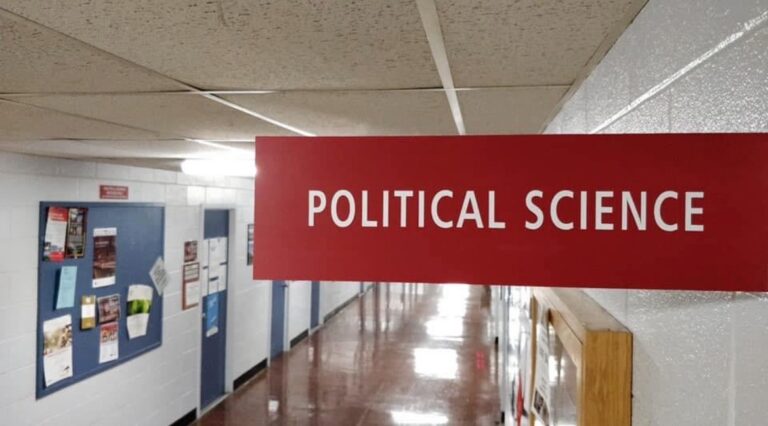
On January 13th, the political science administration held a town hall attended by students and faculty regarding issues in the department, with announcements such as a revamped Law and Public Policy Diploma program, among other upcoming changes and announcements. However, the main issue for students was representation within the department.
Earlier that same week, both the Undergraduate and Graduate Political Science student societies received word from department administrators that at an upcoming faculty meeting, occurring promptly after the town hall, a motion would be voted on that would change the roles of the student societies.
The proposed action would revoke the votes of both the graduate and undergraduate student representatives in departmental meetings. With the motion in close proximity to the town hall, many students in attendance assumed the move would be addressed.
Nearing the end of the town hall administration opened the floor to students, Vice President Internal of the Graduate Society, Eqbal Nazhat, proceeded to read out a statement written on behalf of the Society. This statement expressed concern about the potential issues passing motion eight would create, urging the administration and faculty to reconsider the proposition.
“Faculty and students can work together to keep this environment as is.”
Eqbal Nazhat, Vice President Internal of the Political Science Graduate Students’ Society
Other students then chimed in to express their concerns regarding the motion, including Cody Dalton, Vice President of Academics for the Undergraduate Society, who supported Nazhat and the Graduate Society’s concerns, citing the statement that the Undergraduate Society had sent to the administration that morning.
Following this, Department Head Dr. Alex Marland responded, apologizing and taking responsibility for the lack of communication cited by both societies in their statements.
“I should have made sure we were reaching out to the Undergraduate and Graduate Student Societies, and we should have sit down and had a conversation… I think that needs to happen.”
Dr. Alex Marland, Department Head
Afterwards, the motion was tabled until the administration allocates time to consult with society representatives.
While this has made many hopeful for the security of student voices going forward, many are concerned about what the future brings for student representation in the political science department. Concerns are also being raised about how a lack of communication might damage the relationship between students and faculty.
“[At] this time we should be building relationships with professors instead of being excluded which in turn will hurt the relationships between students and professors.”
Cody Dalton, Vice President of Academics for the Political Science Undergraduate Students’ Society
Updates are to be posted as more information becomes available.
Each word evokes two completely contradictory meanings. We all know this. We are aware that delight can mean both great pleasure and to extinguish light, that tender can mean to be gentle and soft but also a wound that is in pain, and that stroke means to caress someone slowly and yet also refers to the deadly burst of a blood vessel in the brain. We know this, yet we rarely pay attention to the meaning these words hold at the moment that they are said.
‘Solastalgia’ presented by RCAT and Sonderlust, is a play written and performed by Kristin Shepherd and directed and produced by Nicole Smith. It has recently been adapted from its original outdoor venue and reworked to be performed onstage at the LSPU Hall in downtown St. John’s. The play was initially created and performed amid the pandemic in southern Ontario. It was one of the first live theatre performances post-pandemic where an audience could be together with people outside their bubbles.
This is where their choice of an outdoor setting came into play. Performing to an audience only a few feet from your face, at eye level, no less, creates an entirely new level of vulnerability. One that can be very difficult to then replicate onstage. Through the lighting direction, acting approach, and overall atmosphere, the audience could experience that same intimate interaction from a theatre seat. By no means did this play follow the standard etiquette of a theatrical performance, but the realness, humanity, and lack of a fourth wall left each audience member listening intently to every spoken word.
It was uncomfortable,
The audience chattering before the start of the play came to a sudden lull as the woman onstage spoke into her headset. It felt like a classroom going abruptly quiet as they realized the teacher was standing there, watching at the front of the room. A conversation was initiated, and we were there to listen and absorb the angst, hurt, and longing thrown our way. We were forced to connect.
The lights stayed on. The director, Nicole Smith, and stage manager, Hannah Briggs, were able to stray away from the typical theatre model just enough to create unease without completely crossing the line. The sets and lighting opened up the stage, creating an environment resembling that of someone’s home, of someone’s mind. It was almost as if we, the audience, had walked into their safe space but that they had also stepped into ours.
The play was presented as a one-woman show. Shepherd’s initial thought was to create a play with an entirely unpalatable character; what better way than to place a 60-something-year-old woman in front of an audience and have her talk at them? Simple, and yet entirely effective. Shepherd’s character recounts multiple stories provoking laughter, tears, and unease, at times simultaneously. We were given the opportunity to feel like a community while witnessing the human condition through a spectator’s lens.
Solastalgia is the homesickness for something that no longer exists.
Or, by direct definition, “a form of emotional or existential distress caused by environmental change.” A term coined by Austrian philosopher Glenn Albrecht, combining sōlācium ‘solace’ and -algia ‘pain.’ With references to the melting glaciers releasing untouched feelings and undertones encapsulated within the ice from a different time, Shepherd draws a direct link between the current climate collapse and the overwhelming distress being felt globally. It is a word that can encompass many things; drawing from that, Shepherd’s character pushes herself to accept what is uncertain, to accept her humanity and to hope.
The longing for what no longer exists can resonate with people in very different ways. With reference to the pandemic, there is a universal longing for what we once had and how we once lived before Covid-19. But what’s more interesting is the longing that even young children feel for something they don’t know ever existed. The direct connection created between Shepherd and the audience feels uncomfortable because the pandemic made a lack of human connection the norm. There is a sense of awareness that Shepherd’s character and her direct dialogue is able to give back to the audience.
‘Pay attention’
Two words repeated multiple times by Shepherd throughout the piece. Each word she utters holds meaning; nothing is empty, and everything is said with intent. We are often coasting, unable to pay attention to even the smallest of words or moments and the great value they can hold. Ultimately, we are left with one final double-edged offering cloaked in the words, love left. Once again, we have two potential meanings, that love has left the room or that love is the one thing we will always have left when everything is gone. We get to choose our own interpretations. We just have to pay attention.
‘Solastalgia’ will be performed at the LSPU hall for the remainder of the weekend, at 8 pm on the 20th and 21st and 2 pm on the 22nd. The 21st will include a live stream and live audio description. It is an immersive experience you won’t want to miss.
**As well, it is important to note that all RCAT shows have a student discount.**
It is so important that we continue to support our local artists and community. Make sure to check out lspuhall.ca for any upcoming performances that may peak your interest.
This Wednesday, January 18th, MUN Undergraduate Students’ Union (MUNSU) released the following statement today in support of MUNFA in their ongoing labour dispute with the administration for a collective bargaining agreement.
St. John’s – The MUN Undergraduate Students’ Union (MUNSU) stands in solidarity with MUNFA and joins their calls for a fair and equitable deal from Memorial University of Newfoundland and Labrador.
During the January 11th meeting of the MUNSU Board of Directors, MUN Students’ Union voted to stand in solidarity with MUNFA and support their actions for a fair collective agreement. The motion passed by the Board of Directors reads:
“Be it resolved that MUNSU stand in solidarity with the MUNL Faculty association and support their calls to a fair and equitable collective agreement from Memorial University of Newfoundland.
Be it further resolved that MUNSU support MUNFA in their strike action, should a strike action occur in the 2023 Winter academic term.
Be it further resolved that the MUNSU Board of Directors put forth every effort to coordinate collective action and solidarity among MUNSU members, including the utilization of non-essential MUNSU services in support of the MUNFA strike.”
MUNSU fully stands with the Memorial University Faculty Association. In the event of a strike, MUNSU will make every effort to support, promote and stand with striking members of our community. MUNSU will be redirecting all non-essential services towards supporting the strike and will be fighting alongside MUNFA on the picket line.
Faculty working conditions are student learning conditions. The administration of MUNL has demonstrated that their values put profit over people. The student movement stands united in the fight for fully-funded, accessible education. We are calling on MUNL to prioritize the students and faculty that make up our community and take immediate action to support MUNFA.
MUNSU can be reached for comment via resource@munsu.ca or via (506) 469 4658.
Memorial University Faculty Association (MUNFA) members voted 90% in favour of authorizing strike action on Wednesday.
In a press release, MUNFA says, “Academic staff members at Memorial University have voted overwhelmingly in favour of authorizing their executive to call a strike.”
90% of votes are in favour of a strike, with voter turnout representing 93% of MUNFA members.
“MUNFA members are fighting for changes that will protect students’ quality of education and improve the university as a whole,” said Ash Hossain, a professor in the Faculty of Business Administration and the president of MUNFA.
With this decisive mandate from members, the Executive Committee of MUNFA can authorize a strike at any time.
In consultation with MUNFA’s Negotiating Committee, the executive has set a strike deadline of 12:01 a.m. on Jan. 30.
In the meantime, MUNFA is scheduled to return to the negotiating table with the MUN administration’s bargaining team on Monday, Jan. 23.
“We started bargaining in January 2022, and the administration has been unprepared at every turn to make a fair deal. They have refused to discuss crucial proposals for months on end, come unprepared to bargaining sessions, and failed to make compromises that would allow us to reach a satisfactory agreement,” said Hossain.
“MUNFA has been prepared, has presented thorough proposals developed through a lengthy process of member consultation, and has proposed compromises that should have been agreeable to the administration while remaining fair for our members. It is time for the administration to get serious about improving this university and treating MUNFA members fairly,” he said.
MUNFA represents more than 800 academic staff members across Memorial University, including faculty (both tenured and contract), librarians, counsellors, and cooperative and field education coordinators.
Decompressing and relaxing are very important. To be at their best, our bodies require adequate rest after a long work day or tiring study day. This article will discuss simple yet scientific methods to unwind.
The most recommended thing to do is to clean your desk or workspace for the next day. Then step away from your desk and get some fresh air. Going for a walk, running, or working out at the gym helps our brain by fighting off anxiety and boosting our overall mood.
Put on some music and clean your space. High vibrations music helps the mind to relax and practice mindfulness. Music also has healing properties, reducing depression. Clean up your space and prepare nourishing food for your body. Cooking is said to be therapeutic and can boost creativity and happiness. Be sure to include colourful vegetables and fruits in your meals.
Have a warm shower as it lowers blood sugar and blood pressure levels while improving blood circulation and overall sleep quality. Moisturizing the skin is also very important, especially during colder days. Take some personal time to read or watch your favourite show.
Get some sleep. Turn off your phone, and get at least 6-8 hours of sleep. With adequate rest, the mind will relax, improving brain function for the next workday. A well-rested body also tends to be more productive throughout the day.
Throughout the semester, the Student Wellness and Counselling Centre (SWCC) at MUN has been providing students with mental health support services, including both virtual and in-person visits with mental health professionals, as well as a variety of morale-boosting activities and workshops. A particularly popular event among the student body has been the regular Oasis session in the University Centre, where students get the chance to eat popcorn, participate in relaxing arts and crafts, and meet with local therapy dogs trained to provide comfort to students undergoing stress.
Towards the end of the Fall 2022 semester, representatives from the MUN Engineering Society reached out, alongside a representative of St. John’s therapy dogs, to request a change. According to the report by the therapy dog, a seven-year-old miniature poodle named Muffin, the dogs were having difficulty addressing the sheer amount of stress that the engineering department was producing towards the end of finals week.
“We like to know we are effective in our jobs,” Muffin stated, as translated by his handler. “Therefore, moving forward, we recognize that engineering students at MUN represent a higher stress output than the average dog is equipped to deal with. We would rather address this stress at the root than continue to try to mitigate the problem by looking adorable.”
Muffin revealed in an interview with Memorial University that therapy dogs are able to accurately measure an individual’s stress level on a scale of zero to twelve, with twelve representing critical panic, overwhelming, and tension. The average student a dog encounters in the University Centre will come in at about a three or four, with seven and eight being more common around finals week.
Engineering students, Muffins stated, have an average CPSS (Canine Petting Stress Score) of around eleven.
Rather than continue to try and soothe these difficulties that students experience in the fast-paced, highly competitive major, the university has opted to prevent future high-stress levels within the department altogether. From January 2023, the SWCC will be hosting Engineering-specific mental health workshops.
While still providing the usual relaxation and mindfulness services like popcorn and painting stations, these workshops will focus on several local therapy dogs who obtained at least a B.S. in several disciplines of engineering and will provide tutoring and problem-solving services in exchange for pets and treats.
Memorial University looks forward to welcoming Yona, a Siberian Husky and Civil Engineer currently employed by the United States government to build harbours in Alaska; Twinkles, a pug with a YouTube channel where he uploads mechatronics tutorials; Andy, a French Poodle with a Master’s Degree in Computer Engineering from McGill; and Boomer, an Australian Shepherd with specialized training to help students sniff out ideal work terms for their interests.