Home Blog Page 6

Jamil Jivani’s Charlie Kirk-inspired campus tour comes to MUN

0

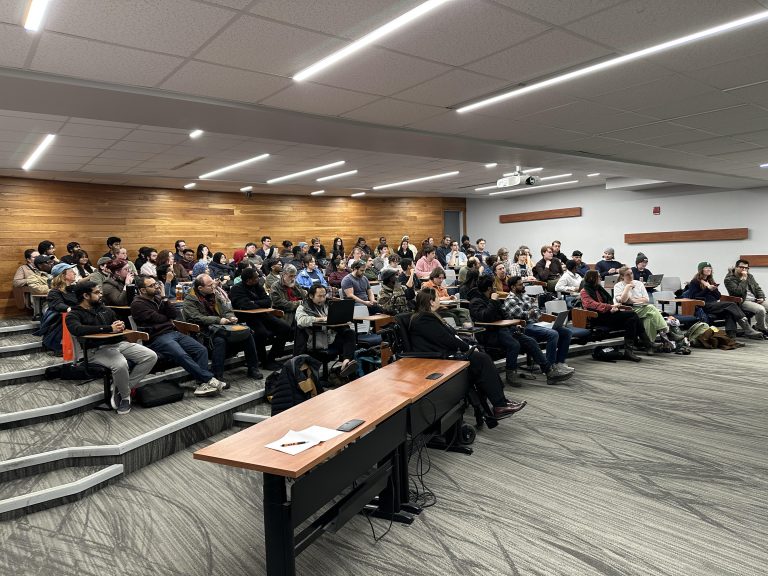
On March 2nd, Bowmanville-Oshawa North MP Jamil Jivani hosted his 13th ‘Restore the North’ campus event, in the business building at Memorial University.

Jivani says Restore the North was inspired by campus tours by the late Charlie Kirk and his organization Turning Point USA.

The format was simple: Jivani starts off with an introduction, explaining who he is and why he is doing the Restore the North campus tour. Then he turns it over to the audience to pose questions to him and state how they believe “the North can be restored.”

The event had about 30 people in attendance, with most of the audience conservative leaning, but a decent portion not. The debates ranged all across the policy spectrum, from the far-right Dominion Society and immigration to electoral reform and CANZUK.

The first person to step up to the mic was one of the few people there who was not a conservative, he had a tense exchange with Jivani after telling the MP he believed Jivani’s Restore the North slogan was a “dog whistle” and stated that he was “not being genuine” in his claim that these events are to foster more political engagement.

A handful of protesters picketed the event. Munroe Molotov, held a sign that read, “Restore the North to what?”

In an interview with the Muse, Molotov said that Jamil Jivani’s event and slogan was “sort of this idea that is inherent to fascistic belief of an imagined past,” and likened it to the MAGA movement in the United States.

Munroe also said that Jiavani’s events are “inspired by Charlie Kirk,” someone who Munroe says was a “far-right extremist.”

In an interview with The Muse, Jivani said that Charlie Kirk “literally died for free speech.”

Jivani’s said that “no country has ever been perfect at any time, but for most of Canadian history, people from all around the world could come here, people could be born here, and there was opportunity to have a better life. And it’s just not the case anymore.” 

Muse-ic Reviews: Fairweather, LFB, John Moran & DOBERMAN

*This article first appeared in The Muse’s 75th Anniversary Print Supplement magazine, published January 2026.

Four Songs — Fairweather

image
(Bandcamp)

Power pop/punk is alive and well in St. John’s. Formerly called ‘Sailor Set Sail,’ this band’s aptly named debut EP draws from overdriven, fuzzed-out sound design similar to bands like Dinosaur Jr. when they were at their peak.

Witty, wistful lyricism dictated by delightfully ‘whiny’ singing lends this energetic EP a playful yet biting edge.

This band proves that overcomplicated narratives aren’t required for songs to be good, just loud drums, power chords, some boyish whimsy, and a vision. Equal parts vulnerable and downright fun, Fairweather’s debut has made them a group to watch for many.

The LFB LP — Liz Fagan Band

image
(Bandcamp)

This inventive ‘Franglais’ synth-rock crew brings something fresh to St. John’s.

The band’s new record combines Liz’s mellow vocals with haunting, yet hypnotic guitar riffs. Tracks like “Lukewarm/L’eau tiède” serve as a ‘buy one, get one free’ for French students like myself – a catchy tune and a learning experience all in one that gives the songs a conversational quality.

With this project, Liz Fagan Band more than exceeds the high expectations set by their last EP.

3 out of 5 — John Moran

image
(Bandcamp)

This EP is home to some of my favourite folk songs this year.

Moran embodies the perfect blend of unserious lyrics and melodic riffs on the comical-but-relatable track “fuck this job.”

I feel you, Moran, creating art and harbouring that true childlike creativity is the dream. The loose, organic rhythms and subtle harmonic shifts capture that classic folk-y feeling, while avoiding the genre’s cliches to still feel fresh – Moran’s brand of indie folk hits that perfect balance between inventive and familiar, exemplified exceptionally well here.

WISHING WELL — DOBERMAN

image
(Bandcamp)

DOBERMAN’S WISHING WELL is a record I would recommend to anyone looking for a starting place to get into ‘Fogtown Hardcore.’

Fast instrumentals and frontman Nathan Dunphy’s incredible vocals for the hardcore genre are combined with lyrics that confront the issues of uncertainty, aimlessness, and monotony which can accompany life in NL post-grad. “R.D.F” and “Wishing Well” stand out in particular.

With a healthy sentiment of frustration and a clear desire for things to get better, WISHING WELL describes being stuck – and feeling (understandably) bitter about it. Absolutely fantastic.

Pen and parchment: The literary lineage forged at Memorial

*This article first appeared in The Muse’s 75th Anniversary Print Supplement magazine, published January 2026.

For generations, the rugged landscape and unique culture of Newfoundland and Labrador have inspired unforgettable authors.

Memorial is not merely an institution of learning; it is a creative frontline. Pivotal writing workshops from Jean Guthrie, Patrick O’Flaherty and Larry Matthews were training grounds for many great NL writers.

For decades, Memorial has served as an essential launchpad for many of Canada’s most celebrated literary voices.

This column pays homage to the poets, novelists, and playwrights who forged their indelible craft within our lecture halls, and now define the national literary conversation.

James Langer

A notable poet and vital literary editor, James Langer is a key figure who bridges the academic study and the professional creative world at Memorial.

He is the author of award-winning poetry collection Gun Dogs and has been published in literary journals like The Walrus, Fiddlehead, and Riddle Fence.

Although originally from Kitchener, ON, Langer’s work delves into growing up in a small town, Heart’s Desire, NL. He taught for Memorial’s creative writing program, inspiring many local authors.

Now Langer is working as a Communications Advisor for the university. He is also the co-editor, alongside Mark Callanan, of the critical anthology, The Breakwater Cook of Contemporary Newfoundland Poetry 2013.

Maggie Burton

A compelling figure who embodies the fusion of arts, public service, and academic pursuit, Maggie Burton is an award-winning poet, professional violinist, and former city councillor.

An alumna with a Bachelor of Music degree and an MA in English from Memorial, her writing focuses on the social and physical realities of women’s domestic labour and relationships through a queer, feminist, working-class lens.

Her debut collection, Chores (Breakwater Books 2023), was shortlisted for the prestigious Gerald Lampert Memorial Award, confirming her status as a vital contemporary voice forged at Memorial University.

She is now working towards a medical degree at Memorial’s School of Medicine.

Donna Morrissey

Donna Morrissey is one of the province’s most beloved and internationally recognized novelists, celebrated for her deeply authentic and emotionally resonant portrayals of rural life.

Morrissey earned a Bachelor of Social Work degree from Memorial in 1992. Her academic training in social work likely provided a crucial lens for her fiction, fostering the empathy and nuanced understanding of social dynamics that distinguish her characters.

Her debut novel, Kit’s Law (1998), became a Canadian bestseller, marking her arrival as a major force. Through subsequent acclaimed works like Sylvanus Now and The Clothesline Swing, she has established herself as a literary pillar whose fiction explores themes of resilience, family bonds, and the enduring heart of the outport experience, all coloured by the deep humanist perspective she honed at Memorial.

LETTER: It’s time to dissolve the GSU. What comes next?

0

This October, I was sitting with one of my colleagues who had gone to the Graduate Student Union (GSU) semi-annual general meeting. She told me that the GSU is approximately $2.9 million in debt, a huge part of which is debt to GreenShield, our health insurance provider. This means that our health coverage is at risk. 

I started to cry.

I’m worried I won’t be able to afford the medications I need. I worry even more about international students and graduate students with families who rely on our healthcare coverage. A lot of us have heard whispers about past GSU executives’ and board members’ financial misdeeds but had thought of them in the abstract. We now know that GreenShield has already threatened the GSU with revoking our health and dental insurance. The reality and consequences we now face are sinking in.

We don’t have all the facts, and we don’t know the whole picture. What we do know is that past GSU executives and employees have rendered the GSU dysfunctional. The GSU has committed both gross financial negligence and embezzlement that has been ongoing for years. The GSU is unable to function in the ways that we as graduate students, and this campus as an ecosystem, desperately need.

The GSU shared a financial update at the semi-annual general meeting in October 2025. This update put the GSU’s debt at nearly $2.9 million. A significant portion of the reported debt was to GreenShield.

We do not currently know how much debt has been paid off and how much remains outstanding; not knowing and a lack of transparency is part of the problem. Are the fees we graduate students pay each semester now going to service this debt rather than pay for our health and dental insurance? 

The GSU leadership has failed to report financial irregularities and potential illegal activity externally. We do not believe that this – at best – financial mismanagement, and – at worst – financial crimes can be resolved internally through committees and reviews.

We appreciate that many of the execs have been working to resolve these issues, but the scale of the response needs to meet the scale of the problem.

Last year, the GSU held a workshop to reimagine its future. However, this took place before we knew about the extent of the debt we owe. We’ve attempted reforming.

We are still left with approximately $800 of debt per graduate student (again, we don’t know the exact amount, and this is part of the problem). 

This is why we must dissolve the GSU. We can’t stay on this path anymore and we don’t have to. Another future is possible. We need only look to GSU’s roots to know what our future could look like.

The GSU is a historic union structure, one which has done an incredible amount of good across decades: organizing to provide graduate students with housing downtown, providing safer spaces and real advocacy for queer safety and community, and serving as a voice for the students of this province as we face the theft of our right to a comprehensive education.

We want a functioning union that we can wholeheartedly recommend our peers participate in.

We want a workplace where people, including the current executives, can build on the organization’s historic strengths, not one where they must join the ranks of people that unfairly bear the weight of longstanding theft.

So where do we go from here?

We don’t have all the answers but here are three steps we can collectively take:

First, we dissolve the GSU. It has failed to fulfill its purpose. But we don’t have to start from scratch.

Second, we discuss with Memorial University of Newfoundland and Labrador’s Student Union (MUNSU) if and how they can temporarily host us graduate students in their union. We would pay our fees to MUNSU who would administer our health and dental insurance. Our next step might rest with them.

Third, while hosted by MUNSU we use that transitional period to create a new graduate governing body who will be accountable to graduate students, represent our interests, deliver vital services to us, and advocate for graduate students’ rights and well-being.

To the current executive team: we invite you to be a part of this reformation.

Dissolve the GSU. Seek justice. Re-form, together.

Signed in hope & solidarity on behalf of the Geography Graduate Student Association (GGSA),

Graydon Gillies, Sam Morton, Lana Vuleta, Jordinn Nelson Long, Domenique Ciavattone

Editors note: GSU says it’s debt is currently at around $2 million with approximately $1.6 million owed to Greenshield and $355,260.02 owed to CFS and CFS-NL.

REVIEW: The Muse’s hottest hot chocolates

0

Four members of The Muse team, Rebecca, James, Emily, and Cale, ventured out into the February cold in hopes of tackling the inaugural St. John’s Hot Chocolate Festival, and we were certainly pleased (and happily full)!

Unfortunately, we missed a couple of participants as storefronts were closed or they were simply sold out. In total, we managed to snag 14 out of the 19 innovative hot chocolates that were offered for the festival in support of the NL Queer Research Initiative.

The Grounds Cafe – “Earl Grey Hot Chocolate with Orange Blossom & Honey Whipped Cream” 5 out of 5 stars. (★★★★) | Winner: Best Hot Chocolate 2026.

This hot chocolate embodied comfort right from the first glance. The beautiful combination of fresh Earl Grey and orange blossom notes reminded me of Terry’s chocolate orange, a staple comfort food for me. The presentation was stunning and not messy. The addition of Earl Grey was innovative, making it the perfect beverage for a winter day. I will be the first person in line once this hot chocolate is (hopefully) brought to The Grounds menu for good! I would order this over a regular hot chocolate any day.

Craig’s Cookies – “Craig’s Specialty Hot Chocolate” 2 out of 5 stars. (★★)

This one did not live up to my expectations, and frankly, tasted like chocolate-flavoured water. The marshmallow on top was thick and difficult to break through. Love your cookies, though, Craig.

IMG 5836
“Craig’s Specialty Hot Chocolate” (Emily Torrance / The Muse)

Bagel Cafe – “Strawberry Dream” 2.5 out of 5 stars. (★★½) 

This was one of the hot chocolates I was looking forward to from the beginning. I am an absolute sucker for chocolate-dipped strawberries, which this drink featured. When the hot chocolate was brought to our table, I was initially in awe. The drink also featured two different whipped creams: chocolate and vanilla, and some strawberry and chocolate syrup.

I wasn’t expecting mountains of toppings ignited with sweetness, though it would have been perfect for others who have a bigger sweet tooth than me. Overall, the drink was too much for me, and the presentation was a little messy. I’d rather stick with a regular hot chocolate than this drink, but I would surely take a second or third chocolate-dipped strawberry on the side!

“Strawberry Dream” (Rebecca Jennings / The Muse)

Poyo + The Sprout – “Cosmic Caramel Hot Chocolate” 4.5 out of 5 stars. (★★★★½)

In my opinion, this drink was one of the more innovative hot chocolates featured in the battle because of its ingredients. The drink consisted of an unexpectedly delicious blend of blue spirulina, plant milk, and organic mushrooms that made me fall in love. The presentation was absolutely gorgeous, and the toppings made a fun and tasty decoration. For me, this specialty hot chocolate would certainly be ordered over a regular hot chocolate.

“Cosmic Caramel Hot Chocolate” (Rebecca Jennings / The Muse)

The Battery Cafe – “Spiced Coconut Hot Chocolate” 4.5 out of 5 stars. (★★★★½) | Runner up: Best-selling Hot Chocolate 2026.

My personal favourite; this drink was smooth, rich in flavour and left me with a feel-good memory. With a magnificent base blend of chocolate, coconut and aromatic island spices topped with toasted coconut flakes, the flavour was abundant without being heavy or overpowering. If you’re often caught between sweet and savoury, this one’s for you. Fingers crossed it sticks on the menu—I’d be back for this in a heartbeat!

“Spiced Coconut Hot Chocolate” (James Poole / The Muse)

Toslow – “Toslow’s Campfire Cocoa” 3.5 out of 5 stars. (★★★½)

Much like its name suggests, this one packed a cozy afternoon by the campfire in a cup. The base of the chocolate blend was a toffee-like organic coconut sugar infused with vanilla and a Chinese black tea smoked over wood, topped with graham cracker crumbs and Newfoundland Smoked Juniper Sea Salt. The flavour was compact but fell apart deliciously on the tongue. You could try discerning all of them in each sip, but you may find more where they came from.

IMG 232
“Toslow’s Campfire Cocoa” (James Poole / The Muse)

The Candy Corner – “Cotton Candy Hot Chocolate” 3 out of 5 stars. (★★★)

I was afraid of this hot chocolate; it looked way too sweet for me, but I was pleasantly surprised! Where a lot of the other hot chocolates border on a completely different beverage, this one is classic pure cocoa with some cotton candy, a peep marshmallow, sprinkles and a candy kabob on top. The peep was excellent, the sour candy was not. As I drank, it got worse as the candies melted into a gelatinous goo. This hot chocolate has the benefit of being a fantastic price for the number of pieces you get!

“Cotton Candy Hot Chocolate” (Cale Stevens / The Muse)

The Newfoundland Chocolate Company – “Winter Sunset” 4 out of 5 stars. (★★★)

This one is a beautiful hot chocolate with a really rich dark caramel syrup and small sprinkles of a sweeter caramel. The hints of orange struck a great balance of the flavours. However, it is odd that the Newfoundland Chocolate Company did not go for a chocolate-heavy drink. Maybe they thought it would be too easy? Unfair competition, perhaps? I like this drink, but as a chocolate-head, I’d prefer one of their regular hot chocolates.

“Winter Sunset” (Cale Stevens / The Muse)

Rocket Bakery – “The Sweet Heat Rocket Blaster” 1 out of 5 stars. (★)

I respect the courage behind the decision to put hot sauce in a hot chocolate with almond milk (as creativity is part of the competition), but I would hope this was tasted before being put on the menu. “Packs a taste shockwave” is certainly an accurate description. Courtesy star for the cookie on top!

“The Sweet Heat Rocket Blaster” (James Poole / The Muse)

Coffee Matters – “Spiced Caramel Hot Chocolate” 2.5 out of 5 stars (★★½)

For the cinnamon lovers out there, this hot chocolate is for you, but there is certainly no “hint” of cinnamon and chilli powder in this hot chocolate. While the flavour was good, it could have been more subtle because it was, quite frankly, overwhelming.

Spiced Caramel Hot Chocolate” (James Poole / The Muse)

Homage Brew and Bake “Dubai Hot Chocolate” 5 out of 5 stars (★★★★★)

This is by far the best hot chocolate I have ever had the pleasure of putting to my lips. The nutty additions of the tahini and pistachios packed this cup with delicious but subtle flavours that left me wanting to order a dozen more. There also seemed to be a hint of coconut in there as well, and being topped with kataifi, the different flavours complemented each other marvellously. While it isn’t your typical, traditional hot chocolate taste, I don’t care and neither should you. If Homage still has this on their menu, drop what you’re doing right now and go get one.

“Dubai Hot Chocolate” (James Poole / The Muse)

Terre Cafe “Alder Hot Chocolate”3.5 out of 5 stars (★★★½)

Likely the most traditionally flavoured hot chocolate on this list, Terre’s Alder Hot Chocolate is rich, dark, and lightly salted. The flavours work well together to create a perfect remedy for these cold February nights, but perhaps it was a little too simple compared to the other experimental contenders on this list.

“Alder Hot Chocolate” (James Poole / The Muse)

Boreal Cafe “Hazelnut Hot Chocolate” 3 out of 5 stars (★★★) | Runner up: Best Hot Chocolate 2026 

The flavour was great, amazing even, but it just wasn’t close enough to an actual hot chocolate for me. This tasted more like a warm vanilla milkshake, and if I’d been blindfolded, I would have thought as much. If that’s what you’re looking for, then by all means go for it, but it’s debatable whether or not you can even call this a hot chocolate.

“Hazelnut Hot Chocolate” (James Poole / The Muse)

Theatre Hill Bar + Cafe “Orange White Hot Chocolate” 4 out of 5 stars (★★★★)

If an Orange Creamsicle and a hot chocolate combined for the perfect treat, this is what you’d get. This drink is sweet and creamy while maintaining a nice white chocolaty taste. It’s impressive how the flavours are bold, yet they don’t compromise the classic hot chocolate taste underneath. Personally, I’m not much of a sweet tooth, hence the four stars, but if that’s what you’re looking for, then this could very well be a five.

“Orange White Hot Chocolate” (James Poole / The Muse)

We hope to see this festival again next year! Don’t forget to check out the NL Queer Research Initiative, as this fundraiser helps make 2SLGBTQ+ history and research accessible in NL.

OPINION: A university is a community; we need to start acting like it 

0

In discussions of the problems facing Memorial University, there are a few issues that are repeated over and over: crumbling infrastructure, tuition increasing with no improvement in services, administrative bloat, and so on. There’s little doubt that the university has to address these questions. But beneath those problems lies something deeper: 

Memorial University needs to start acting like a university. 

During the 2023 MUNFA strike, a central question facing both picketers and their bargaining team had to do with the role of collegial governance at the University.

The strike ended with the creation of a Collegial Governance Committee that lacks power, and MUNFA received no concrete commitments from university administration on governance.

Three years on, what changes have we seen? We still have a university that makes decisions without meaningfully consulting its community members and that treats students not as independent adults but as children who must be managed. 

The culture of the university has, in recent years, been reduced to protectionism and distrust. Distrust runs in every direction: students distrust their professors, the administration, and their own students’ unions; professors distrust their students, staff, and administrators; and administrators seem to distrust everyone, including each other. 

A new budget model that forces academic units to compete for funding with market logic is not likely to change that. 

The university’s history, and its culture, run deep—and so change is met with hostility and defensiveness. Faculty feel powerless and students feel shut out. As animosity grows, the community shrinks. Soon, there may be little left to save. 

So, what can we do about it? 

For faculty, it means recalling your fundamental duty to the university: the community of teachers and learners. It means remembering the purpose of the university as a place where knowledge is made and shared in collaboration with students, not in spite of them. 

For students, it means engaging with your unions, learning your rights and responsibilities, and pushing to make your institution better. It means holding your unions accountable and making them fight for your needs. 

For administrators, it means being willing to listen. It means being able to have genuinely hard discussions, and to stop using aphorisms and strategic buzzwords to hide a lack of concrete answers. It means being transparent about how far you will—and will not—go, and honest about what you want the university to achieve.

This means a collective shift in how we think about our responsibilities to the university that has sustained Newfoundland and Labrador’s economy for the last century. We have to come together, not divide and conquer. 

While tuition rises, facilities degrade. Talk swirls of lost programs, cut positions, and the erosion of student experiences. Faculty are frustrated, and students don’t know who they can ask for help. 

A crisis is not overcome through media releases, animosity, or distrust. It is not overcome through empty promises and government posturing. It is not overcome through anonymous complaints and misdirected anger. 

If we want to save our university, we have to save it—not “those people over there.” Us. Newfoundland and Labrador depends on it. 

Students need to engage with their unions, with the Senate, and with the Board of Regents. Faculty need to participate in the governance channels that are available to them and to push against administrative overreach.

Administrators need to learn to listen, and to understand that they have a public duty. That when they show up to work, their responsibility is to maintain the backbone of an entire province. 

Memorial needs to start acting like a university. Not like a corporation, not like a business, not like a market where knowledge is only worth its weight in gold. 

And that takes everyone. 

Mackenzie Broders (she/her) is a graduate student studying Philosophy. She holds a BA in philosophy and a BMus in musicologies and piano from Memorial University. From 2023-2024, she served as Executive Director of Advocacy of the MUN Students’ Union.

GSU says dissolution would end health insurance coverage

0

The Graduate Student’s Union (GSU) has responded to the petition put forward by the TAUMUN calling for a vote on its dissolution. 

The petition calls for an Extraordinary General Meeting for graduate students to vote on the dissolution of the GSU, citing proposed fee increase, financial mismanagement, and issues with transparency.

The Muse received comment from the GSU’s Executive Director of Communications, Gaayathri Sukantha Murugan, responding to the motion proposed by the TA’s union. 

“GSU strongly disagrees with this proposition,” says Murugan. 

“While we understand the concerns raised by TAUMUN, a vote of this nature cannot happen until robust conversations are had with the Canadian Federation of Students to ensure the continuation of membership benefits available to graduate students, especially health insurance.”

In recent years, GSU ended its Grammarly Premium subscription service offered to students, and closed Bitters pub following extensive renovations. 

Murugan says that despite financial hardships, the student union still offers important services.

This includes the Health and Dental services administered by Greenshield, to whom the GSU says it owes $1.6 million in outstanding fees.

The student union is part of a national health plan it accesses by being members of the Canadian Federation of Students. Murugan says that if the union were to be dissolved it would no longer have access to this health plan.

“The loss of this affiliation, and access to student-oriented insurance plans, would significantly impact all students who rely on health insurance including international students, student parents, students with disabilities, as well as all students without any other coverage, all of whom rely on this coverage for life-sustaining care while being enrolled in academic programs,” says Murugan.

She cautions that “voting to dissolve the GSU before establishing a safety-net for students may generate more harm than intended.”

She also cautioned about the loss of funding for ratified graduate clubs and societies, as well as a projected lack of student advocacy, representation, and input within both internal and external institutional decision-making processes.
She says that “the impacts of dissolution cannot be captured in words alone, as it would represent a loss of community, safety, and support that would be felt for years to come.”

Murugan also says that dissolving the GSU will not absolve outstanding debts to Greenshield and both provincial and national chapters of CFS.  

According to Murugan, GSU would be required to work with a lawyer, Memorial administration, and impartial third parties to liquidate all assets. 

Failing to repay outstanding debts in full will “[affect] the abilities for any newly formed graduate unions to obtain health insurance through providers such as Greenshield or other reputable companies.”

Murugan says, should the membership vote to dissolve the GSU, it would lose the opportunity to investigate past financial mismanagement and hold guilty parties accountable.

Proposed fee increases

Murugan says the proposed increase of around $15 dollars a semester would only amount to an additional $5.56 if GSU had been increasing fees based on the Consumer Price Index.

image
Courtesy of GSU.

According to the statement, the union’s governing documents require membership fees be adjusted annually to reflect the CPI, and the GSU membership fee has not been updated in approximately 10 years. MUNSU and CFS adjust their membership fees annually based on CPI.

The Muse will provide updates as the story develops.

MUNSU executives keep course reimbursements, despite budget deficit

0

A motion to remove Executive Director course reimbursements failed to pass at MUNSU’s latest board meeting.

MUNSU executives are reimbursed for the cost of one course every semester, with the student union spending between $7,020 and $35,100 annually, depending on domestic or international tuition rates.

At MUNSU’s meeting on March 4th, Nathan Gillingham, Executive Director of External Affairs, brought forward the motion to eliminate this policy.

According to Gillingham’s motion, MUNSU’s latest audit indicates a deficit of over $200,000, and the union is in need to find savings.

He says MUNSU’s mandate is to “serve the students,” and that removing the course reimbursements would “restore a lot of trust” to MUNSU.

Gillingham and the Executive Director of Finance, Farhan Probandho, along with nine other board members, supported removing this reimbursement.

The vote ultimately failed, requiring at least 12 votes, as bylaw amendments require 2/3s approval.

Six members voted against, whilst one member abstained—leaving removal one vote short at 11/18.

For reference, there are five Executive Director positions: Advocacy, Campaigns, External Affairs, Student Life, and Finance. 

Every spring, students campaign and are voted into these roles in an annual election.

Each Executive role is a full-time job at 35 hours a week, and this year’s executives will earn $22.99 per hour, placing their annual salary at around $35,000.

The positions are exclusively for students, meaning that they must be enrolled in at least one class during the Fall and Winter semesters.

Director of Campaigns, Rana Abuidris, said that “By executives having a requirement [to be enrolled], then not compensating for it makes the job inherently inaccessible … and as a union, we’ve advocated for paid work terms … because students should not perform required work without compensation.”

Some board members, including Mabrur Islam, Director of Advocacy, said that course reimbursement is not a privilege, but compensation.

However, other board members, such as Juairya Abdullah, raised the point that executives need to be “students to get the job…they are not being forced to be a student.”

Other compensation exists within the union, but costs proportionally less and is consistent year to year, such as the “mobile allowance” of $50 per month to cover phone expenses—a total of $3,000 a year for all five executives.

At Memorial, this year’s incoming international students pay $2,250 per course, while domestic students pay $675 per course.

Most international students are required to be enrolled in at least three courses per semester, as international student visas require full-time enrolment.

Executives are also not allowed to take more than three courses per semester. Meaning international executives pay at least $13,500 per year for courses, not counting student fees or other expenses.

According to Blake Colbran, Director of Student Life, “The question is not whether to cut, but where to cut, and I think there are better avenues for us to take than to disadvantage international executives.”

Addressing the cuts, Gillingham says, “Making cuts isn’t easy … everywhere MUNSU puts money can be justified with a very sound argument … all of it has a purpose … it is simply about our means.” 

To Director of Finance Farhan Probandho, “If MUNSU doesn’t correct in three or four years, we will be in dire straits.”

“The only way to do that is to evaluate our costs and the services we offer … and those conversations cannot happen if we do not take accountability, and if we don’t take action at the executive level first,” said Probandho.

Legendary skip Brad Gushue bows out of final Brier

0

Saturday was an emotional day at the Brier in St. John’s, as Brad Gushue, one of the province’s greatest athletes, was eliminated from his hometown Brier in the Page 3 vs. 4 Playoff game to Team Canada.

Last ever ‘battle of the Brad’s

Brad Gushue and Brad Jacobs, among the best skips of their generation, have arguably had one of the best rivalries in the sport over the last two decades, which fans have coined ‘the battle of the Brad’s.’

They played each other in the last game of pool play on Thursday, where Gushue got the best of Jacobs 4-2.

After a tough Friday where each team had to claw their way into the Page 3/4 playoffs, they were destined for a win-or-go-home rematch.

Sadly, Team Gushue did not get a repeat of Thursday, as Team Jacobs picked up a 7-5 win.

After the game, Jacobs said to Gushue, “Congrats on a great career, you’re the best ever.”

An emotional Gushue also received a loud send-off from the home crowd:

After the game, when asked if he found any solace in losing to the reigning Olympic gold medalists, Gushue said, “I don’t know, it sucks to lose. At the end of the day, they’re a really good team, they have a good chance of winning (the Brier).”

Incredible experience

While Gushue was hoping to end the Brier at the top of the podium, he still made some incredible memories from the experience.

He noted the end of the game and the raucous applause he got as he left the ice for a final time, saying, “I think that standing ovation is gonna be something that sticks with me.”

Gushue said he also took a lot of pride in some moments he had with his family during the last week.

“Monday night, when they honoured my daughters after winning [U Sports women’s curling champions], and then Wednesday night my youngest daughter was a future star, those were the highlights for me… those are moments that are really special to me, and I was full of pride both of those nights,” Gushue said.

Mark Nichols’ future uncertain

DSF0098
Gushue’s longtime third, Mark Nichols uncertain about future (Curling Canada / Andrew Klaver).

While Gushue’s retirement has been the story of the Brier, his longtime friend and third, Mark Nichols, hasn’t committed to curling next season.

Nichols has been Gushue’s teammate at 20 of his 23 Brier appearances, winning multiple Briers, Olympic medals and grand slams along the way.

After the game, Nichols reflected on his experience in St. John’s, saying, “It was awesome. This whole event has been absolutely amazing. The energy in the building, the fans, it’s just so special to get to play at home.

One of the best to do it

Brad Gushue leaves the game as the most decorated Canadian men’s skip.

His six Brier wins as a skip are a feat no one else has matched, and he is also a two-time Olympic medalist, winning gold in 2006 and bronze in 2022.

Regarding his legacy in curling in the province, Gushue said “It’s not just me, but it’s our team who kinda created interest in the sport, grew interest in the sport.”

‘A clean slate’: TAUMUN puts forth petition to dissolve GSU

0

Graduate Students may soon have a chance to vote for the dissolution of their union, which is in at least $2 million of debt and is proposing a $45 annual hike in student fees.

The Teaching Assistants’ Union of Memorial University of Newfoundland (TAUMUN), has introduced a petition to call for an emergency meeting with the intent to dissolve the Graduate Student Union (GSU) to “clear the path for a new, transparent organization designed to represent all campuses and faculties.”

According to emails graduate students received from Dean of Graduate Studies, Dr. Amy Warren, Memorial and the GSU are reportedly working towards both the development of a new agreement and rectification of GSU’s outstanding debts to Greenshield, estimated by anonymous source to be approximately $1.8 million.

In addition to this, the GSU also owes Newfoundland’s chapter of the Canadian Federation of Students (CFS-NL) $177,630.01 and the National branch of CFS $177,630.01, for a total of $355,260.02 owed from undelivered dues.

Altogether, the unions’ past outstanding debts likely amount to over $2 million, however it is unclear where they sit financially at the present moment. The latest financial statement on GSU website is from 2021.

The Muse contacted the GSU for comment and for clarification on its debt, and will update when we receive a response.

image
Past Graduate Student Union Annual General Meeting (GSU)

The petition

TAUMUN represents Teaching Assistants, Graduate Assistants, and Research Assistants at Memorial, which make up about 25% of graduate students.

In a Quarterly Newsletter on March 2, TAUMUN said it has concerns about TA labour and pay and an “unethical” proposed referendum to increase GSU membership dues, which would bring the annual membership cost from about $90 a year to $135 per year, a $45 increase.

In its petition, TAUMUN said it is proposing the dissolution due to the GSU reaching a state of “irremediable insolvency.” 

TAUMUN cites “institutional fiscal mismanagement,” “terminal organizational liability,” “erosion of service viability,” “compromised representative autonomy,” and the “necessity of structural liquidation” as its rationale for proposing the motion.

The TAUMUN executive said that they “condemn any Service Level Agreements or Memoranda of Understanding not ratified by the general membership,” urging GSU leadership to maintain their autonomy as a union.

“Graduate students deserve a better future than that proposed by the GSU, and therefore, they must have the democratic opportunity to decide their future,” says the statement.

The petition states that if members vote in favour of dissolution, the Graduate Student Union will “cease to exist, rendering all existing representative and service agreements null and void.”

The petition has surpassed the 25-signature rule, under the GSU constitution, for the Extraordinary General Meeting to go ahead, with about 40 signatures at the time of writing.

Comment from TAUMUN executives

TAUMUN Vice President Tristan Poulin said the tipping point in deciding to put the petition forward was the realization that the union intended to raise dues to solve its debt problem.

“We thought that was highly unethical to make current members pay for a debt that wasn’t contracted by them,” said Poulin,

“The best and simplest way to put it is we think it’ll be a clean slate,” said TAUMUN President Kieran Knoll.

“It’ll be a debt-free student body. It will be a body that has autonomy to make decisions for [itself]. At this point, without theorizing what a future could be, it essentially would be a future without risk by the GSU.”

He said TAUMUN isn’t trying to grab more power or replace GSU. Knoll said GSU members are simply using TAUMUN as a platform to elevate their concerns.

“The feedback we’re hearing from our members and from our community that we’re talking to is that there is a disconnect, that there is a kind of ‘why even bother at this point?’ kind of mentality,” said Knoll.

Knoll said he was equally concerned that according to him, the GSU executive were pursuing a potential loan from the university rather than listening to membership.

“That is an extremely weak advocacy position to put themselves in. And that actually impacts all of us as unions,” Knoll said.

We will provide updates as the story progresses.