Home Blog Page 33

LETTER: I got arrested while protesting genocide at MUN, here’s what I learned

0

I hate breaking rules. I’ve never even received a speeding ticket. Imagine my surprise to find myself with a court date this week to enter a plea after I got arrested on my university campus.

For anyone who hasn’t been following the news on local rabble-rousers here are the Cliffs Notes: MUN Students for Palestine (MS4P), which formed in May 2024, demanded that MUN disclose and divest from any investments complicit in the ongoing genocide of the Palestinian people. MUN declined to do so, which sparked students to start a two-week outdoor encampment followed by a four-week indoor occupation of the Arts and Admin building. 

This pressured MUN to disclose over $7 million (now updated to more than $15 million) invested in complicit companies, including weapons manufacturers that sold arms to Israel. Our student occupation continued until MUN sent police to shut down the protest on July 5th. I and two other students were arrested and charged with petty trespassing. We have a five-day trial set for mid-June. We continued our protest in a decentralized way, but ultimately MUN succeeded in using police to reduce the effective pressure we could apply.

Here is some background information to help you contextualize my experience. I am a white Canadian student. I have never been involved in university student politics before this. I am an anthropology grad student, and although many of my classes deal with unmasking systems of oppression and colonialism, I have been privileged enough to deal with these issues in term papers rather than being confronted with them in my personal life.

First, let me remind you of the statistics about the Genocide in Palestine. In July of 2024, contributors to the Lancet, a peer-reviewed medical journal, had this to say about death tolls: “In recent conflicts, such indirect deaths range from three to 15 times the number of direct deaths. Applying a conservative estimate of four indirect deaths per one direct death to the 37, 396 deaths reported, it is not implausible to estimate that up to 186, 000 or even more deaths could be attributable to the current conflict in Gaza.” This was published 5 months ago.

In April of 2024, a month before we set up our encampment, the UN published a press release stating experts were gravely concerned about the targeted Israeli attacks on educational infrastructure in Gaza, including the destruction of 13 public libraries, and 195 heritage sites. In November 2024, UNICEF published an article which said there were two attacks per day on schools in Gaza in a single month.

I sometimes pick up substitute shifts at the public libraries here in town. By chance, my last shift at the library before the encampment started was working during toddler music time. One boy was too shy to join the group playing instruments but whispered the right answers to his mom from his place hiding behind shelves on the other side of the room. Every time I see the statistics about the attacks on public libraries in Gaza, I think of that little boy.

LESSON 1: The situation at MUN is much worse than you think!

Sorry to be a downer but yes, really, it’s worse! MUN has not only refused to acknowledge that there is a genocide happening but has insisted on complete “neutrality.” In a May 24th meeting MUN President Bose said the University could not take “a political stance” because they have a responsibility to accommodate “multiple viewpoints.” Investing in companies actively providing weapons used by Israel in genocide, war crimes, and crimes against humanity doesn’t exactly feel neutral to me.

In a June 13th meeting, we asked if MUN could acknowledge the fact that the International Court of Justice had ruled that there were plausible grounds to find Israel has been committing genocide. Dr. Jennifer Lokash, Provost and Vice-President (Academic) Pro Tempore, said they would not be including the word genocide in a statement. In fact, she had read the ICJ report and thought it was more nuanced than that. The report in question notes that “In the Court’s view, at least some of the acts and omissions alleged by South Africa to have been committed by Israel in Gaza appear to be capable of falling within the provisions of the [Genocide] Convention.”

Investigators with extensive experience in the area have reached different conclusions than the MUN admin. Medicines Sans Frontieres (MSF), have published statements illustrating the situation “For more than a year, our medical staff in Gaza have witnessed a relentless campaign by the Israeli forces marked by massive destruction, devastation, and dehumanisation.”

Although MSF acknowledges they lack “legal authority to establish intentionality,” they have noted “the signs of ethnic cleansing and the ongoing devastation – including mass killings, severe physical and mental health injuries, forced displacement, and impossible conditions of life for Palestinians under siege and bombardment – are undeniable.”  Amnesty International recently published a report which “assesses allegations of violations and crimes under international law by Israel in Gaza within the framework of genocide under international law, concluding that there is sufficient evidence to believe that Israel’s conduct in Gaza following 7 October 2023 amounts to genocide.” 

In a June 18th meeting, MS4P was allowed to present to select representatives of the Board of Regents. Chair Glenn Barnes helpfully peeled back the progressive university mask to let us know, at the end of the day, MUN cares more about making money than if they are actively contributing to the brutal slaughter of civilians when he said “Our job is to make sure we have investments that have the best return… You have to sort of avoid getting too deep into subjective viewpoints.”

But enough rehashing meetings! Boring! I don’t have Twitter or Reddit, so I luckily didn’t really have to see any of the shitty comments left about me – some of my comrades weren’t so lucky. I can name half a dozen or so fellow protesters in the student movement and community who have received death and rape threats that are so vile I’m not going to quote them.

Sometimes they would be littered with racial abuse or graphic details about harming their family members. A student protester was even physically assaulted during an off-campus march. One delightful individual liked to loiter around the encampment and film us while asking if we support baby murder. Nope! In fact, we are ardently protesting against the killing of children and MUN’s investments in corporations that enable it. 
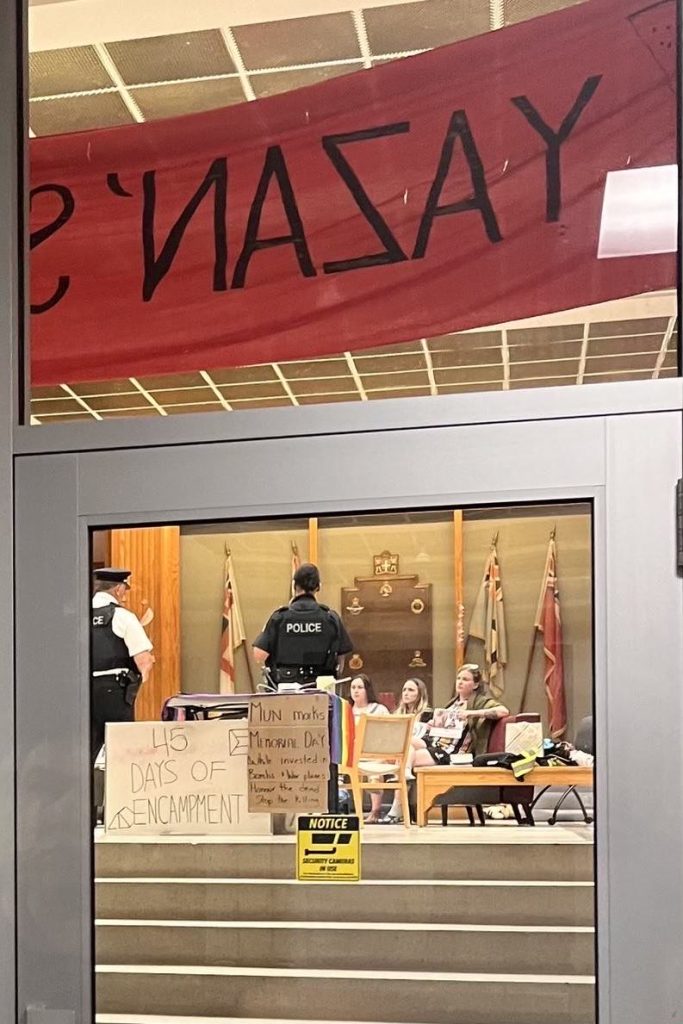
IMG 5655
Three of the Pro-Palestine student-protesters on the night of their arrest (Submitted)

These incidents were upsetting to protesters, but fail to encapsulate the systemic quality of the repression of the protest. This is only the first lesson, so I’ll skip right past the misleading or outright false claims to media, the constant weaponization of safety discourse, the code of conduct breach and the subsequent resignation of Glenn Barnes, and get right to the fabrication of threats against students. 

Picture this, it’s 7:33 AM on a delightful sunny Monday morning, and you and three of your sweet comrades are writing informational messages in chalk on the sidewalk in front of the Art and Admin building. Kesha is blaring from a small Bluetooth speaker (come on, you’re doing radical chalk messages. You need background music). A Campus Enforcement officer approaches and tells you that you should be careful with your chalk messages because individuals have told him they’d break your “effing” neck if they caught you at it.

How do you feel? Concerned he’s using alleged death threats to sanction our messages instead of, say, getting the person’s name or writing an incident report? Me too! So we checked with the Student Liaison Ailsa Craig and Chief Risk Officer Greg McDougall (recently ‘restructured’ out of MUN under mysterious circumstances) who told us no report was filed because there was no credible threat.

Right. But a kettle in the lobby was so dangerous it warranted confiscation by CEP, and when I leaned a poster against a wet floor sign (the floor was dry) it warranted an incident report. As part of a separate RNC case, the CEP officer first said to the police that we were exaggerating or misunderstanding what he said. When presented with an audio recording of the conversation, he admitted in a statement to police that he had fabricated the threats. To our knowledge, no action was ever taken to address this. 

Myself and another student filed complaints with the Human Rights Commission. Our claim was dropped because according to them, we could not prove that the purpose of the fabricated threats was to intimidate us specifically due to our political opinions. No matter where we turned, or what avenues we took, or which officials we appealed to, in every instance, the responses were demoralizing and disillusioning. Our first court date was mysteriously a month earlier than was stated on the docket, switched at 4 pm on the day before we had to be in court without any notification. We have had radio silence from MPs and the Minister of Education. 

This is all part of a larger pattern of intentional and widespread repression of Palestinian solidarity groups. A recent statement by a UN Special Rapporteur draws attention to the issue, who said that “the brutal repression of the university-based protest movement is a profound threat to democratic systems and institutions.”

LESSON 2: MUN Administrators failed to show leadership in the face of a genocide

It seems as if leadership positions are seldom held by ‘leaders.’ Memorial University administrators would rather continue funding a genocide than take a principled, and arguably more neutral, stance by choosing to not be invested in weapons manufacturing. They said that choosing divestment would be a political stance, something inappropriate for a university.

In their own words, the complicit direct investments of the pension committee made up “less than one-third of one percent” of the total pension fund. That money could be moved into a different sector with similar returns, but on July 11th, the Board of Regents voted to instead retain those investments. During the South Africa anti-apartheid movement, MUN also made the sickening choice not to divest, and offered up many of the same excuses of fiduciary responsibility and the need to refrain from political statements.
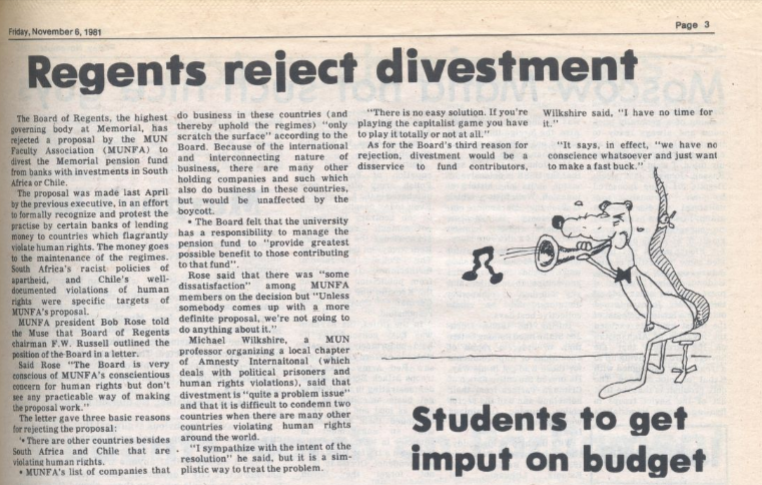
Screenshot 2025 01 08 at 15 48 50 Muse 1981 11 06 Muse Memorial University DAI
Article from the Muse archives after MUN Board of Regents rejected calls for divestment from apartheid South Africa and Chile (DAI/The Muse)

In the first meeting we had with MUN admin, as multiple members of admin donned pride merchandise, we pointed out that supporting LGBTQ+ pride initiatives is also a political stance. Rhea Rollman’s book A Queer History of Newfoundland has some interesting insight on that front. In 1990, MUN was considering hiding security guards in bathroom ceilings to catch gay students. Just before that, UBC refused to allow the ‘Gay Olympics’ to be held on campus, for fear of UBC becoming associated with homosexuality. The president justified this choice by saying “One doesn’t want to have an informal identity with an issue of such controversy… I don’t think the university is the place to make political statements.” That sure sounds familiar! From East Coast to West Coast – different issue, same flimsy excuse. A cowardly reluctance to stand up for human rights is justified by suggesting it would be too political.

The people in the leadership of these institutions serve to uphold the power of the colonial systems that these institutions are founded on. Their ranks are swollen with self-proclaimed equity champions who clam up when doing the right thing means standing up for something that isn’t yet popular or profitable. Across the country, universities chose to use police to repress their own students rather than divest from weapons manufacturers.

To make matters worse, MUN didn’t even seek their own injunction, but blindly relied on the University of Toronto decision –  a legal ruling for a different institution, different form of occupation, and different province. Heidi Matthews, a legal scholar, described this decision as “absolutely disgusting” and “disturbing” in a CBC interview this summer. In our meeting with Board of Regents representatives, MUN’s lawyer informed us that MUN consulted with other universities and took decision-making cues. If all of your friends were funding war crimes, would you?

LESSON 3: Community is everything

The protest would have been impossible without networks of community support. During the active encampment and occupation, we were fed every day by a community meal train. We received a few hundred dollars in donations from community members but we turned down thousands. We encouraged folks instead to donate directly to mutual aid for Gazans or to amazing medical teams like Glia.

Still, every day, we would receive emails, messages and visits from people eager to contribute however they could. We made it through 45 days of continuous protest. The messages of solidarity were just as crucial as the food and tents. People donated time to give teach-ins. We helped each other maintain perspective and drive. Two of the weekly marches which usually took place downtown were moved on campus. Older and more experienced activists helped us with organization and offered morale, wisdom, and Georgestown Bagels. 

When the police arrived, I put on sweatpants over my shorts, and a sweater, despite the heat of the lobby because we’d been warned it was cold in jail. We did not know if we would be arrested, or even held for the night or over the weekend. There were other students present who were more vulnerable than myself. They were able to avoid arrest but were nonetheless forced to confront armed police officers. The RNC was already on site before CEP even mentioned the word trespass or told us police had been called. 

The police directed two CEP officers to grab my friend, and each took an arm physically removing her from the lobby. A small woman in a red skirt, surrounded by bulky dark uniforms. I felt my first and only acute stab of fear. It wasn’t the arrest itself I was scared of, but the idea of being separated from my community. I can vividly remember them leading her out through the wooden doors plastered with photos of Palestinian children.
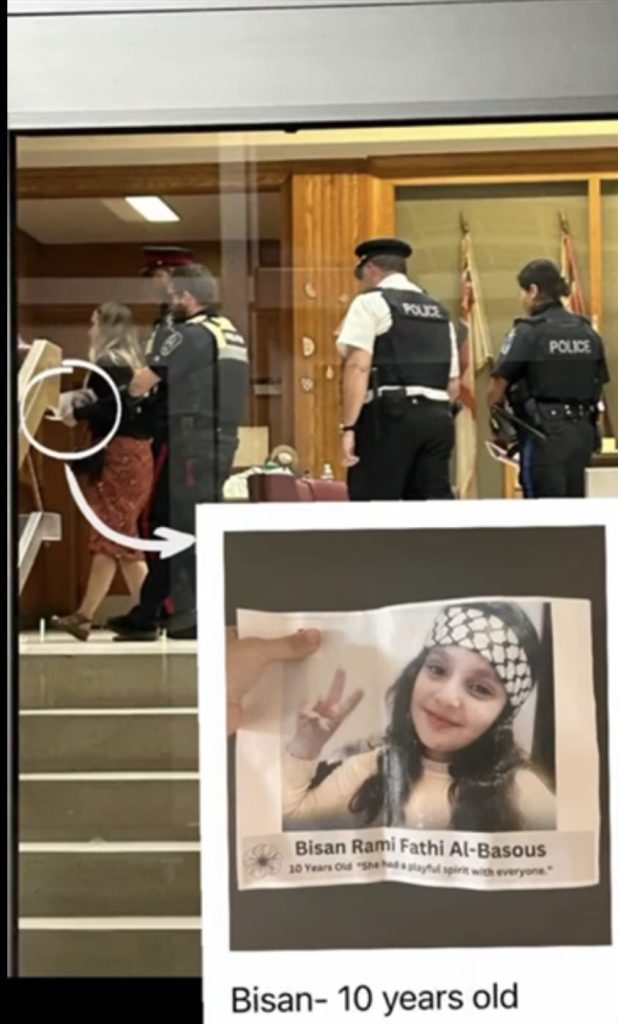
IMG 8584
Student protester being led away by CEP to be arrested by RNC. (Submitted)

I was next, and I remember that only one of the CEP officers actually grabbed me, the older one, proud and clearly inflated with his own sense of self-importance. The other one didn’t touch me but just marched alongside, hesitant and self-conscious, half reaching for my arm. I hoped he was ashamed. 

In the hallway, an officer processed me, telling me that I was under arrest, and reading me my rights and charge. CEP interrogated me on what classes I was registered in, in what felt like an effort to find out if I was secretly a non-student imposter. When the police and CEP were done with paperwork, they led me out of the hallway through a side door I had forgotten about in the blur of my newfound criminality.

Officers opened the door to send me out, and immediately two community members began berating them for the shame of arresting students and doubling down on supporting genocide. As they let me out the door, I felt like a dazed cod fish in a catch-and-release program, still clutching a picture of a murdered Palestinian school teacher. I hadn’t expected anyone to be at that door, and I immediately felt so grateful and safe. Weeks after the arrests, a different comrade told me that when they saw us getting arrested, it made them cry. 

The moments that stood out to me the most from the arrest and aftermath were about the people around me, and how important we are to each other. We feel so much rage and sadness and fear. We talk about it in grief circles. We also talk about how all of the rage and fear and grief and need to do something comes from the love we feel for our fellow human beings, here, in Gaza and everywhere. 

LESSON 4: Solidarity Now

Links between groups working for liberation are key for the success of all of our movements. The leaders of institutions that are currently committing or supporting genocide have unified and widespread tactics for repression. We need unified and widespread resistance. During the MUNFA strike, the community and students pulled together to support the striking professors. For us, support was instrumental in achieving any of the progress that we did. Recently, we showed solidarity with striking CUPW workers. Our local movement is part of a larger global call to end the ongoing occupation and genocide in Palestine. There are hundreds of similar on and off-campus groups across the world, and our strength comes from solidarity. 

If you’re involved in any kind of activism or community group, start thinking about how you can build connections and work with others for collective liberation. If you’re not involved yet, it’s so easy to start today. The most radical action I’d taken before May was citing Karl Marx in my homework. Although I’m still new and still have so much to learn, one thing I do know is that our community is full of people who care about each other and want to try to make the world a better place.

They are ready to welcome others and share their knowledge. It’s as easy as picking out one event this month to go to. If you are a student, we have been doing Food not Bombs pop up lunches in the University Centre food court every Tuesday – a perfect chance to chat. Your contribution matters as part of a greater process of building community unity. I think the most important thing I’ve learned through this experience is the value of those community networks and connections. The people united will never be defeated.

LESSON 5: Every little bit counts

As some people have pointed out (looking at you HSS Dean’s Office), MUN divesting their paltry $7 million will not bring back any of the people who have been killed. Despite those helpful words of encouragement, what we are doing does make a difference. 

More people than ever before are aware of the injustices occurring, and taking actions to try to stop it. Slowly, the tide of public opinion seems to be turning. Canada has begun voting in favour of Palestinian human rights at the UN. Universities, colleges, townships and other organizations are beginning to make commitments to divest. Student and Faculty Unions, including those here at MUN such as MUNFA, TAUMUN, MUNSU, and GSU have passed motions and published statements in favour of divestment. Locally, the St. John’s Pride Board has committed to supporting the BDS list.

I cried in public at their AGM when I realized divesting really was as easy as passing a motion and forming a committee. Companies on the BDS list are taking sales hits, and some have already divested due to the sustained pressure. Every small choice contributes to the global movement against Israel’s crimes.

Let’s revisit Lesson #2. The leadership of MUN (and just about every institution like it) are cowards. If they are going to take a useful, ethical stance, it will be because they are forced to do so through public pressure. I think this holds true across the board. When Glenn Barnes violated the Board of Regents Code of Conduct, it was reported to the University Auditor and the Minister of Education, but no action was taken (revisit Lesson # 1). However, when the media and public picked it up, the university launched an investigation that led to his eventual resignation.

Now I have to be moralistic and insufferable for a second. Sustained economic, social, and political pressure is necessary for meaningful change. That means you too should take stock of how you can contribute. It can be going to rallies, or workshops or fundraisers (check out @palestine_action_yyt for events). It could mean joining local Palestine solidarity organizations. It could mean skipping Chapters and Starbucks in favour of local options.

Send a letter to your MP. Email Neil Bose (president@mun.ca) and the Board of Regents (tinas@mun.ca) to let them know you think it’s shameful for our institution of higher education to be invested in weapons. Start asking where your pension money is invested and demanding your workplaces and unions divest. Since May, we’ve achieved a lot, but there is still so much work to be done. Lend your voice to the fight against genocide today. 

Got an opinion? Submit an Opinion Piece or a Letter to the Editor to the Muse.
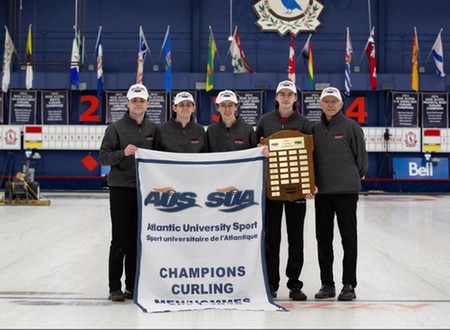
Sea-Hawks crowned 2025 AUS curling champions

0

The Memorial Sea-Hawks won the Men’s AUS Curling Championships at the Mayflower Curling Club in Halifax, Nova Scotia, this past weekend. It was the first time since 2017 that MUN had won the AUS Curling Championship, and the first time since 2023 that a men’s team from Memorial participated.

The Sea-Hawks went 4-1 in the round robin, their only loss was to six-time defending champions Dalhousie Tigers in Draw 2. Nonetheless, the Sea-Hawks still managed to finish first in the round robin standings and get a bye straight to the championship game, where they faced off against the University of New Brunswick Reds, who were looking for their first win since the tournaments inauguration in 2015.

Snapinsta.app 472489967 582075717765991 8269086496277498963 n 1080
Memorial Skip Simon Perry won AUS Male Athlete of the Week. (Eduardo Ibarra)

The final between MUN and UNB was a close thriller, with MUN pulling out on top 6-5. The Sea-Hawks got off to an early 2-0 lead, before the Reds rallied to score in three straight ends, going up 5-2 after five ends and putting the Sea-Hawks in a hole. The Sea-Hawks answered back and scored in three straight ends, and rallied to win the 2025 AUS Championship.

The Sea-Hawks have now earned the opportunity to participate at the 2025 USports Championships held in Lethbridge, Alberta, from February 24th-28th, where they will compete against the top university teams from around the country.

Climbing and community thrive at The Cove

0

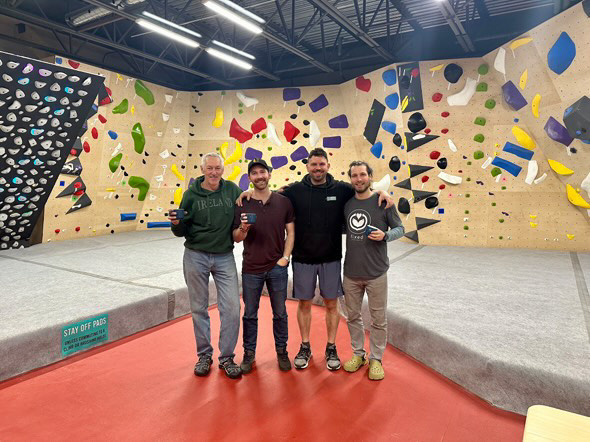
St. John’s newest bouldering gym and cafe, The Cove, wants you to ‘get stoked!’

Bouldering is rock climbing without ropes – but don’t worry, you don’t go as high, there are beginner-friendly routes, and the staff at The Cove will teach you how to fall safely.

Pioneered by longtime members of the climbing community in Newfoundland, co-owners Joel Harvie, Daniel Alacoque, Stephen Ryan and Bob Flynn have found great success since opening their doors in the summer of 2023. 

Bouldering: both addictive and aerobic

Climbing seems to come to people entirely by chance, but once folks find it they’re absolutely hooked. Co-founder and operator Joel Harvie got a coupon for Walnuts – St. John’s only other climbing gym – on a bus back from a marble mountain trip in his early twenties, and after cashing in on it, “I was at Walnuts every day for a month until I had to take a rest day, climbing was just very, very addicting, I couldn’t help myself, I haven’t looked back since and now here we are.”

Co-founder and operator Daniel Alacoque also found climbing around a similar age. After his friend pawned off their old climbing shoes on to him, Alacoque tried it out of curiosity and found himself quickly addicted to climbing as well. 

5B169DD4 1D76 4923 8238 9D3B8A9EAD04
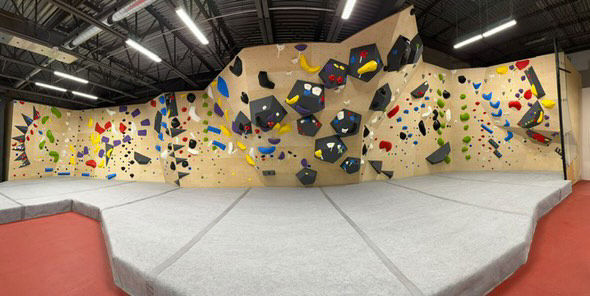
The climbing walls at The Cove (Submitted)

The Cove came to be when Harvie and Alacoque were both working at Walnuts. Heavily immersed in the local rock–climbing community, they identified a want for more in St. John’s, as they had both “done a fair bit of travel and had seen what climbing could be outside of Newfoundland.” 

“We were both working on this idea of a bouldering gym separately and we somehow figured each other out, sat down once for a conversation over a beer at Big Ben’s and I don’t think we ever turned around and thought about doing it without each other after that,” Harvie says, “we wanted to give back to the community who gave us so much.” Their visions for what a bouldering gym in St. John’s might look like seemed to align perfectly, and they began seriously working on the idea.

image
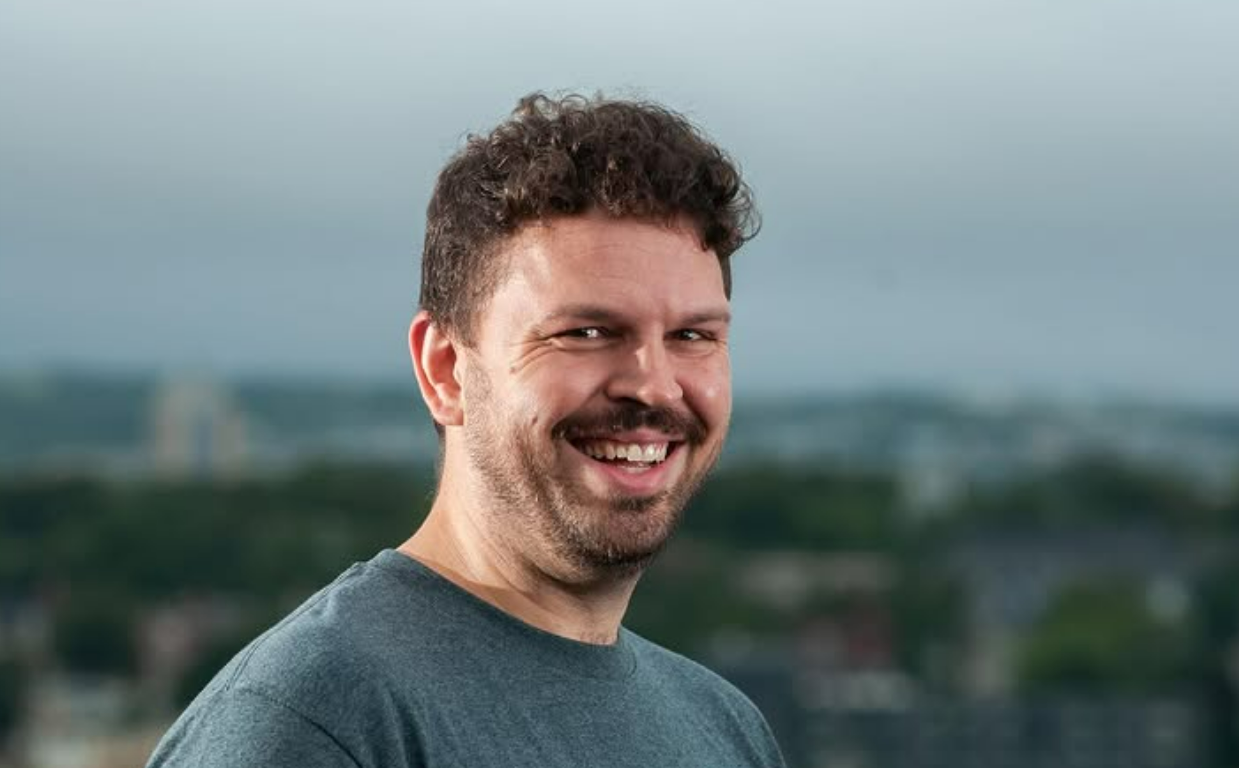
“We wanted to give back to the community that gave us so much,” says Joel Harvie (Submitted)

Cardio and community at the ‘church

Since its grand opening, The Cove has seen an overwhelmingly positive response from patrons, achieving one of the co–founder’s main goals in its establishment: to grow the local climbing community. Joel Harvie recalled that at the beginning, their friends and existing members of the local climbing community were thrilled. Now, over half their client base is people who didn’t climb before The Cove, and people seem to love the place. 

Alacoque likened being immersed in the climbing community to church, saying that “from what we know growing up, the climbing community is a little bit like a church sometimes, you spend years in the community – you see people meet each other, get married, have kids, and they’re all continuously climbing whether it’s casually climbing in the same day or hanging out at community events and its really cool to see.” 

“Seeing the youth come up in our ‘church,’ in our community, and so many of them continuing to stay involved after their default programming as a youth athlete … watching them still hang around and integrate into the community of their own volition has been really cool,” Harvie added.

As far as fitness goes, bouldering especially has a low barrier to entry. Harvie cites the accessibility factor as one of the main reasons for its spike in popularity over the last decade, “for bouldering you don’t need to do any kind of rope safety lesson which makes it more accessible to just try it out… if you imagine trying to organize every one of your workouts around somebody else, that’s brutal, so bouldering lets you just come in and do it on your own.” 

A189AD4E 5DDB 4876 B953 7223DC3C90D2
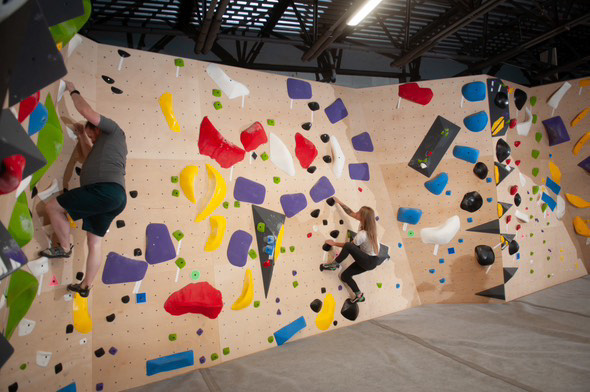
Patrons climbing at the Cove (The Cove)

Climbing also has a sense of childlike whimsy about it – many St. John’s residents may recall attending a birthday party at Walnuts as a child – which makes it a great outlet for stress relief, all while staying active. “Climbing also is a very natural thing to do, you grow up climbing trees, and stop as an adult, you don’t have that sort of childlike movement and it’s very cathartic to use your four limbs to climb up a wall,” Alacoque says.

Continued success of climbing on the rock

In conversation with The Muse, Alacoque also spoke about his experience as one of the leading climbing coaches in the province. Climbing is a highly individualized sport, and he said it’s been extremely rewarding to work with individual climbers and see their progress.

“Climbing is a good sport to coach the person rather than the team. If you coach a team of soccer, you’re focusing on the team, maybe some drills. You’re rarely challenging people and athletes one one-on-one, or encouraging the athlete to push their own limits individually. With climbing, all of the athletes, whether they’re youths or adults, they’re very individually focused. So if you are a person that is motivated to improve, climbing is a really good sport to push yourself,” says Daniel Alacoque.

The Cove recently announced plans for expansion following their immense success. The future of climbing in Newfoundland looks bright, and any susceptible climbers are encouraged to try it out, especially as the season’s weather worsens and staying active gets more difficult.

Degree or dinner: Survey seeks insight on campus food insecurity

0

As the seasons change and students head towards the end of the fall semester, a growing number at Memorial are grappling with more than just academic pressures. The rising cost of living is forcing many to choose between their education and their next meal.

“It’s not just about skipping a meal, it’s about constant stress,” said a third-year Computer Science student who wishes to remain anonymous. “I never imagined university life would mean deciding between buying textbooks or groceries.”

To address this escalating crisis, Food First NL, in partnership with The Hub for the Study of Local Governance in NL, and the MUN Campus Food Bank, launched a comprehensive survey aimed at understanding food insecurity on campus. Their goal is to improve the services and practices of the Campus Food Bank, as well as advocating for equitable policy change.

The MUN St. John’s Campus Community Survey is now live and will remain open until December 15th, 2024. You can access the survey here.

The survey aims to gather insights into students’ experiences with food insecurity, their interactions with the Campus Food Bank, and their suggestions for meaningful change.

“We want to hear from everyone—faculty, staff, or even community members who access the campus. Whether or not you have used the Campus Food Bank, your input is valuable,” said Madison Hynes, Program Assistant at Food First NL.

“The project isn’t just about studying the problem; it’s about starting to find real solutions.”

food insecuritty
Campus Food bank offerings (Jenna Head/The Muse)

Most students at MUN experience food insecurity: study

Food insecurity among MUN students has reached alarming levels. A 2021 study revealed that 58% of students at MUN experience food insecurity, significantly higher than the national average of approximately 13% (Blundell & Mathews, 2021). “Post-secondary populations have higher rates of food insecurity than the general population,” said Hynes.

According to Food Banks Canada’s 2024 Poverty Report Card, “Forty-three per cent of people [in NL] said they are struggling to access fresh and affordable food—the highest rate of any province.” Nearly 40% of the province is worried about feeding themselves and their family, which is ten percentage points higher than the national average.

As per Campus Food Bank data, food bank usage has doubled in 2023, overseeing 6324 visits. Relatively, the numbers for 2022 were 3317 visits. Currently, 2024 is heading for another recorded usage of over 6,000 annual visits.

Food insecurity doesn’t just mean hunger, it also affects mental health and academic performance. Upcoming research by Dr. Ken Fowler indicates that food-insecure students are more likely to experience high psychological distress and an increased frequency of suicidal thoughts. According to the study, they also tend to have lower grade point averages.

Insufficient financial aid a factor in food insecurity, says Hynes

Several factors contribute to the high rates of food insecurity among students. Rising tuition and living costs are significant issues, as “insufficient financial aid means many students’ aid packages don’t cover the full cost of tuition, let alone living expenses,” Hynes notes.

International students face even greater challenges. Their tuition has almost doubled since 2021. In addition, visa restrictions often limit their ability to work more than 20 hours per week, exacerbating their financial strain. “Many international students are unable to find employment that fits within their visa limitations, leaving them with minimal income to cover basic needs,” said Hynes.

Currently, according to statistics from the provincial government, the unemployment rate has orbited around 10% since September. This has left many students who graduate unable to find full-time jobs. Many end up relying on casual jobs or part-time work to support themselves.

Madi Hynes
“We need data from the students to advocate for change,” said Madi Hynes, PhD candidate and Program Assistant with Food First NL. (Memorial Grad Studies)

Food First NL calls for innovative solutions

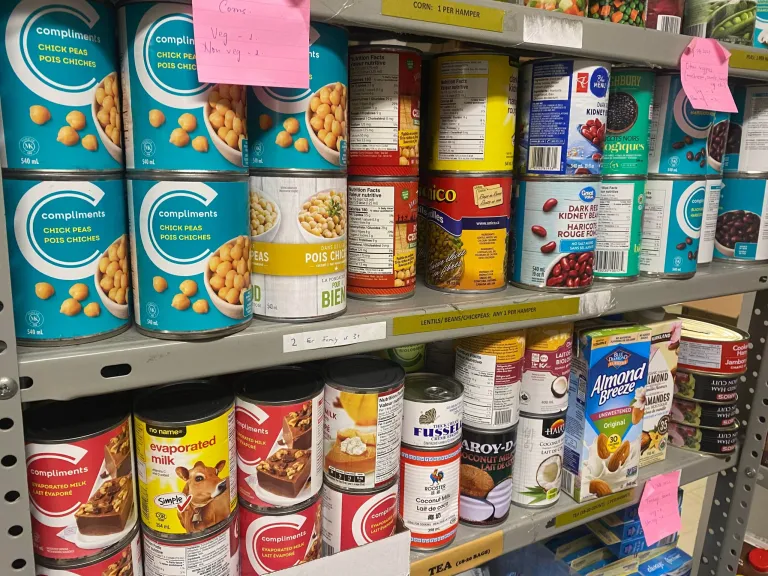
The partnership is exploring alternatives to traditional food assistance, with the grocery store model emerging as a promising approach. Instead of distributing pre-packaged hampers, this model allows students to select the items they need, mirroring a regular shopping experience. “The University of Alberta adopted this model and saw positive results,” said Hynes. “It’s less stigmatizing and more respectful of individual needs.”

At the University of Alberta, the Campus Food Bank transitioned to this model to offer a more dignified experience for students and community members facing food insecurity. By empowering users to make their own selections, the model aims to reduce waste and ensure that people receive food they’ll actually use. 

However, implementing such a model comes with challenges. “Donors sometimes restrict how funds can be used, preferring to purchase non-perishable items over grocery gift cards,” said Hynes. The hope is that this model, with its focus on dignity and choice, will resonate with the community and encourage broader support for adapting food assistance to meet diverse needs.

Data needed for increased advocacy

Participation in the survey is crucial to driving change. “We need data from the students to advocate for change,” said Hynes. “By sharing your experiences, you’re contributing to a foundation for meaningful advocacy.” The information collected will inform strategies to enhance food accessibility and affordability on campus. “This is just the first step; our ultimate goal is to ensure that no student has to choose between their education and their next meal.”

Students’ responses are anonymous and confidential. By completing this survey, students will have a chance to sign up to win one of ten gift cards (including Dollarama, Sobeys, or Tim Hortons) at the end. The chances of winning are dependent on the number of entrants.

The survey is currently live and will close on December 15th, 2024. You can access it here.

If you are experiencing food insecurity or need assistance, resources are available:

MUN Campus Food Bank: Located in room CA1000 of the Global Learning Centre (formerly Corte Real) building, Burton’s Pond Apartments, on Memorial University’s St. John’s Campus, offering support to students in need.

Dial 211: Newfoundland and Labrador’s community services helpline offers a directory of local resources, including food assistance and support services.

For additional information on food insecurity in Newfoundland and Labrador, visit Food Banks Canada’s Poverty Report Card.

Twelve myths about cycling debunked

I know what you are thinking: cycling is not really my thing. Cycling can be everyone’s thing! Whether as a hobby, commuting or simply an excuse to be outdoors.

Many people do not cycle because they have heard some reasons not to. But are they all true?

You need lots of fancy gear

Not at all. You just need a bike and a helmet. If you’re really into cycling, there will always be other nice gear that you might like to get later, but to start out, they aren’t necessary (and some of the high end equipment might not even give you an advantage as a beginner.

Bikes and gear are expensive

It is 2024 and inflation rates are rising but the cost of your bike gear doesn’t have to. There are loads of options to keep things on a budget, from second hand bikes online, to free or more affordable community bike repair shops. And with fewer components on a bike that wear down and break, you could really be saving some money. With savings in your pocket and a good bike, you would be smiling on your ride to the bank a lot more often.

On the topic of gear, as mentioned above, you do need a helmet. But, you might ask, are expensive helmets safer? No. All helmets are made to the same safety standard. Expensive helmets are usually just more comfortable or have other additional features like ventilation, light weight, visors, built-in lights, etc.

Only expensive bikes are worth riding

Expensive bikes will have various nice features. Generally, a high end (expensive) bike will go longer before the components wear down. They are often lighter. They might also have a larger range of gears that make hills easier. But… any bike in good working order will get you around town.

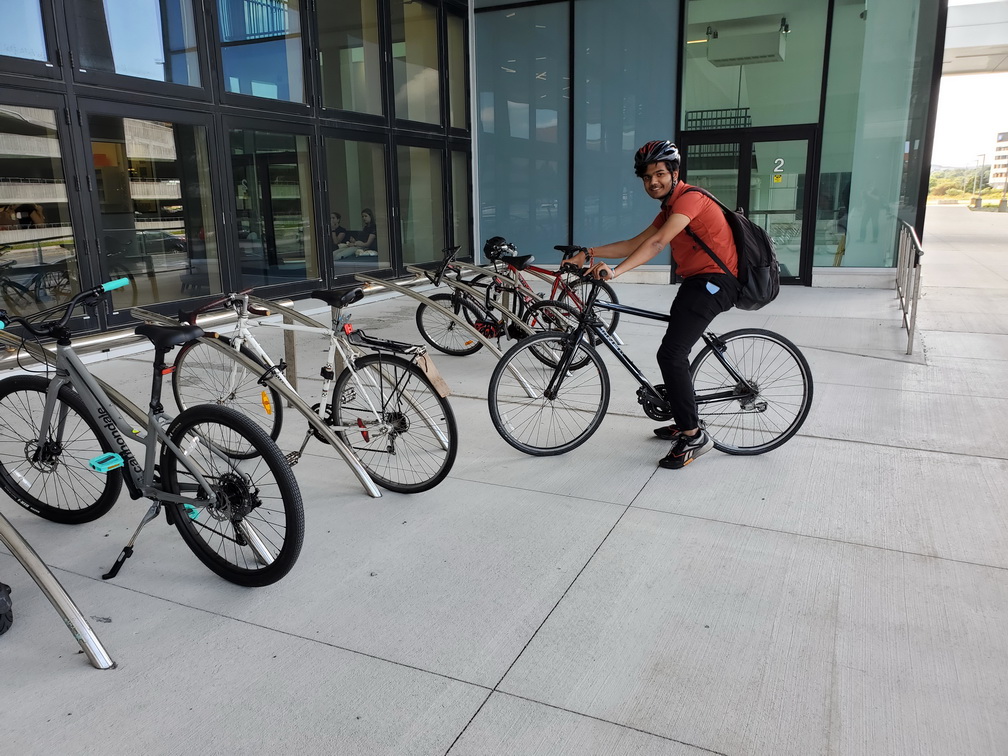
Cyclist at the Core Science building, MUN. (Photo by Otis Crandell)

Biking takes longer

It depends. In rush hour, a bike can often go short distances faster than a car. In St. John’s, anywhere within a 40 minute bus ride will probably be faster to get to by bike. Biking requires planning to know which roads will get you to your destination the fastest, and avoid hills as much as possible. Google Maps is a great way to plan out your trip.

It’s also good to plan the travel time into your schedule to take into account the extra time that it might take. Although it might take extra time, you can also count that towards your daily workout, so 30 minutes on the road is a combination of travel time and workout time.

Biking in the city is dangerous

It can be. That said, most cyclists go a long time without any sort of dangerous incident. The key is to be aware and ride responsibly – be predictable, wear bright clothing, look around you, anticipate what motor vehicle drivers are going to do, follow traffic rules, and claim your lane. It’s also good to avoid roads with heavy traffic and instead take a slightly longer route but with fewer cars.

I’m out of shape

If you are new to riding or haven’t ridden in a long time, then it may seem strenuous at the beginning. But if you ride for even half an hour every day (for example, to and from school) then you’ll notice that your legs will adapt within a few months. Biking will help you to get back into shape.

Cyclist at the University Centre, MUN. (Photo by Otis Crandell)

I’ll arrive at class sweaty

This might be true. In that case, you can always take it easy and take into consideration more time to get to your destinations. If you’re going to the university, you can take a shower at the Field House.

My clothes will get wet/dirty/wrinkled

If this is the case, you can always bring a change of clothes with you. Or have a change waiting in your locker. If you shower at the gym, you can also change into your new outfit at the same time.

On the topic of rain, what can you do when it’s raining? You have a couple of options. You could wear rain pants and a water resistant jacket. If you don’t mind being wet for a while, you could just change when you get to school. Or you could simply not ride that day.

Bike seats are uncomfortable

There are all sorts of seats. If you don’t like the one that came with your bike, you can pop into any cycling store and pick up a new one that suits you. They are interchangeable.

I live too far from the university

You can always ride part way and then take the bus. The city buses have bike racks on the front of them (from spring to early fall). Or ride to school and take the bus home. After a while you may find that you can do more and more of the trip by bike.

You can’t carry much on a bike

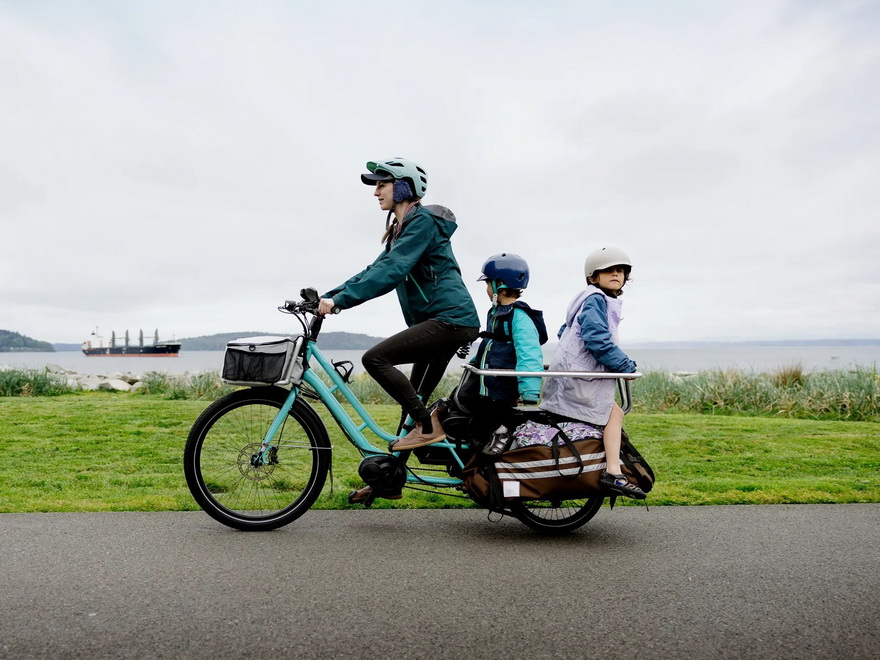
You would probably be surprised at how much you can fit into the panniers and/or baskets, and a backpack. A lot of cyclists carry the week’s groceries in a single trip. You can get quite large baskets or travel boxes for the back of your bike, or even a trailer for taking the little ones to school or the pool.

Tips for Family Cargo Biking resize
Commuting with the kids. (Photo by Ryanjlane. Wired)

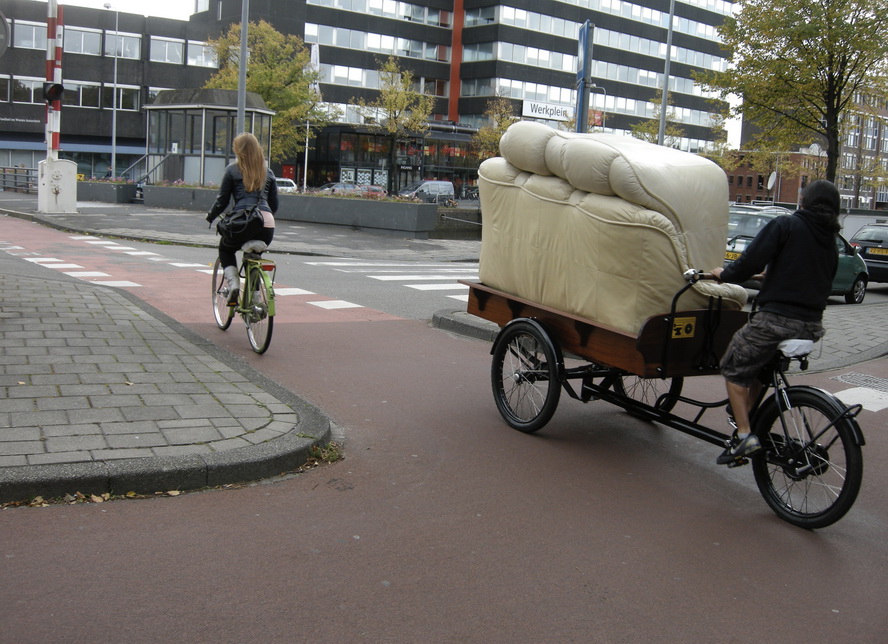
Is there a best way to carry groceries? What about my school books and laptop? There is no “best” way in general. It depends on you. There are various ways to carry things. Some people prefer a backpack, others prefer panniers, others like a large carrier box on the back (like a small trunk) that they can put their stuff in and take it out when they get to their destination. If you’re going on a long trip, you might want a trailer. If you want to carry a sofa, you might need a box bike. If you’re transporting your kids, consider a trailer (or a box bike).

sofas on bike resize
Carrying two sofas on a bike. (Photo by Mark Treasure @AsEasyAsRiding)

Bike maintenance requires specialized knowledge

In a way, yes, it does. But, most skills that you’ll need to maintain on your own bike are easy to learn. You can probably find a community bike garage (either in the city or on campus) where someone will show you how to maintain (or even fix) your bike. After you’ve changed a few tubes or bearings, or trued the spokes on a few wheels, you’ll get the hang of it. And if you don’t, there’s no shame in taking the bike to a professional to do a yearly tune-up.

If you’re interested in learning more about bike maintenance and repair, ask around to find a local bike club. Some might offer classes. Or visit a community bike garage where someone will probably show you how to fix things on your bike.

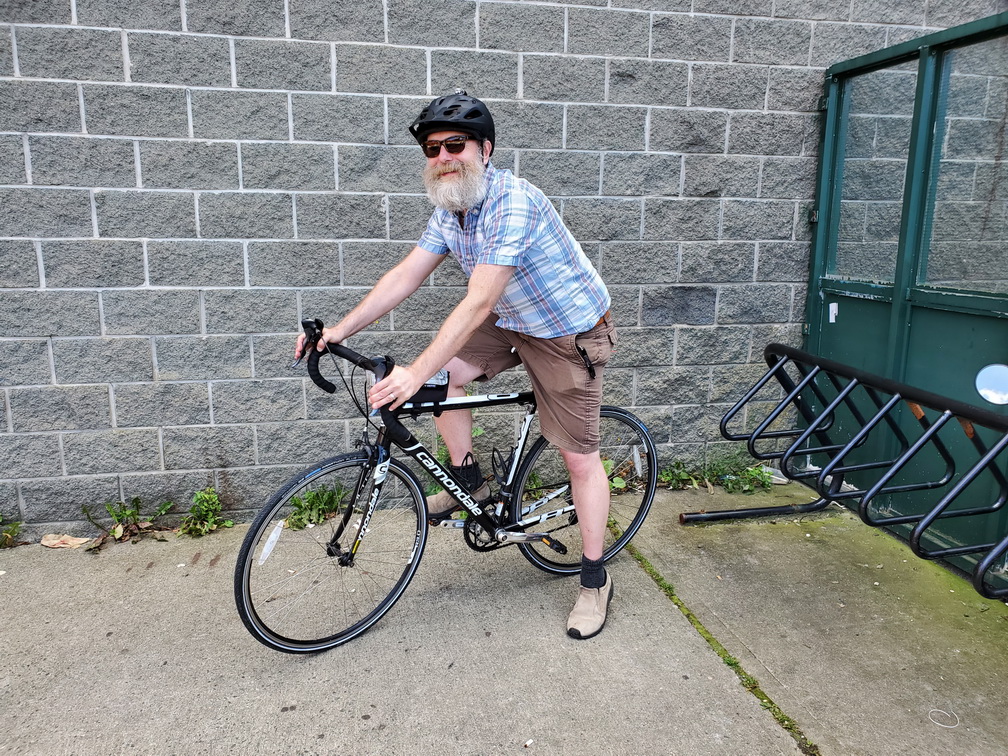
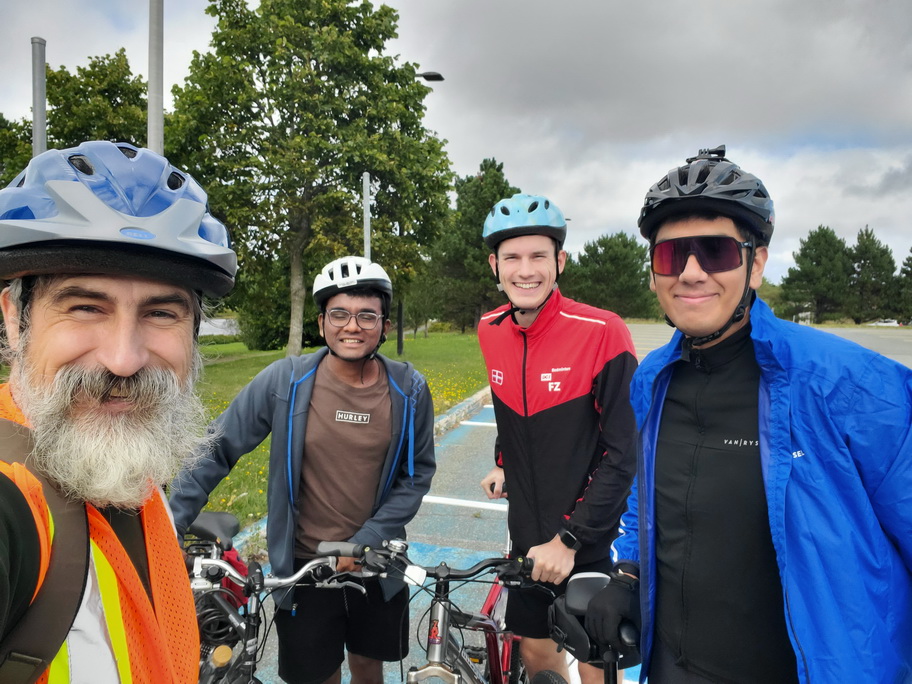
Friends out for a ride. (Photo by Otis Crandell)

All-in-all, there are lots of good reasons to take up cycling:

  • exercise
  • being more “green”
  • saving on car costs and maintenance (gas, parking, repairs, insurance)
  • more freedom and mobility than city buses
  • enjoying an outdoor activity
  • reduce stress
  • appreciate your surrounding while travelling

If you’d like to get started in cycling, contact the MUN Bike Hub (MUNBikeHub@gmail.com). The MBH is a student-run group whose objective is to promote cycling. The group organises easy, leisurely bike excursions and long distance excursions (also for leisure), as well as other bike related workshops and events on campus. The group is also advocating for a bike centre on campus where students can fix their own bikes and get guidance from experienced mechanics as well as a place to borrow bikes.

Graduate Student Union by-election begins: Candidates

0

Following the resignation of Sanjana Khan Shammi on October 1st, the Graduate Student Union is holding a by-election for the role of Executive Director of Communications. Voting takes place online from December 2nd to December 3rd, and only graduate students are eligible to vote.

Chief Returning Officer Connor Keill says he hopes to “run a fair, friendly, and transparent election.” Nominations for the election opened on November 23rd and closed on November 27th, and candidates will have about four days to campaign before the vote begins. When asked via email about the short timeline, Keill said the goal was to have the election done before exams.

“While the compressed calendar has been difficult for everyone, I have been very impressed by the ability of our candidates to rise to the challenge, said Keill.

The election will be a ranked ballot vote, graduate students will rank their choices from first to fourth.

Here are the candidates:

Oluleye Adebowale Adewale

image
Oluleye Adebowale Adewale is a graduate student in the Department of Safety and Risk Engineering (GSU)

Oluleye Adebowale Adewale is a graduate student in the Department of Safety and Risk Engineering. He says his experience in record keeping will help him bring transparency to the role.

On his campaign profile, Adewale says he has “the skills to maintain transparent and accessible filing systems while keeping graduate students informed through effective communication channels.”

Adawele says he will use social media, university platforms, and notice boards to increase communication with grad students. He also says he will organize workshops to showcase “communication and advocacy services available to students.”

Irfanul Islam

image
Irfanul Islam is a Master of Education student (GSU)

Irfanul Islam is a Master of Education student, and according to his campaign profile, he currently serves as an Aldrich Conference and Academic Coordinator for GSU.

Islam says that in his experience with GSU, he has “developed a deep understanding of GSU’s structure, operations, and the needs of its members.”

His priorities include increased transparency, communication and record-keeping. Islam says he will make meeting minutes, reports and updates accessible to members.

Sadie Mees

image
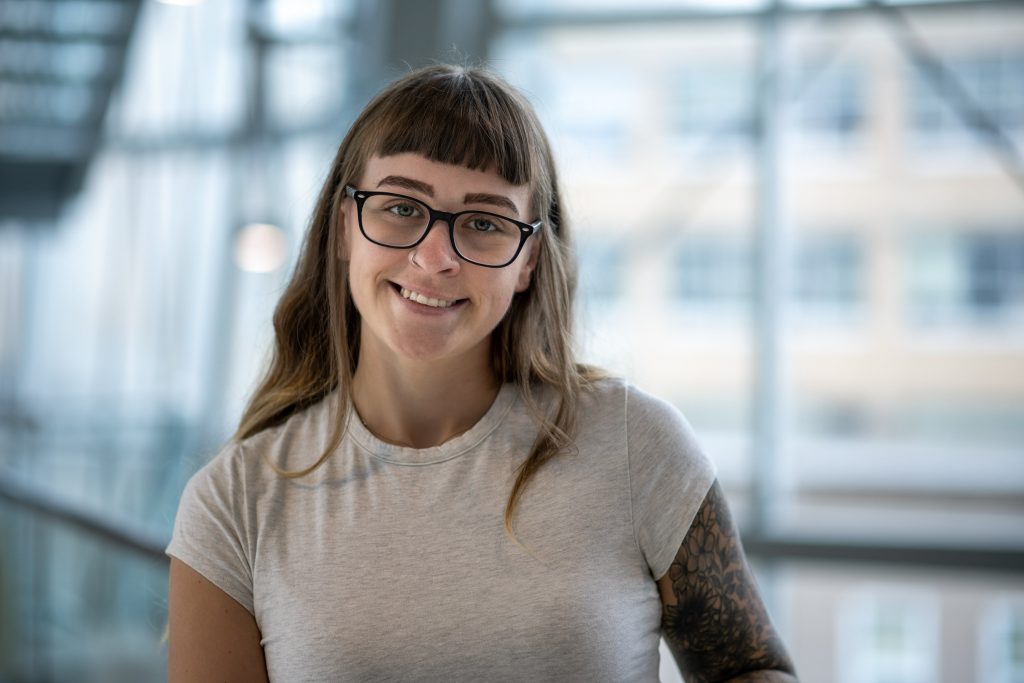
Sadie Mees is a master’s student in the Department of Anthropology (GSU)

Sadie Mees is a master’s student in the Department of Anthropology and says her experience in media relations and public speaking will help her carry out the duties of the position.

On her campaign profile, Mees says she has had difficulty receiving support from the graduate union in the past and would “like to help push the GSU in the right direction, towards a more positive and active role within the University community.

Mees says she would engage with graduate students to take feedback and “carry out direct actions to have those needs met.

Kunjankumar Rakeshkumar Varia

image
Kunjankumar Rakeshkumar Varia is a master’s student in oil and gas engineering (GSU)

Kunjankumar Rakeshkumar Varia is a graduate student in oil and gas. He says his job experience has given him interpersonal skills and problem-solving abilities that will help him in the position.

According to his campaign profile, Varia says he would like to increase transparency, community and advocacy. “This role is not about speaking for you but about creating platforms where your voices are heard.”

Varia says he can elevate the union’s outreach with his “expertise in social media strategy.”

The full campaign profiles can be viewed on the GSU Website.

An election forum will be held tomorrow at 4pm online.

Reaching for the stars: Students to develop MUNStar-1 satellite

0

Memorial University is preparing to launch its next contribution to research from with the development of MUNStar-1, an Earth observation satellite. Spearheaded by the Faculty of Engineering and Applied Science and supported by C-CORE, this student-led initiative is not only a remarkable technological undertaking but also a significant opportunity to address pressing global challenges like climate change.

This project builds on the success of Killick-1, another satellite developed under the Canadian Space Agency’s CUBICS program, which was deployed from the International Space Station earlier this year. MUNStar-1, a CubeSat equipped with a GNSS Reflectometry payload, will use reflected GPS signals as passive radar to monitor key ocean parameters. These include wave activity, wind patterns, sea ice, and potential oil spills—critical data for understanding and mitigating the effects of climate change.

Once launched into a sun-synchronous orbit or one similar to the International Space Station, MUNStar-1 will continue Newfoundland and Labrador’s storied connection to the ocean, but this time, from the vantage point of space.

The Killick-1’s successful launch from the ISS. View the full live stream here

Provincial and government funding

The project has attracted significant investment, with the Government of NL recently announcing $350,000 in funding through the Research Innovation Fund. This is in addition to $350,000 from the Canadian Space Agency and $100,000 from C-CORE.

Industry minister Andrew Parsons, emphasized the transformative potential of this initiative. “Through this project, Memorial’s students will have the unparalleled experience of building a device destined for outer space.

MUNStar-1 will not only enhance Earth observation science but also train the next generation of highly qualified professionals who will drive our province’s growing tech sector.”

The MUNStar-1 project stands as a testament to the creativity and ambition of Memorial’s engineering students, who have risen to the challenge of designing and building a device of this scale and complexity. Undergraduates and graduate students from electrical, mechanical, and mechatronics engineering programs are working collaboratively on the satellite, gaining hands-on expertise in cutting-edge space systems and Earth observation technologies.

C-CORE’s Vice-President of Remote Sensing, Desmond Power, underscored the dual value of the initiative. “This project not only advances climate research but also allows local companies to hire engineers who are already skilled in addressing industry-specific challenges,” he said.

Dr. Weimin Huang, a professor in Memorial’s Faculty of Engineering and Applied Science, highlighted the broader implications. “This funding strengthens Memorial’s research portfolio, enabling us to tackle climate change issues of critical importance to the province and beyond.”

Sea-Hawks volleyball off to solid start this season

0

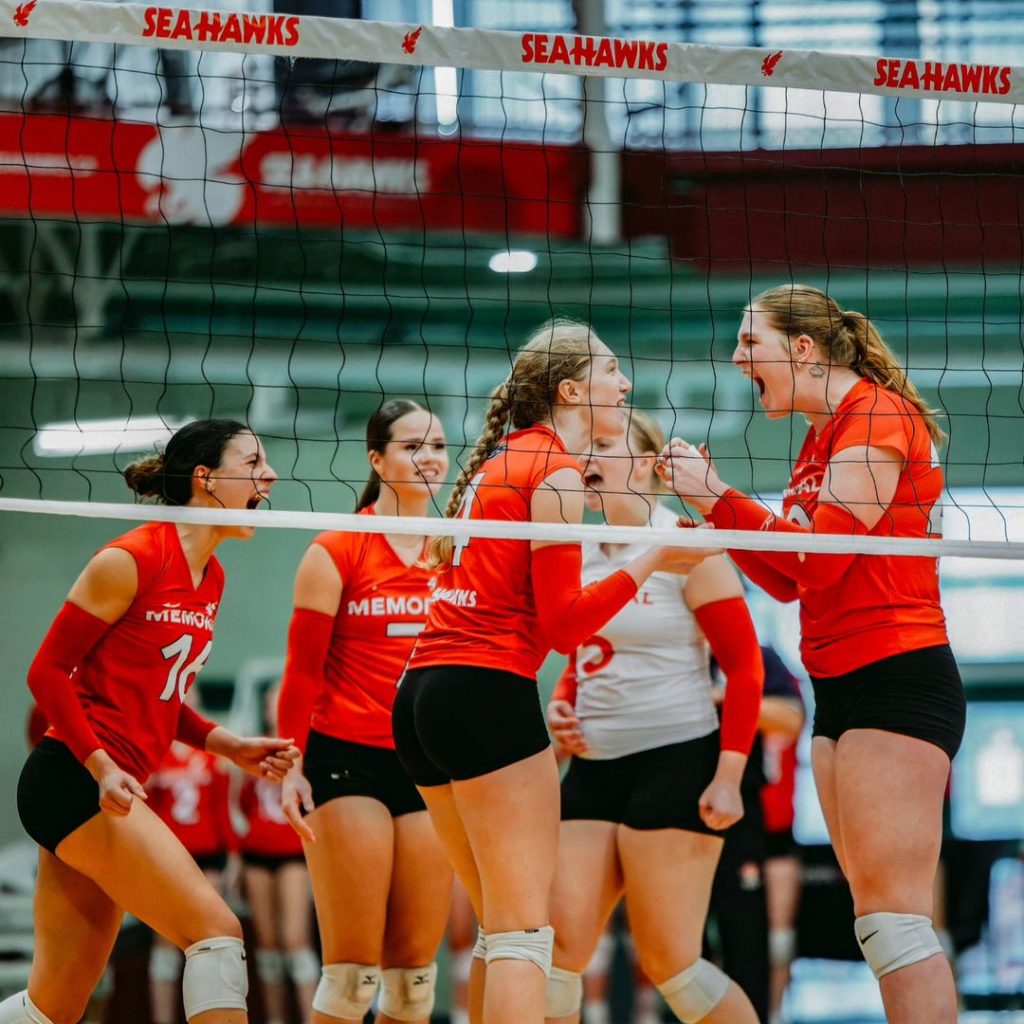
It’s been a great start to the Volleyball season for the MUN Sea-Hawks, as they have won three of their first four games. Sea-hawks are already up from from last season, as MUN finished in last place in the Atlantic University Sport league the season prior with a W/L record of 0-20.

Memorial opened their season in late October against the University of Moncton Aigles Bleus. Sea-hawks put out a great effort against Moncton, they won twice against them in the opening 2-game series.

Game one of the series was a thrilling 3-2 win for the Sea-Hawks. They won a tight first set 25-18, then dropped the next two sets to go down 2-1. The Sea-Hawks persevered, they won a close fourth set and edged out Moncton 19-17 in the penultimate fifth set. The second game was much smoother for MUN, they swept Moncton 3-0 in a very solid showing from the Sea-Hawks.

First Volley image
Memorial defeated Moncton 3-0, start their season with a W/L record of 2-0. (Loclynn Smith)

After a perfect start to their season, the Sea-Hawks headed to Wolfville to face off against defending AUS champions, the Acadia Axewomen. 

Memorial lost the first of this two game series, dropping a very tightly contested game 3-2. This was a very back-and-forth game, with each team trading sets, ultimately Acadia got the better of them in the fifth set, handing Memorial their first loss of the season. The second game of this series, the Sea-Hawks bounced back and won another very close game 3-2. This was identical to the first game, as both teams once again traded sets, and needed a fifth and deciding set to determine the outcome of this game, which ultimately saw Memorial win a close one 15-13, improving their record to 3-1.

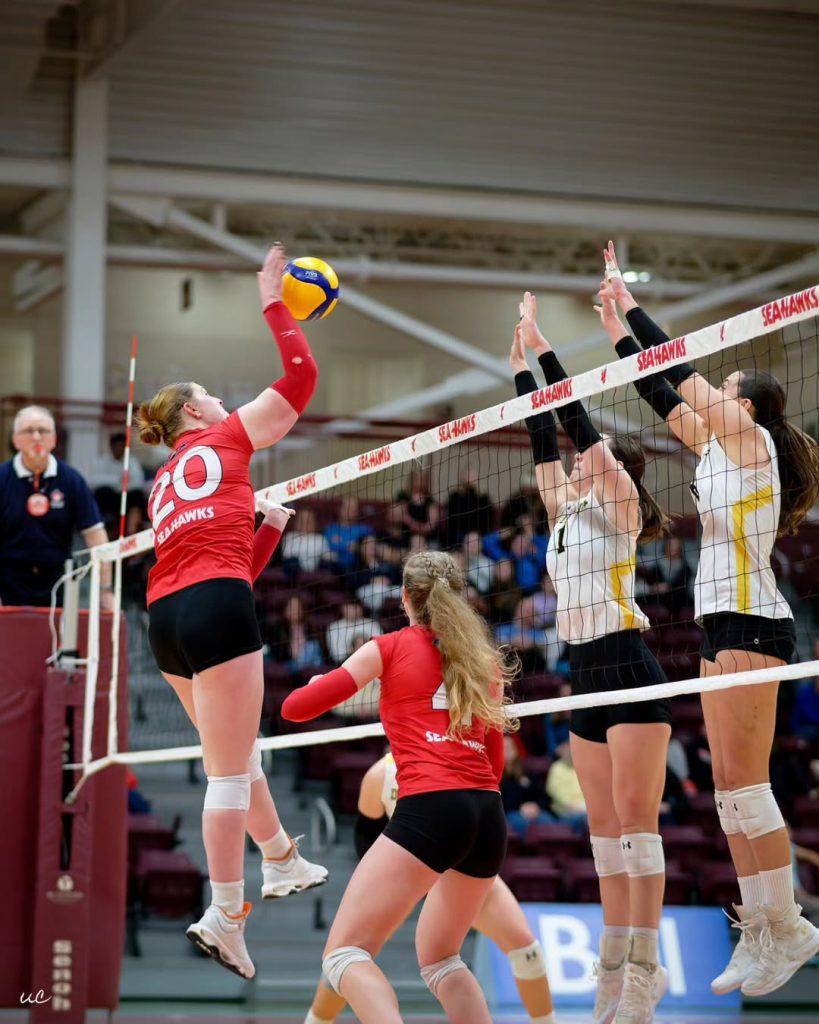
The Sea-Hawks then returned home, where they faced off against powerhouse Dalhousie Tigers, where they pulled off a very respectable two-game split.

In the first game of this two-game set, Memorial lost 3-1. After winning a close first set 25-22, MUN dropped the following three sets, with Dalhouie’s offense being too overwhelming for Memorial. The Sea-Hawks bounced back the next day, winning a back and forth game 3-2, including the fifth and final set 15-9.

Last photo volley
Memorial defeats undefeated Dalhousie 3-2 in a thrilling match. (Udantha Chandraratne)

This gave the Sea-Hawks a 4-2 record at the start of their road trip last weekend against Saint Mary’s, where they unfortunately dropped both games of this series.

In the first game, MUN won a long first set 30-28, but unfortunately dropped the rest of the sets, losing 3-1. The second game was also very similar, the Sea-Hawks won a long first set 30-28, then not being able to contain the Saint Mary’s offense, lost three sets in a row and lost the game 3-1.

That takes us to this weekend, where the Memorial Sea Hawks hold a 4-4 W/L record, and sit third in the AUS. Their next games are Friday, November 29th at 7:00 pm, and Saturday, November 30th at 1:00 pm at the Field House against the University of New Brunswick Reds. The Reds have a W/L record of 3-5 and sit fifth in the AUS.

That will be the final Sea-Hawks volleyball game until January 2025, giving them a well deserved break.

Earning while learning: An argument for paid social work field placements

0

It is essential for students without prior experience in their field to gain practical experience as a working professional in a more guided and controlled environment prior to graduation. 

According to Memorial University’s Bachelor’s of Social Work (BSW) Field Education Manual field placements are “an applied form of teaching and learning in which students have the opportunity to experience themselves as developing professional social workers in a supervised practice setting.”

This is completely reasonable and beneficial for any future working professional. What is not beneficial is that the majority of Social Work field placements are unpaid and actually cost students money. 

Reform is needed in organizations that accept social work students to ensure they are fairly compensated, and within the University to lower tuition rates for those completing field practicums to help to ease the financial burden of unpaid work.

Since many of these organizations depend on provincial and federal funding, given their mostly non-profit nature, there should be a targeted effort by the government to allocate specific funds for student placements. Doing so would not only reduce financial strain on students but also address the demand for services in communities that lack the necessary resources.

Financial impacts

“Students are required to register for the field practicum courses as they would any other course in the BSW program. BSW Field Practicum Courses: SCWK 3300 is the first BSW field practicum; SCWK 4302 is the second BSW field practicum. Both practica include 350 hours of field education with direct and indirect social work practice opportunities and field instruction.” (BSW Field Education Manual, 2022)

We reached out to Cheryl Mallard, the Manager of Field Education at the School of Social Work at Memorial University, to clarify why tuition costs remain the same during field placements, even though students are working rather than attending traditional classes. She explained:

“A social work field practicum is considered a course, not a work term. In fact, each practicum is equivalent to four courses. Students pay tuition accordingly, as the primary focus of the practicum is on the student’s learning.”

While it’s understandable that the primary focus is on learning, the tuition costs raise questions. Field placements inherently involve real work, as that’s how students gain practical experience. One student in a current placement shared their tuition costs—$3659.99—which covers four days a week in the field and a single 3-hour class at Memorial.

Normally, tuition at MUN covers materials, instruction, and campus resources—to name a few. Why, then, are students charged the same rates when they’re only on campus for their one 3-hour class? A fairer approach might be to maintain the course structure for financial aid eligibility while adjusting tuition to better reflect the nature of field placements. This adjustment would help students manage their finances while conducting these essential placements.

At a time when the field is struggling to retain essential workers for vulnerable populations—some even calling it a crisis—this kind of funding, paired with reduced tuition, would benefit everyone involved.

According to the Job Bank, Government of Canada, social workers earn hourly wages ranging from $24.04 to $48.00, with a median wage of $37.00. If a student were paid at the minimum wage, which is $15.60 in Newfoundland, a much lower figure than the low end of the scale, for 700 hours of work, they would gross $10,920. This could go a long way for a struggling student. 

While it’s reasonable to suggest that students might be compensated at a lower rate because they have not yet completed their degree, the focus should be on determining what constitutes fair compensation for their work, rather than questioning why they aren’t being compensated at all. 

Perspectives from the field

We spoke with Joanne Turner, a Social Worker with more than 18 years experience both locally and internationally serving at-risk youth.

“We lose a lot of potential good people in the field because students are having realistic conversations with themselves and their peers about what they can and cannot afford to do. The economic realities are dictating the direction they take, especially in a time of such instability,” said Turner.

There’s no bandwidth to follow what you’re passionate about if you’re struggling to make ends meet. Even 10 years ago, there was more flexibility, but now the economic landscape is too sharp. People can’t afford to put themselves at risk. How do you manage?”

Untitled design
Josh Poirier and Andrew Moulton are two social work students at MUN in a field placement. (Brandon Hinton)

This is what Josh Poirier and Andrew Moulton, two social work students currently enrolled in their first field placement in a prominent youth serving organization in St. John’s had to say:

Q: How has participating in an unpaid placement affected you financially? Do you feel the cost of living and additional expenses (like transportation) have been a challenge while managing your placement?

Josh: It’s stressful, but I was fortunate enough to save a lot during the summer. I rely a lot on those savings. If I was required to do a longer placement, or if my situation were to change, I don’t think I’d be able to be in the program at all.


Andrew: I rely on student loans and not a lot has changed. I have a budget but it’s very, very tight. Everything right now is stable, but my budget is set up to barely work and that’s if everything goes perfect.

Q: Do you feel that the lack of financial compensation affects the way you view the profession or your enthusiasm to work in the field?

Josh: “100%. Although, it’s well known that most people don’t get into this field for the money. It’s rewarding on another level. It’s like—I know I want to do this, but the older I get the more I think about money. You start thinking about the realities and it’s hard to ignore. Although we’re in this line of work for selfless reasons, you have to think about yourself, too.”

Andrew: In this field there’s a big emphasis on burnout and self-care, but it’s ridiculous to think that finances do not impact your level of self-care.

When asked about the response from the school regarding support for paid placements:

Andrew: “The School of Social Work has been very supportive. They ‘get it’, you know? Most of them are former social workers themselves.”

Josh: “At first, there was a petition we signed advocating for change, but after a while I think the reality set in that this is just how it is. Frustration isn’t for the faculty but more about rigid bureaucracy. We know there’s a need for workers in rural Newfoundland, and if you want people to work in these communities, they need to be compensated. If they had to tell me there was a paid placement in a rural community, I would have been on board right away to serve that need. I’d even do it for minimum wage.”

This mirrors the response from Cheryl Mallard, manager of Field Education on changes she would like to see:

“Associated costs and lack of housing are real barriers for students who may like to travel to rural NL. More bursaries and scholarships to support these types of opportunities may be helpful.”

It seems that whenever you speak to anyone connected to the field of Social Work—whether it’s students, current practitioners, or educators—the response is unanimous: fair compensation is essential to attract and retain passionate people.

Mallard
Cheryl Mallard is the Manager of Field Education for the School of Social Work (MUN)

We asked Mallard how feasible she thinks it is to implement paid field placements within the current structure of the program: 

“I do not think it is feasible at all in the current climate. We admit up to 100 BSW students annually to the BSW 1st and 2nd degree programs. On average 35-40% of BSW students obtain a paid practicum in a given semester. Our school relies heavily on the not for profit and community-based sector to provide valuable practicum learning opportunities for our students,” said Mallard.

“Most of these agencies would not be able to continue to participate in social work field education if paid practicum was a requirement. I also fear students would be delayed in completing their degree if this was a requirement as there is only so much capacity in the provincial social work practice community and less capacity to offer paid practicums.”

Placements that pay

In the 2022 BSW Field Education Manual it states, “Students completing a BSW practicum with the Government of NL are paid for the 350 required hours of the practicum, subject to current government policy. Other agencies or jurisdictions also may pay students for the 350 required hours of the practicum (or any portion thereof), subject to agency policies.” (2.5.3 Paid Placement, Page 27).

From Cheryl Mallard, manager of Field Education: 
“At the present time, paid practica are primarily with the Government of NL (direct line departments as well as NL Housing, Office of the Child & Youth Advocate, Office of the Citizen’s Representative, Office of the Senior’s Advocate) and some departments with the Government of Canada as per their respective policies regarding student placements, internships, and work terms.”

“The school, vis a vis the field education coordinators, is not involved in student employment contracts and compensation; this is between the agency and the student once has student has interviewed with the agency and offered a practicum subject to meeting the department/agency’s hiring requirements.”

It’s widely known among aspiring social workers that these roles within the government are often the only placements where they can earn a wage. As a result, many students take on these positions not because they’re passionate about these sectors, but simply because they need the income. Given the broad scope of social work, many students don’t intend to specialize there.

So, what does this mean for the quality of experience for both the students and the agencies if students are only choosing these placements because they offer compensation? Introducing other placements that offer payment for services will increase both the student and professional experience as well as the quality of service provided.

A Case for Compensation

Why should Social Work Students receive compensation? Here is a list of just five reasons:

  • Financial Burden: Unpaid placements can create significant financial stress for Students, especially those who are already juggling tuition fees, living expenses, and possibly other debts. Additionally, not all students have the financial means to complete unpaid placements, which can limit access to the profession for those from lower-income backgrounds. Compensation can reduce the need for students to work additional jobs, allowing them to focus more on their field placement and academic responsibilities.
  • Professional Recognition: Paying people for their work acknowledges the value and importance of their contributions to the agencies and clients they serve. This can lead to a greater sense of responsibility and investment in the work, potentially improving the quality of care provided and the learning experience.
  • Consistency with Other Fields: Many other professional fields offer paid internships or placements, making it reasonable to expect similar compensation in Social Work.
  • Living Expenses: Students often have to relocate or commute for their placements, incurring additional living or travel expenses that can be mitigated by receiving payment.
  • Reducing Exploitation: Ensuring students are paid helps prevent the exploitation of their labor, ensuring they are treated as valuable members of the workforce rather than free labor.

Final thoughts

For a field that serves the most vulnerable in the city and is experiencing a shortage that some are calling a crisis, it is paramount to attract and compensate social workers accordingly. Agencies considering social work students should be prepared to compensate them properly, or the government should provide subsidies to these students and working professionals.

If not at a full wage, because they are not fully qualified and the position requires oversight from both the university and the hosting organization, at the very least a partial wage aligned with their role and responsibilities should be considered. In the meantime, Memorial should also consider lowering tuition costs for those entering their field placements to help offset the pressure of rising costs of living.

A case for biking at Memorial

In Newfoundland, despite the rain, drizzle, and fog, biking continues to be a viable mode of transportation. For most of St. John’s, according to Google Maps, after driving, biking is the second fastest option to get to campus. While it is also a good option, taking the bus can mean long wait times to board the bus or even for transfers. Riding a bike to the university can cut your 48-minute walk or 39-minute bus ride down to 15 minutes.

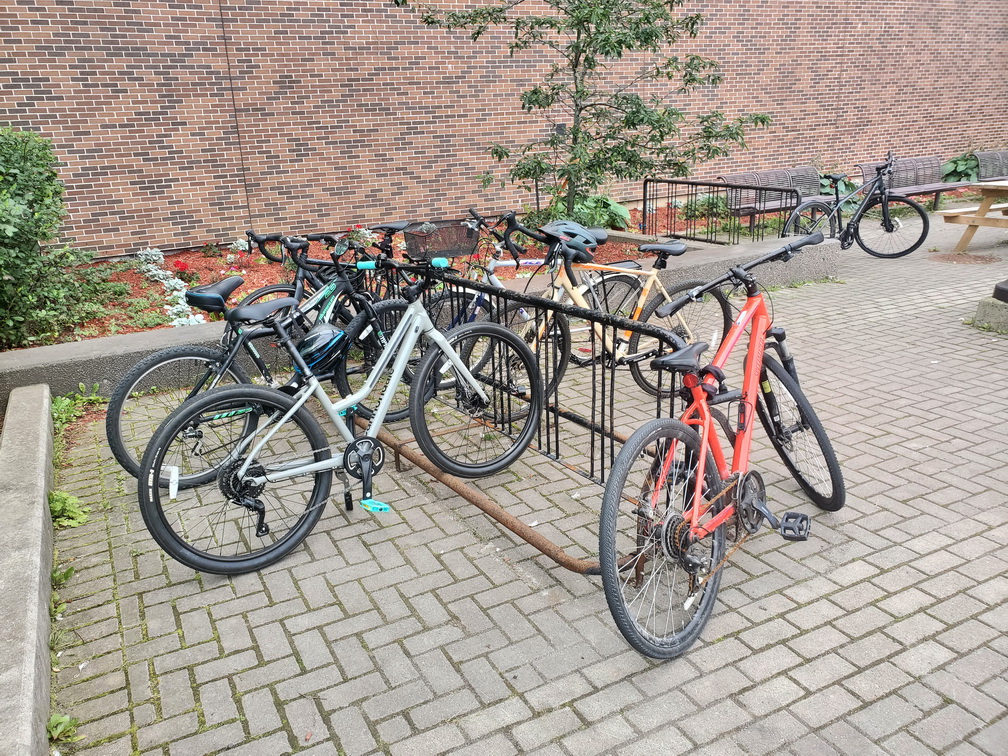
If you usually drive, there are plenty of upsides to biking instead. No need to search for a parking spot at MUN, as there is an abundance of free bike racks around campus, including some in indoor spaces. MUN also has a few bike lockers at two locations on the main campus and one on the Signal Hill campus. Furthermore, biking saves money, as there is no need to buy gas, or carry out expensive repairs. The only repair with biking is regular tune-ups which are a lot cheaper than on a car.

From a sustainability point of view, biking helps reduce your carbon footprint in a manner that adds up over time. For instance, more cyclists mean fewer cars and less reliance on motor vehicles, reducing pollution. From a health standpoint, biking improves physical and mental health. As you bike, you burn calories, reduce your risk of type 2 diabetes, lower your LDL cholesterol, and improve cardiovascular health [see also], while also easing feelings of stress, depression, and anxiety by promoting the release of endorphins in your body. Furthermore, biking has been shown to improve and preserve cognitive abilities in adults. Therefore, cycling is a long term, sustainable, and affordable means of transportation with a broad range of benefits for the present and future generations.

Awkward bike racks at the Health Sciences building.
Awkward bike racks at the Health Sciences building. (Otis Crandell)

Memorial University needs to embrace, endorse and promote biking

To make biking more attractive at MUN, more initiatives are needed. Encouraging biking on campus means less demand on the limited car parking spaces. Bikes also provide a suitable alternative for many students whose accommodations are too far away to walk to school but close enough to bike. Promoting biking is promoting an active lifestyle, healthier student and staff will translate to better productivity in general.

Promoting biking at MUN could help new out-of-town students who do not own a car. New arrivals often have to get around town to find a place to rent, shop for household essentials, and sort out administrative matters. Being able to borrow or rent a bike when they are new in town can make settling in a lot easier.

Having access to a bike gives new arrivals the freedom to get around town while learning to navigate the limited bus system in St. John’s. Overall, promoting biking at Memorial University will be a win for everyone, on many levels. A few pro-bike initiatives have popped up at the university such as last summer including e-bike rentals.

The e-bikes cost $80 for 3 hours and had to be picked up and dropped off at the company office. While it is great to get more people familiar with other forms of transportation, the e-bike rentals were out of budget for most students. Other projects included new bike path on Elizabeth Avenue, bike lockers available for rental from the MUN Sustainability office, and MUN Bike Hub student group.

Meeting up for a group ride. (Photo by Otis Crandell)
Meeting up for a group ride. (Otis Crandell)

Misconceptions about biking as a primary means of transportation

Barriers that prevent biking from becoming a primary means of transportation include misconceptions such as ‘You can’t ride in the cold/rain’, ‘You can’t ride all year round’, ‘St. John’s has too many hills. I’m not in good enough shape for riding up hills’, ‘Bikes are expensive’, ‘Cycling is not safe.’

If we dig deeper, we will discover that these misconceptions can easily be dispelled, using simple workarounds. For instance, you can ride in the cold and/or rain with proper rain gear, gloves, and warmer helmet and biking shoes. Biking over a hill is doable, using the right low gears, which is independent on your fitness level. As to the misconception of bikes being too inexpensive, bikes come in a spectrum of bike price ranges. It is possible to get an affordable bike to match your current financial state.

While there are risks to biking as with other things, using bike lanes and following bike safety tips such as using a helmet, and driving defensively improve the safety of biking [see also].

Introducing the concept of a bike centre

Across Canada, many universities have a bike centre – a hub for students to deal with biking needs and to promote a cycling culture on campus. For instance, Dalhousie, McGill, University of Ottawa, University of Toronto, University of Waterloo, University of Guelph, Laurentian, University of Winnipeg, University of Saskatchewan, University of Alberta, University of Calgary, University of British Columbia, University of Victoria and others have bike centres on campus.

The universities and student unions provide an indoor space and funding for bike centres. Most of these university bike centres provide free use of tools and free used bike parts. Parts that have to be changed more often like tubes, cables and tires are sold at cost. These centres also offer technical experience and assistance for students to tune-up or repair their bikes.

Bike centres provide a place for organising bike related events such as basic maintenance workshops, advanced bicycle repair workshops and beginner biking classes. Bike centres are usually run by volunteers and typically receive frequent bike donations. The donated bikes are lent out, sold, or disassembled for spare parts.

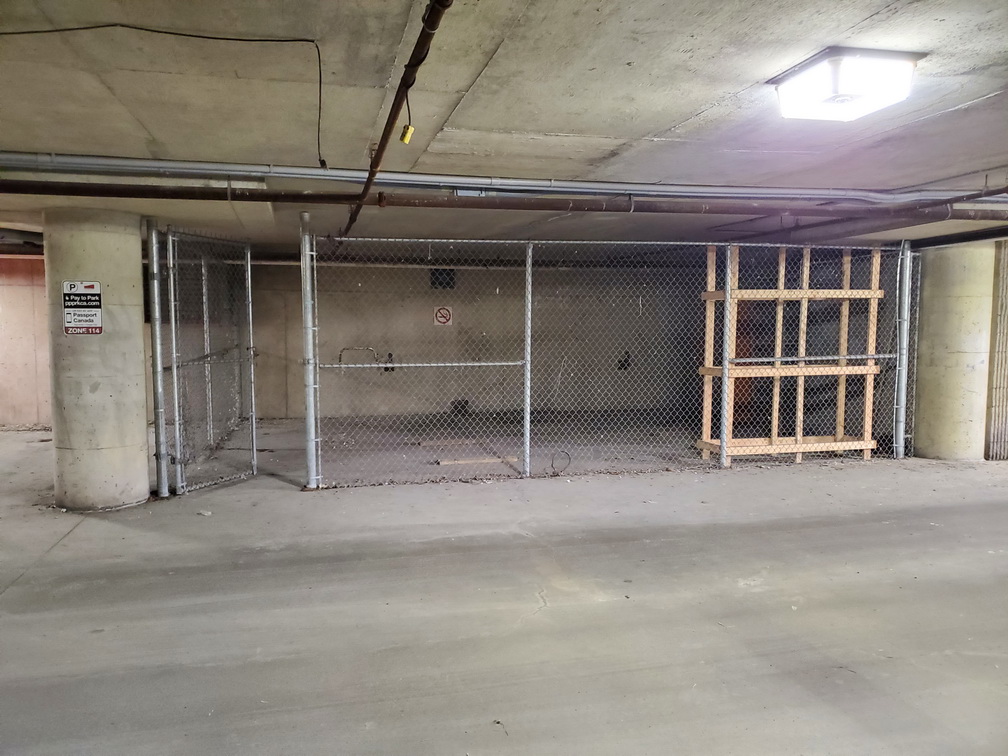
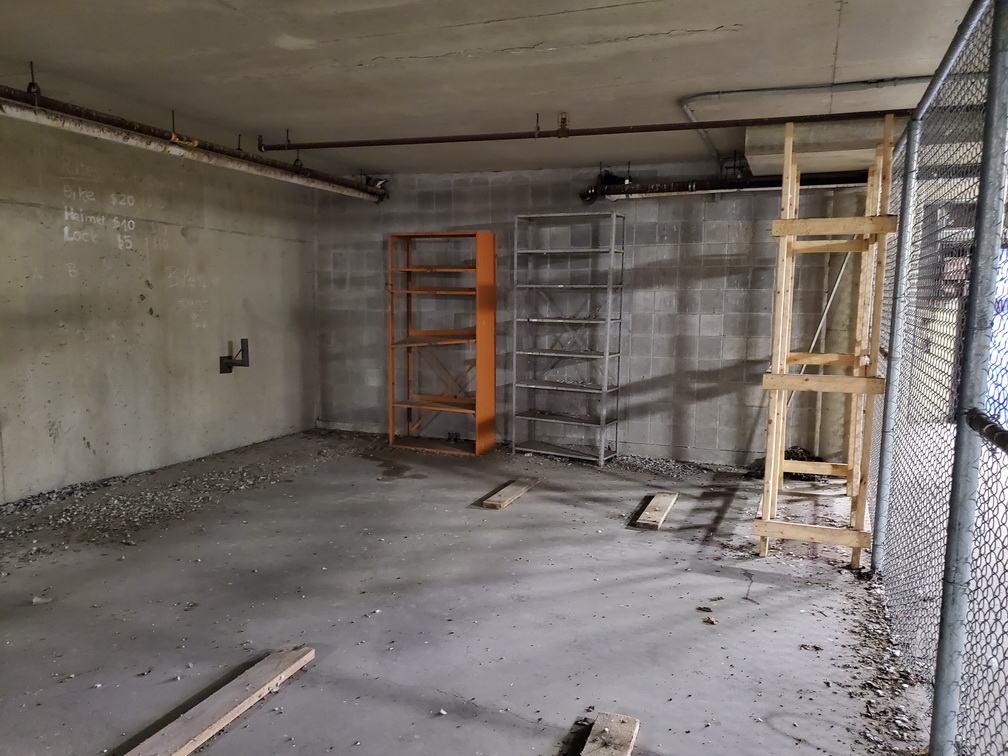
In the past, MUN had a bike centre which operated between 1993 and 2003, and from 2007 to 2020. The bike centre was slowly downsized and moved from an indoor space in the Engineering building, to a weather-exposed, and unlit area of a parking garage. The last bike centre was shut down during the pandemic and the associated bikes and equipment given away. The MUN bike centre offered technical assistance and access to tools, as well as new and used bike parts. They also rented bikes to students at a low cost of $20 per calendar year.

Location of the previous bike centre at MUN, now a sanctuary for pigeons. (Photo by Otis Crandell)
Location of the previous bike centre at MUN. (Photo by Otis Crandell)

Would you like MUN to have a bike centre again?

A small group of students – the MUN Bike Hub – are working on restarting the bike centre at MUN and are currently seeking volunteers with any skills that might be of use. Skills required in volunteers include experience with bikes, administration, logistics, marketing, social media, or grant writing.

Other skills that may be useful are also welcome. Currently, one of the things the MUN Bike Hub needs is for supporters to petition the university for a space to run the program. To make biking more accessible at MUN, consider letting your student union know that you would like and benefit from a bike centre on campus and that you’d like them to push for something like this. Also, consider contacting the university senate and lobbying for their input in approving a bike centre on campus and how this could impact you, the university community and the environment.

To get involved, and make biking more accessible at MUN, contact the MUN Bike Hub group at MUNBikeHub@gmail.com.

MUN Bike Hub logo. (MUN Bike Hub)