The men’s and women’s Memorial Sea-Hawks soccer teams were home this weekend for a two-game series against the Cape Breton Capers.
MUN Women’s Team Earns Crucial Series Split
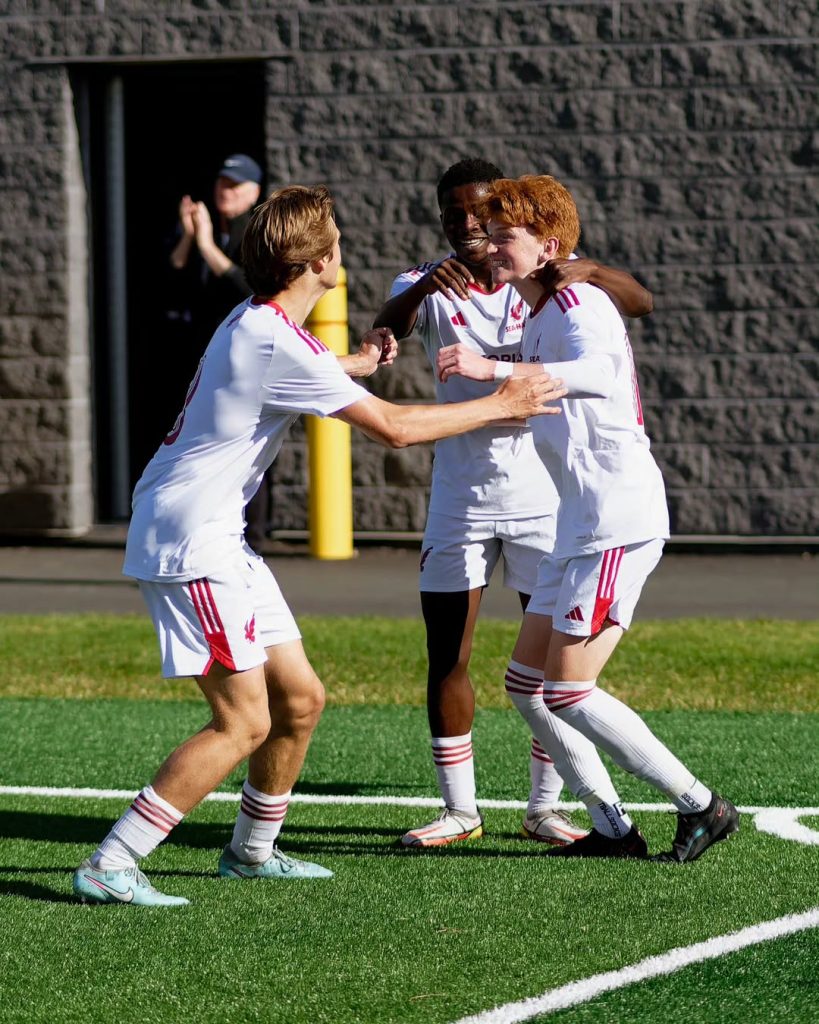
Memorial defeated Cape Breton 3-0 Saturday, before falling 1-0 Sunday (munathletics/Instagram).
The MUN women’s soccer team was in for a tall task facing off against CBU, as they have consistently been one of the top teams in the AUS.
Not only did CBU win the AUS championship last season, they did so without losing a single game. In fact, the last time the Capers had even lost a game came back on September 9th, 2023, over two years ago when they lost 3-1 to StFX.
During the Capers championship run last season, they faced off against the Sea-Hawks in a massive semi-final game, where they would breeze by MUN, winning 4-0.
This was also a significant series for MUN because CBU sat only one point behind them in the AUS standings, meaning if MUN did struggle against CBU, they would have likely fell a few spots in the standings, as all the teams placed behind Memorial in the standings also earned points this weekend.
Luckily for the Sea-Hawks, they came out guns a-blazing Saturday afternoon, as they completely dominated Cape Breton. Zoe Rowe would open the scoring in the 4th minute of the match, as she added her league leading 10th goal of the season.
The Sea-Hawks would continue to build off of their early momentum, as Jen Milligan would add her 3rd goal of the season in the 14th minute, giving MUN a 2-0 edge early.
The Sea-Hawks would net one more goal late in the first half, as Isabella Hoddinott scored her first goal of the season in the 43rd minute, and gave MUN a massive 3-0 lead.
That was all the offence that Memorial needed, as they cruised their way through the rest of the match and would hand Cape Breton their first loss in over two years.
While MUN dominated the game on Saturday, it was a bit of a different story on Sunday. Cape Breton looked much better and was able to keep up with Memorial, and it paid off for them, as Grace Hannaford scored in the 54th minute, which would ultimately hand the Capers a 1-0 lead.
While MUN was unable to score in game two, it was still a very respectable performance, and a match that they were in until the very end.
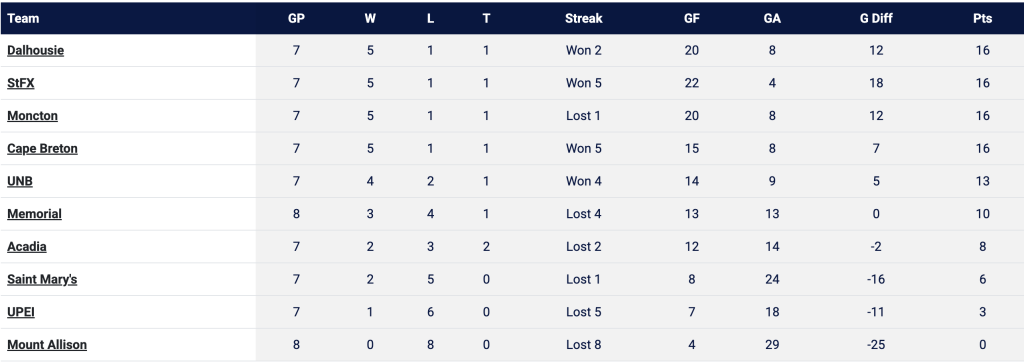
Standings wise, after the series, Memorial maintains their one point lead over Cape Breton, and now sit in third place with four games left on the season. As of now, Memorial would be the top seeded in the quarter-finals and would face off against StFX.
Memorial sits in third place in the AUS Women’s Soccer Standings (atlanticuniversitysport.com).
MUN men’s Team drops both games, extend losing streak to four games
Memorial lost 2-1 on both Saturday and Sunday (munathletics/Instagram)
The Men’s team entered the series on a two game losing streak, after starting the season 2-0-1. This was the opposite of Cape Breton, who entered the series red hot on a three game winning streak.
Both teams entered the series tied in the standings with 10 points, meaning these two games had huge ramifications on the standings moving into the last quarter of the season.
Memorial got off to a great start Saturday afternoon, as Andy Knight netted his first goal of the season in the 16th minute, giving his Sea-Hawks an early 1-0 lead. That lead would later evaporate during the dying minutes of the first half, as Max Piepgrass tied the game, before Evan Cunningham scored the game winning goal in the 57th minute to ultimately give the Capers a 2-1 win.
The Sunday afternoon encore was much of the same, as CBU would yet again come out on top 2-1, thanks to a two goal performance from Jamie Nicholson. Luke Peddle scored the lone goal of the game for the Sea-Hawks, scoring his third of the season in the 90th and final minute of play.
MUN exits this series now on a four-game losing skid, and will hope to get back on track next weekend, as they head to Nova Scotia to face off against Acadia and Mount Allison in their final road trip of the season.
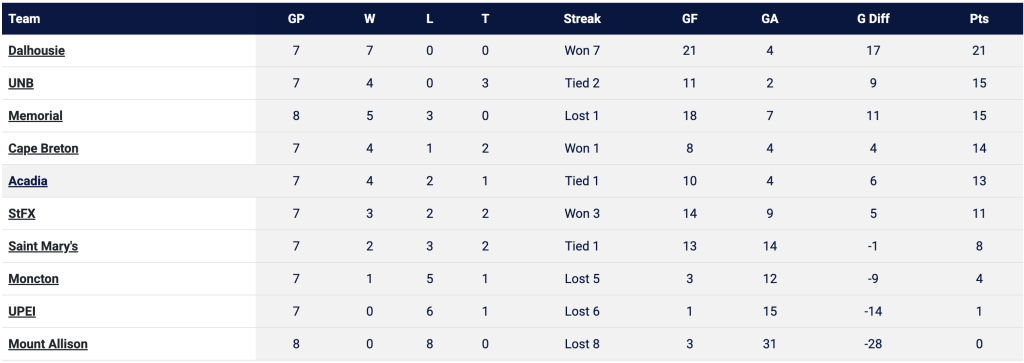
Looking at the men’s standings, the Sea-Hawks now sit in the sixth and final playoff spot, with Acadia two points behind them in the standings. That game is yet again going to have huge potential playoff ramifications for the Sea-Hawks.
Memorial sits in the sixth and final playoff spot in the AUS men’s Soccer standings (atlanticuniversitysport.com)
Voters in Newfoundland and Labrador are being faced with the somewhat confusing scenario of having both municipal and provincial elections occur simultaneously. NL residents will elect a both municipal councils on October 2nd and provincial MHAs on October 14th.
There is no shortage of campaign material found throughout the city as signs have sprouted up. With the overlapping of municipal and provincial signs, I couldn’t help but also think about overlapping issues councillors are having to confront directly at the municipal level, many if which are also provincial and federal responsibilities.
You might not have strong opinions on waste management, or zoning regulations, but I would dare argue that municipal politics is just as, or more important than its provincial and federal responsibilities.
When you wake up in the morning to pour yourself a glass of water or get a shower and the water isn’t contaminated, that’s municipal politics.
When you stop outside, breathe fresh air and observe the absence of rotting garbage, that’s municipal politics.
When a snowfall hits and the roads are plowed so you can still get to work or school, that’s municipal politics.
You have enrolled in college or university classes and need to move into the city. As a result, you need an apartment to rent. However, you are faced with a shortage of decent rentals and the last 5 apartments you’ve looked at way over your budget. Better get some roommates. Additionally, there is 20 other applicants for the apartment, so you are not likely to get it anyways, that’s also municipal politics.
Indeed, while the provincial and federal governments talk a great deal about funding housing strategies, your local councilors are the ones dealing with approving new developments, passing zoning bylaws and hearing from residents about homelessness or the impacts of short-term rentals.
You’re commuting from a suburban home to a job in the urban core, traveling a considerable distance between where you live and where you work. However, you are stuck in traffic, there is a line of cars in front of you halted to a stop and you are likely to be late for work again. As you sit, idling alone in your car a bus shelter stands empty on the shoulder, its schedule flapping in the breeze, that’s also municipal politics.
Big infrastructure announcements are always popular, especially during election season. Another highway expansion that’s “guaranteed” to clear traffic.
At the same time, it’s your municipal council that manages the transit system and shapes streets, determining bus routes, service schedules, and whether roads are safe and convenient for walking.
You’re sitting at home, listening to the noises of thunder and rain outside as another ‘once in a lifetime’ storm has struck. As the flash of lightning lights up your living room, you worry about your own safety and that if your basement apartment floods again, on top of losing all your possessions, you’ll need to find a new place to live, that’s also municipal politics.
Climate change and the governments emissions reduction strategies understandably is a major portfolio deserving much attention. Yet, it is your municipality that will be responsible for stormwater drainage, culverts and floodwalls. All critical infrastructure that keeps you and your community safe.
While we are likely to hear a great deal about many of these issues discussed by governments in the national press, the impacts will be felt locally in your community.
Voter turnout for the city of St. John’s in the 2021 Municipal Election stood at just 47.10%, meaning over half of residents of voting age didn’t participate. Unfortunately, many of us are choosing to sit out as important decisions are being made that will evidently impact our daily life’s.
Lower voter turnout doesn’t merely just reflect apathy; it has real consequences. When residents abstain from the process, critical decisions are made without broad public input.
In a democracy, our collective voice matters and deserved be exercised. Especially considering the many issues and crises we are facing.
As we approach both municipal and provincial elections, I encourage you to get involved, learn about the challenges our city is facing.
Reach out and speak to your candidates for Mayor, Deputy Mayor and Councillors about what their vision for your municipality. And most importantly, vote.
Got an opinion? Submit an Opinion Piece or a Letter to the Editor to the Muse.
After 17 years, the Quebec Maritime Junior Hockey League is back in St. John’s as the Newfoundland Regiment officially began their inaugural season Thursday night against the defending QMJHL champions Moncton Wildcats at the Mary Browns Centre in front of a sold out crowd.
Before the first game started, there were some pregame ceremonies that paid tribute to the Royal Newfoundland Regiment, as well as a ceremonial puck drop. The fans were also introduced to the players one by one.
Some notable players on this years Regiment team include captain Justin Larose, who scored 61 points in 63 QMJHL games last season, Montreal Canadiens prospect and starting goaltender Mikus Vekvanags and Newfoundlanders Ben Veitch and Quinn Norman, who were each selected 5th and 6th overall in the 2025 QMJHL Draft.
There is also Noah Laberge, Will Reynolds and Dawson Sharkey, who were drafted in this years NHL Entry Draft, but were unable to participate in this series due to participating in NHL training camps.
Once the game got underway, the Regiment started off slow, giving up a goal 42 seconds into the game as Rian Chudzinski put the Wildcats up 1-0. The Regiment didn’t even register a shot on goal until the 13:47 mark of the first period, where Tyson Goguen capitalized and scored the first goal in Regiment history.
Goguen’s goal opened the floodgates for the Regiment, as they would score another two goals in the following two and a half minutes, as Biagio Jr. Daniele and Marek Danicek scored their first of the season, before Goguen would grab his second goal of the game early in the second period, scoring a rebound goal on the powerplay and giving the Regiment a 4-1 lead.
After that, three goals were scored in a three minute span. First, Rian Chudzinski scored his second goal of the game at the 12:45 minute mark of the period, cutting the Regiment lead down to 4-2, before Maddex Marmulak sniped his first goal of the season and regained the Regiment’s three goal lead.
Over a minute later, the Wildcats scored yet again, thanks to Alex Mercier, as Moncton once again cut the Regiment lead down to two.
Niko Tournas would score in the final minute of the second period, as he shortened the Wildcats deficit to 5-4, capping off a wild middle period that saw five total goals get scored by each team.
The third period was calmer in terms of number of goals scored, however it still had tons of drama, as Alex Mercier netted his second of the game, and tied the game 5-5.
Although the Regiment got a scare, Louis-Francois Bélanger scored a beautiful goal at the 5:27 mark of the period, giving back the Regiment their lead late, before captain Justin Larose potted the empty netter to ultimately give them a 7-5 victory.
Both teams played an encore performance Friday night, where it was a nearly sold out crowd at the Mary Browns Centre. This time, the Regiment started 17-year old goaltender Antoine Proulx, who played his first career QMJHL game and will likely play a huge part in this teams future.
Tommy Bleyl opened the scoring in a high scoring first period, as the Wildcats took a 1-0 lead, which did not last long, as Regiment rookie Max Dineen scored his first career QMJHL goal 21 seconds later, tying the game up at 1-1.
After Alex Mercier gave the Wildcats a 2-1 lead, Rian Chudzinski was called for a high sticking double minor penalty late in the period, giving the Regiment a four minute powerplay, which they capitalized on as Tyson Goguen scored two powerplay goals in under 90 seconds to give the Regiment a 3-2 lead entering the first intermission.
The second period was much calmer, as for the first time all series it seemed as if the Wildcats had finally figured out how to limit the Regiment offence, and they were rewarded as Alex Mercier scored his second goal of the game and tied it 3-3.
In the third, both teams seemed to have calmed the game down, however, Niko Tournas scored at the 6:58 mark of the third period, giving the Wildcats a huge 4-3 lead with very little time left in the game.
After that goal, it seemed as if the Regiment were done for. They were unable to generate any offence and the Wildcats were shutting down any scoring chances the Regiment may have had.
That was until captain Justin Larose scored an insane game tying slap shot goal with 40 seconds left in the period.
That goal would send the game into overtime, where for the second night in a row Louis-Francois Bélanger scored the game winning goal, scoring on a breakaway in overtime, and giving the Regiment a 5-4 win and a 2-0-0 record.
It’s hard to imagine a better start to the season for the Regiment, and they’ll look to do continue this hot start next weekend when the Charlottetown Islanders come to town.
Canadian curling icon and St. John’s Native Brad Gushue announced Wednesday that at the conclusion of the 2025-26 Curling season he will retire.
Gushue, 45, is the most decorated skip in Canadian men’s curling history. Along with his teammates Marc Nichols and Geoff Walker, Gushue has won the Brier a record six times, the most all time for any skip.
His most memorable Brier win came in St. John’s back in 2017, when he won his first Brier after over a decade of trying. Representing Newfoundland and Labrador, Gushue and his team faced off against defending champions Team Canada, skipped by Kevin Koe. It was a nail biting victory, coming down to a wild last shot:
He would go on to win the Brier again in 2018 and 2020, before winning it three years in a row from 2022-2024.
Aside from his Brier accolades, Gushue has gone to the Winter Olympics on two occasions, winning a gold medal in 2006 in Milan, Italy and winning a bronze medal in 2022 in Beijing, China. He was joined by Nichols in both of his Olympic appearances.
Gushue has also represented Canada at the Men’s World Curling Championship’s on multiple occasions, winning gold once in 2017.
Because of Gushue’s long list of accolades, he feels confident in his decision to retire now, saying “years ago, I created a list of goals I wanted to achieve, and I feel like I’m among the lucky few who can say they’ve achieved them. That’s given me the confidence to make this decision now, to leave on a high note with no regrets, no challenge left unanswered and no expectation unmet.”
Family also played a big factor in Gushue’s decision to retire. “My wife and daughters are important to me, and I’ve missed enough milestones to know I don’t want to miss anymore.”
As for what’s next for Gushue? Well, there is still a full season of curling ahead, and it is a big one. The first Grand Slam of Curling event of the season is set to begin on Tuesday, before the Montana’s Olympic Curling Trials are set to take place in late November, where Gushue and his teammate Marc Nichols will look to make their third Olympic appearance.
Aside from a potential spot in the Olympics, there is also the 2026 Montana’s Brier taking place in March, which is the marquee event on the Men’s Curling calendar and will be held here in St. John’s.
Brad Gushue has had a remarkable career with nothing left to prove. It should be an exciting year of curling this season, and hopefully we see a few more big moments from him and his team.
Tucked on the corner of Cathedral Street, No. 4 offers some of St. John’s finest cocktails, served with a side of that unique downtown vibe that feels instantly welcoming. For those who prefer, mocktails are also available at a lower price, ensuring that everyone can enjoy a thoughtfully crafted drink in the same inviting setting.
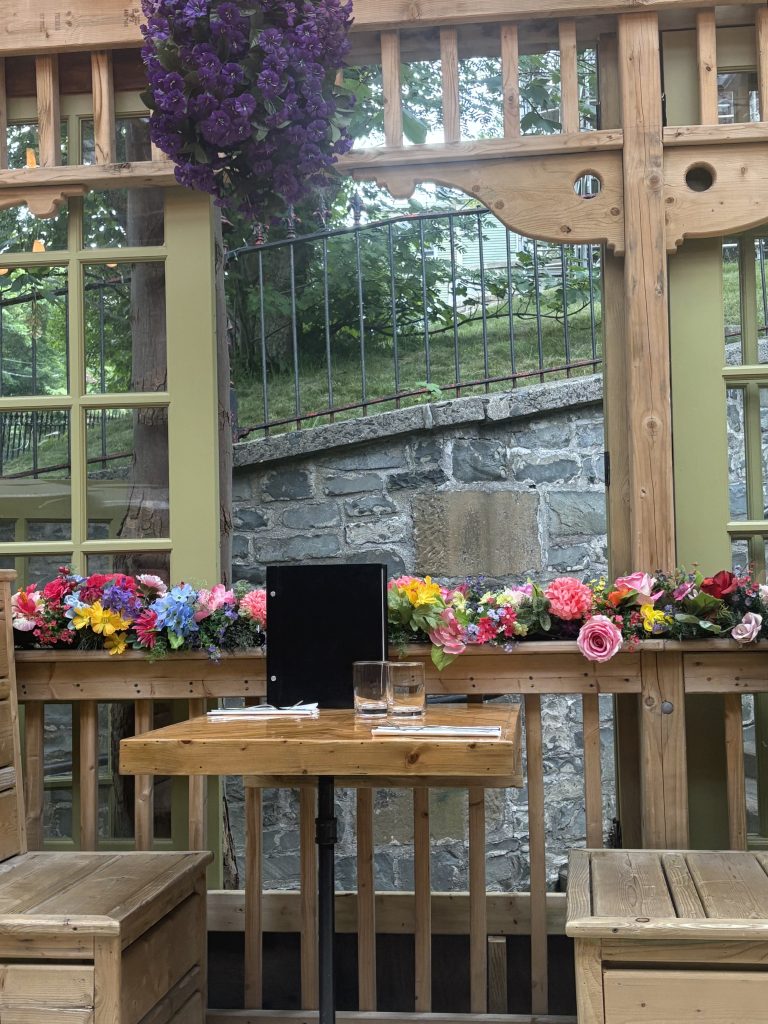
Greeted with smiles, I asked to sit on the deck, which was overflowing with flowers and sweet decorations like silver and gold stars and string lights. It was the kind of spot where time seemed to slow down, making it easy to settle in and enjoy the moment in a comfortable setting.
Inside, it felt like stepping into a gnome’s home or a 70s neon dream – whimsical and full of small details that made the atmosphere unique. I ordered the Pink Skies cocktail, a mix of coconut, lemon, strawberry, and Earl Grey. While the cocktails can be a little pricey, the quality and careful curation behind them make it feel worth the splurge. I left feeling certain I’d return to explore more from their impressive menu.
No. 4’s patio / Rebecca Jennings
For food, I went with a popular menu item, the mac and cheese. A generous layer of breadcrumbs blanketed the creamy, cheesy dish beneath, offering a satisfying contrast in texture with every forkful. The portion was more than fair for the price; it’s a dish that could easily be split or leave enough leftovers for lunch the next day. The flavors were comforting yet rich, and each bite was somehow better than the last, leaving me reluctant to reach the end.
There’s something about No. 4 that stays with you long after you’ve left, a charm that lingers in your mind.
It’s the kind of place you can picture yourself revisiting again and again, whether you’re looking for a fun solo evening or the easy company of a few good friends.
Rebecca Jennings is a student writer studying Communication and Media Studies and French. Her work flutters between the nostalgic and the natural, drawing inspiration from pixelated worlds like Kirby, the quiet symbolism of butterflies, and the tactile joy of both traditional and digital scrapbooking. Through poetry, essays, and visual storytelling, she explore softness, transformation, and the small details that speak the loudest.
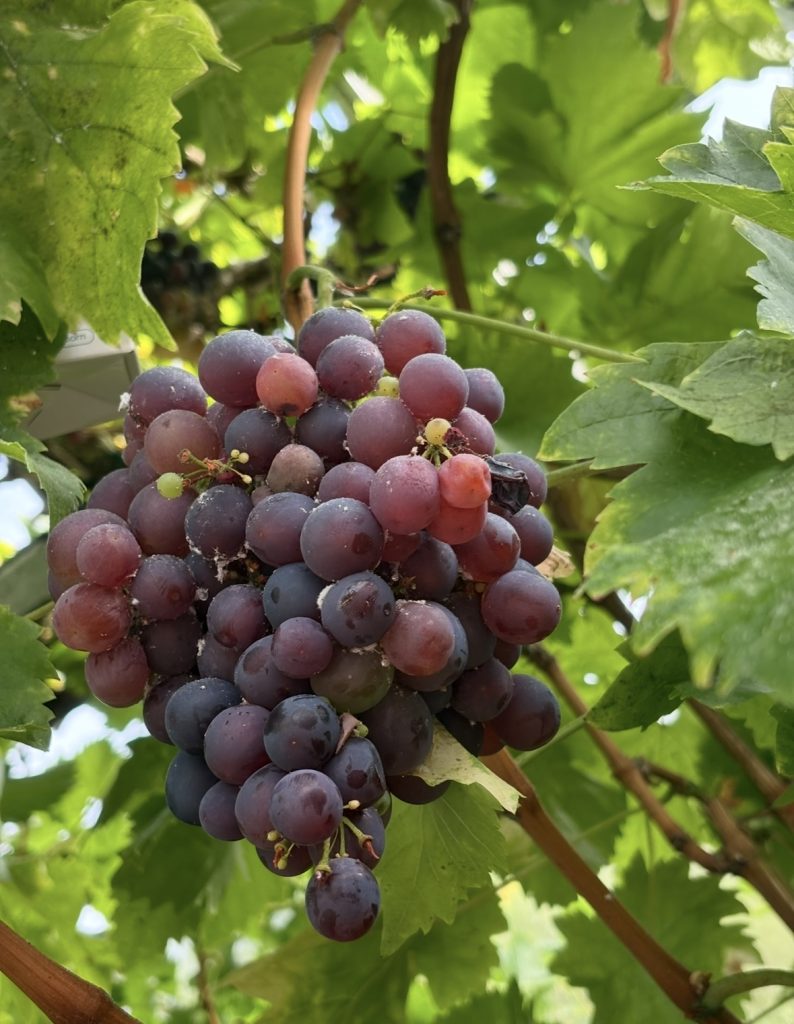
Memorial University’s Botanical Garden is a 110-acre oasis of nature trails, flourishing gardens, and a public greenhouse, where – if you’re lucky – you might catch grapes ripening on the vines.
Tucked away just minutes from the city’s centre, it feels like stepping into a different world, one where you can slow down, breathe in fresh air, and experience Newfoundland’s natural beauty up close.
The Memorial University Botanical Garden is far more than a pretty patch of wilderness. Within the garden, you’ll find a diverse mix of ecosystems, from boreal forest and bogs to fens, ponds, and barrens. It also functions as a living laboratory, pulsing with scientific discovery, education, and conservation.
One of the garden’s primary purposes is to research rare plants. The garden plays a critical part in preserving Newfoundland’s endangered plant species. Thanks to ex situ conservation (that means growing plants outside their native wild habitats), species that are threatened in the wild get a fighting chance. The limestone barrens of the Great Northern Peninsula, home to plants like Long’s Braya, are just one example of these ecosystems.
MUN Botanical Gardens / Rebecca Jennings
Grapes at the MUN Botanical Gardens / Rebecca Jennings
But the Garden isn’t just for botanists – other environmental science students (or any student with a green thumb!) and curious scholars flock here to study over 2500 taxa, that is, more than 2500 different plant types!
These spaces aren’t just scenic; they’re also an excellent resource for scholars at MUN, with many research projects conducted at the garden each year. Students often visit accompanied by professors as part of their university coursework, using the grounds as a living classroom for hands-on learning in environmental science and related fields. Instructors in related fields also have the option to take their students on field trips to the garden.
MUN Botanical Gardens / Rebecca Jennings
The botanical garden is open seasonally from May to November, featuring trails and cultivated areas that change along with the seasons. Spring brings fresh blooms, summer is lush and vibrant, and autumn fills the forest with colour.
In December, the grounds transform for the Merry & Bright Holiday Light Festival, a sparkling event that has become a holiday tradition for many in the city.
A typical day at the garden usually starts at the visitor centre, where you can purchase a day pass (free if you are a student at Memorial!) and grab a map to guide you along.
The cultivated areas are a delight for anyone who loves flower gardens, with carefully tended beds that change throughout the year, and a greenhouse filled with exotic plants that feels like a tropical getaway within the garden.
An informative sign at the MUN Botanical Gardens / Rebecca Jennings
As you wander the trails, interpretive signs gently guide your attention to the life and history surrounding you, turning each step into both a moment of calm and a chance to learn.
The signs encourage attendees to slow down, to notice the small details – the curve of a leaf, the ripple of water, that might otherwise be unseen. In this way, the garden is more than a place for walking; it becomes a narrative form of nature, inviting you to connect not only with the beauty of the present moment but also the unique biodiversity and natural history of Newfoundland.
MUN’s Botanical Garden is also a wonderful place to pick up birdwatching. The peaceful trails and quiet ponds make it easy to slow down, listen, and notice the movement of birds all around you.
After exploring, many visitors enjoy concluding their visit in the gift shop or greenhouse, browsing local crafts, plants, and gardening supplies to take a piece of the garden home with them. The Postmasters Café, located on-site, is also a favourite stop, perfect for enjoying a coffee, snack, or meal before or after your walk through the trails.
There are still a couple months left of the Garden’s seasonal programming. For more information about visiting, programs, and upcoming events, you can visit the official website.
Rebecca Jennings is a student writer studying Communication and Media Studies and French. Her work flutters between the nostalgic and the natural, drawing inspiration from pixelated worlds like Kirby, the quiet symbolism of butterflies, and the tactile joy of both traditional and digital scrapbooking. Through poetry, essays, and visual storytelling, she explore softness, transformation, and the small details that speak the loudest.
Ever since the assassination of Charlie Kirk happened on September 10th, I have felt like I have been living in the Twilight Zone.
Particularly after witnessing our nation’s parliament give Kirk a standing ovation.
On the floor of the House of Commons, Conservative MP Rachael Thomas eulogized Kirk by saying he was “an outspoken advocate for faith, family and freedom.”
This is total revisionism of what Charlie Kirk stood for.
Charlie Kirk’s gruesome assassination was horrific and not something that should be celebrated to any extent. But his murder does not necessitate us to posthumously whitewash his message.
I was very familiar with Charlie’s programming. I listened to him speak for long periods of time, in his own words, since 2017. And yeah, he did talk a lot about faith and family. But freedom – can we be real for a second?
Charlie Kirk was not pro-freedom. Charlie Kirk was pro-Christian nationalism. But he did not wish the level of freedom he desired for his fellow Christians for everyone else.
Charlie Kirk did not advocate for the freedom of Muslims to practice their faith. He wanted mass deportation for immigrants, especially Muslims, using vile rhetoric to paint them as an urgent threat to “Western civilization”.
He was constantly talking down to the Black community, using false or misleading crime statistics to create the impression of a violent, criminal culture.
He was against the freedom of women to control their own bodies. He called transgender people “an abomination to God.”
He did not stand for free speech either. He called for journalists, such as Mehdi Hasan, to be deported because of their speech. He was in favour of speech for people he agreed with, but not for his political enemies.
As a Canadian, why the hell is my parliament having a standing ovation to honour an American right-wing MAGA influencer?
There was no standing ovation for The Minnesota House Speaker Melissa Hortman when her and her husband were killed.
There has been no standing ovation for any of the children, women, innocent civilians who have been killed in Gaza.
There have been no standing ovations for any of the victims of school shootings in the United States over the past 10 years.
Notably, they did give a standing ovation to Nazi veteran Yaroslav Hunka.
Not only was Charlie Kirk not from our country, but he was one of the strongest advocates for an administration that has been explicitly targeting Canada.
A standing ovation for Charlie Kirk was not just a statement against political violence – it was, at minimum, an erasure of the hateful rhetoric he spread against so many of our fellow human beings.
Although we should condemn his death, we should not celebrate what he stood for.
Got an opinion? Submit an Opinion Piece or a Letter to the Editor to the Muse.
This summer, well-loved St. John’s math rock/midwest emo trio Swimming embarked on a cross-country tour, aptly named ‘Swimming Across Canada.’
This tour was bigger than any of their previous excursions in Atlantic Canada and Ontario; instead, the band trekked through independent music scenes all the way to the Prairies, reaching as far West as Edmonton.
Ongoing from July-September with two short runs and a small break in between, Swimming kicked off the national tour in July with their annual show at charmingly dingy Mainlanders’ Pub in Little Catalina alongside emo band Customer Service from Halifax. Just a couple hours outside town, this show is an eccentric tradition of theirs that starts any tour off with goofy, good vibes.
Since the songs on ‘Old’ had been workshopped for years, some band members felt it was a matter of getting the recording process out of the way to pursue new things, but to their surprise, the album has become a fan favourite. Nearly every subsequent show venue has been packed to the brim.
“It’s been actually surprisingly good,” said bassist Nick Hunt when asked about the record’s reception. “When we were doing this album, we were kind of just throwing whatever songs that we hadn’t recorded yet into it. It almost felt like…okay, this is going to be one that’s gonna come out… and then we’re gonna move forward.”
“We kind of already wrote it off a little bit in our heads … and then we put it out and people seemed to enjoy it, so it was kind of a pleasant surprise to be like, ‘okay, cool, people are still into this,’” Hunt said.
Photo by @cratediving on Instagram / Swimming performing in Saskatoon
Anticipation & excitement for ‘Swimming Across Canada’
Though Swimming planned to visit some familiar cities, a nationwide tour is bound to bring any musician to places they’ve never visited before.
“I don’t even know what [the West Coast] looks like,” Hunt joked in a pre-tour interview. “I’m not googling a single thing, it’s gonna be a surprise.”
Cherwick, who was born in Edmonton and has family in Winnipeg, expressed excitement about visiting as an adult with his own project. “I haven’t been back much since I’ve lived in Newfoundland, so I’m excited to go back. This is the first time I’m going back with my own band… I’d like to see those places where I grew up through the lens of what I do now. I’m excited to see what the scene is like,” he said.
Swimming’s influence locally has established the band’s reputation as somewhat of a pillar of the St. John’s alternative music scene, so traversing the unfamiliar music scenes of other Canadian cities/towns was bound to be an intriguing experience.
One of Nick Hunt’s favourite things about going on tour, however, is being exposed to new music.
“Everyone struggles to find new music, even people who are into music,” he said. “Playing with all these other bands essentially forces you to listen to their music, but at the same time, you get to meet them and then form relationships with them. And then you can listen to this band later on and be like, well, they were awesome, and hopefully we can bring them here sometimes.”
The band placed a lot of faith in show organizers and festival board members from other scenes, which appears to have turned out quite well, as they played a plethora of venues with countless Canadian bands throughout their summer tour.
With a tumultuous government, mass deportation, and countless other dangers, it’s no wonder that any prospective traveler, including musicians planning a tour, would avoid our neighbors to the South.
Following President Trump’s re-election, many Canadian artists have canceled the US portions of their tours. Most notably, Montreal-based transgender musician Bells Larsen was forced to cancel his US tour dates after being refused a Visa due to his passport’s gender marker.
Though they initially toyed with the idea, Swimming deliberately decided to avoid the States on this tour, explaining that it “very quickly became not the vibe” in an Instagram post.
“We don’t belong to any type of marginalized group or anything,” Cherwick expanded on the band’s decision. “So it would be relatively safe going to the States if we tried to, but even for us, it would be a risk, so it’s pretty scary thinking about somebody who’s already at risk going and having to deal with that now.”
Hunt and Cherwick also discussed the headache of acquiring Visas for multi-national touring, and figured they were better off simply hitting as much of Canada as they could instead.
Success on tour
Swimming is a band that champions the power of DIY, entirely embodying the resourceful, community-oriented values of alternative/indie music. ‘Swimming Across Canada’ allowed other provinces to get a taste of Newfie emo, and the band got an intimate window into other unique music scenes across the country.
Landmarked by a first-time appearance at Toronto DIY-punk-fest New Friends, and ending off with a bang at Edmonton’s coveted Purple City music festival on September 6, Swimming’s biggest tour yet seems to have been a great success, hopefully paving the way for more up-and-coming Newfoundland bands to tour the country in the future.
The Grounds Café at Murray’s Garden Centre (1525 Portugal Cove Road) has a cozy, inviting atmosphere that makes it easy to linger. The menu is filled with fresh, carefully prepared options, including vegan and vegetarian dishes and gluten-free baked goods, all made with attention to detail.
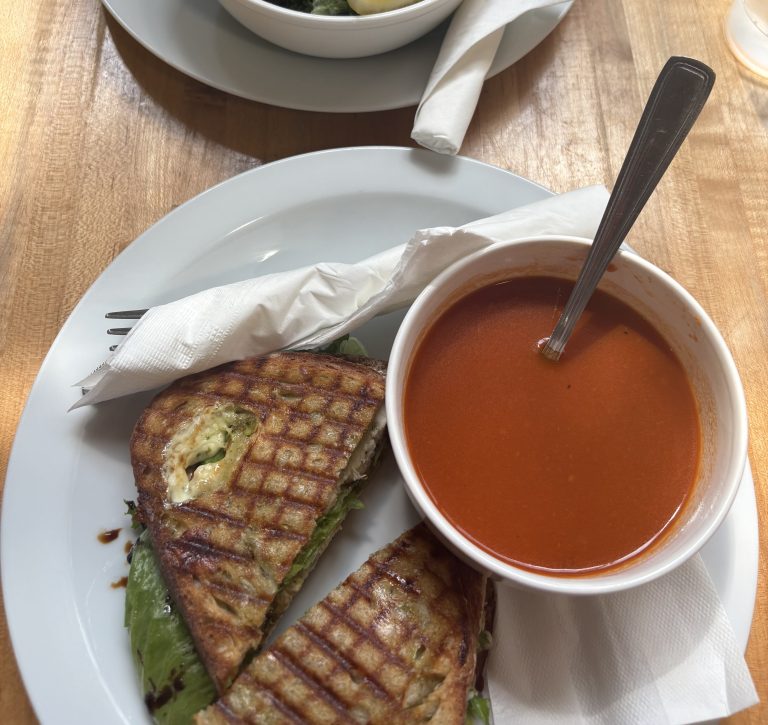
During my visit, I decided on the chicken pesto sandwich, a side of tomato soup, and a freshly brewed cup of coffee. Before I made my way to a seat, I was given a coaster with a duck on it – a very cute indicator of where you’re sitting, so the staff knows where to bring you your food!
Every little attention to detail was sweet. The sandwich itself stood out immediately; the bread was toasted to achieve just the right crunch, providing a satisfying bite without overpowering the fillings. Each ingredient tasted fresh, creating a balanced mix of flavors.
The only element that felt slightly unusual was the combination of pesto and BBQ sauce, which didn’t quite blend as seamlessly as the rest of the sandwich. Still, the overall quality and taste were excellent, and I would happily order it again.
The Grounds Cafe strawberry cheesecake / Rebecca Jennings
To finish off the meal, I treated myself to a slice of strawberry cheesecake. It was beautifully presented, every bite was smooth, delicate, and perfectly sweet without being overwhelming. The light strawberry flavor paired wonderfully with the creamy filling and crust.
The seating, the open space, and the food contributed to the atmosphere in the cafe, blossoming with comfort.
After eating, exploring the greenhouse outside was a must. Rows of flowers and plants lined either side, creating a calm and almost magical atmosphere.
Beyond the current exhibition of blooms, Murray’s Garden Centre offers seasonal flowers, fresh vegetables like tomatoes and shallots, unique décor, and gardening essentials like seeds and tools for purchase.
The combination of the café and the garden centre makes for a refreshing change of pace, where you can enjoy a great meal and then wander the nature-filled grounds. It makes for a peaceful study spot as well!
Rebecca Jennings is a student writer studying Communication and Media Studies and French. Her work flutters between the nostalgic and the natural, drawing inspiration from pixelated worlds like Kirby, the quiet symbolism of butterflies, and the tactile joy of both traditional and digital scrapbooking. Through poetry, essays, and visual storytelling, she explore softness, transformation, and the small details that speak the loudest.
Three current and former activists from MUN Students for Palestine Devoney Ellis, Sadie Mees, and Nikita Stapleton will set sail to Gaza as part of the Freedom Flotilla, a civilian-led mission carrying humanitarian supplies, such as food, water, medicine, and baby formula.
While MUN invests in genocide, three of it’s current and former students are risking their safety to deliver aid to a starving people living under oppression.
Newfoundland activists are joined by Mskwaasin Agnew and Dr. Suzanne Shoush pictured here on the vessel destined for Gaza (Submitted)
What is a more worthy cause? If history can teach us anything, silence in the face of genocide is support for genocide, and the institutions, organizations, and individuals who refused to oppose genocide will not be looked upon kindly in the future, when everyone will have been against this.
Memorial’s refusal to act despite students and faculty calling for a full divestment from entities involved in the genocide on Gaza, is shameful. Its treatment of student activists involved in MUN Students for Palestine has been shameful.
It is vital that MUN administration reverses course and supports their courageous students taking part in this vital and morally righteous mission by divesting the over 15 million dollars in companies connected to the genocide in Gaza.
Devoney Ellis is a recent graduate from Memorial, and is one of three activists with MUN Students for Palestine heading to Gaza. (Submitted)
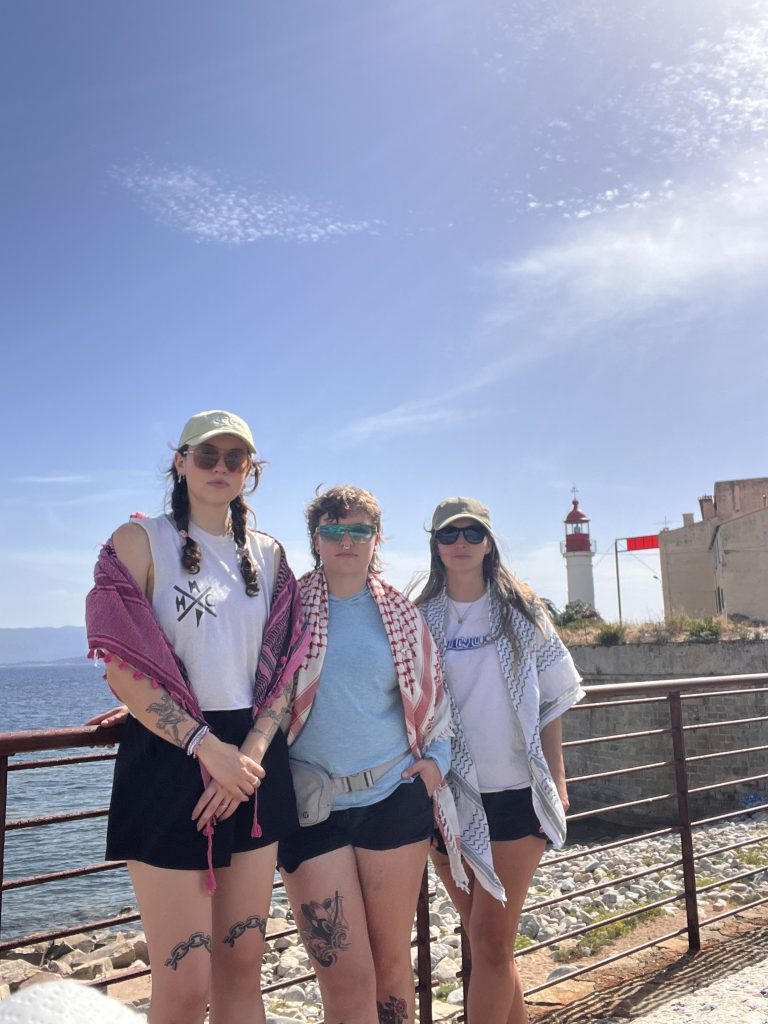
The three activists are currently awaiting their departure in Corsica, France. The group will join the Global Sumud Flotilla, a coordinated effort of numerous small civilian vessels with delegations from over 45 countries, including the US, Algeria, Brazil, Norway, Ireland and South Africa.
The project is a continuation of previous humanitarian efforts to break Israel’s blockade on Gaza, including the Freedom Flotilla which has been ongoing since 2010. The most recent attempts made in June and July of this year, were intercepted by Israel’s military, in violation of international law according to Amnesty International.
Sadie Mees is a graduate student at Memorial University and is one of three activists with MUN Students for Palestine heading to Gaza. (Submitted)
In June, the vessel Madleen, carrying humanitarian aid, was seized by Israeli forces. All crew members were illegally detained and held in custody prior to later deportation, including well-known climate activist, Greta Thunberg, and a member of European parliament, Rima Hassan.
In this past week, the Sumud flotilla experienced two drone strikes against a civilian-occupied vessel near Tunisia. Since 2010, each attempt at breaking the blockade has been intercepted or attacked by Israel.
A very disturbing precedent has been set when a state is permitted to starve a population they essentially control, and respond with violence to any actor that attempts to intervene.
Nikita Stapleton is a Memorial University graduate, and one of three activists with MUN Students for Palestine heading to Gaza. (Submitted)
The situation in Gaza is catastrophic
Since 2007, Gaza has been under a complete military blockade enforced by Israel. The Israeli government controls all of Gaza’s imports and exports. Residents of Gaza are restricted from travelling in or out of the Strip without Israel’s permission.
In violation of international law, Israel has also entirely separated Gaza from the rest of the Palestinian territories, restricting Gazans from attending universities, accessing healthcare or visiting family and friends in the West Bank.
For 17 years, Gazans have been confined to a strip of land that is the area of Las Vegas, with one of the highest population densities in the world.
Prior to the ongoing Gaza genocide, Israel’s blockade had disastrous effects on Gaza’s economy, creating mass job losses and high unemployment. Between 2006 and 2022, Gaza’s GDP shrunk by 37%, contributing less than 18% to the overall GDP of Palestine.
Long before October 2023, Gaza faced numerous bombing campaigns from Israel over the years: in 2008-9, 2012, 2014, 2022, May 2023, and now October 2023, onwards.
The total blockade of Gaza by air, land and sea, combined with recurrent air strikes, decimated Gaza’s infrastructure, leaving the population dependent on humanitarian aid. Since October 2023, this has worsened substantially, with unemployment soaring to over 80% and most businesses destroyed.
The UN estimates that, if or when, a permanent ceasefire is reached, it would take approximately 350 years for Gaza’s economy to recover to its 2022 level.
It is no exaggeration to say that the current situation in Gaza is catastrophic. Since January 2024, Israeli settlers have physically blocked aid delivery to Gaza at various crossings, including assaulting suspected aid delivery drivers and setting fire to aid trucks.
Since October 2023, the Israeli government has weaponized humanitarian aid against Gazans, periodically interrupting the flow of aid, and allowing minimal supplies to enter only in response to international pressures.
Palestinian children wait in long queues to get food at the Jabalia refugee camp in the Gaza Strip on March 11, 2025, after Israel stopped all humanitarian aid from entering the Gaza Strip [Al Jazeera/Mahmoud Issa/Anadolu]
In March 2024, the government almost entirely cut off aid deliveries, a practice that continues to this day. The restrictions on aid into Gaza have resulted in widespread forced starvation.
For the first time, the Integrated Food Security Phase Classification announced on August 15 that Gaza is experiencing a famine, classed as Phase 5, the highest phase on the Acute Food Insecurity scale.
This classification is only used when a region reports at least 20% of households as having a severe lack of food, 30% of children as suffering from acute malnutrition and 2 adult deaths or 4 child deaths per day for every 10,000 people due to starvation, or malnutrition combined with disease.
Although Israel’s attacks on Gaza’s infrastructure has made it difficult to gather accurate statistics, at least 404 people, including 141 children, have died from malnutrition. Thousands more children need to be evacuated for medical treatment, which requires approval from Israeli authorities.
Not only are Gazans starving while food is being withheld just miles away, but also over 1400 Gazans have been killed while waiting to receive aid at distribution sites.
In what has been called the “Flour Massacre,” in February 2024, Israeli military opened fire on a crowd of Gazans waiting to receive food, killing approximately 112 and wounding more than 760.
Many Gazans have chosen not to go to aid distribution sites, fearing for their lives. Instead, these Gazans are at the mercy of merchants in local markets who charge exorbitant prices for the little food that is available.
Worsening this crisis, Israeli authorities have directly financed armed gangs in Gaza who attack delivery trucks and steal the paltry amount of aid that was allowed in.
With no income, no agriculture, and aid sites turned into death traps, Gazans are given little chance to survive. The ‘solutions’ currently pursued by foreign countries, including Canada, such as air-dropping aid, continue to be inadequate, even dangerous.
A person carries the body of Palestinian boy Muhannad Eid, who died after being struck by a box of airdropped aid, in Nuseirat, in the central Gaza Strip, August 9, 2025 [Stringer/ Reuters]
In August, a 15-year-old Palestinian boy was crushed to death by a pallet during an aid airdrop. Gazans and NGOs have called for the resumption of aid deliveries by land.
Civilians around the world have responded to their leaders’ lack of response by taking direct actions themselves. The Global Sumud Flotilla is the most significant coordinated direct action yet.
It is immoral to forcibly starve people. It is soul-crushing to witness children sending out their last pleas for help before their frail bodies are no longer able to keep going.
It is unconscionable that mothers in Gaza listen to their babies cry, knowing their own bodies are too weak to produce milk. It is devastating to watch elders, some of which survived the 1948 Nakba, in which Israel ethnically cleansed over 750,000 Palestinians, succumb to hunger.
The brave volunteers who are risking possible Israeli attacks and intervention in an attempt to open a humanitarian corridor and show solidarity with the people of Gaza, should not only be commended, but supported in whatever way possible.
So far, Israel has been given almost carte blanche to act outside of international law with little to no consequences.