Home Blog Page 57

Pride on Campus 2022: MUN SAGA

0

While Pride Month was celebrated worldwide in June, Pride in St. John’s starts this week, with festivities on campus beginning on July 14th. Several organizations are working for the welfare of the LGBTQ+ community at MUNL and in St. John’s, including MUN SAGA (Sexual and Gender Advocacy Resource Centre).

“MUN SAGA started as a group of students on campus that wanted to create a resource centre and a safe space for LGBTQ+ students and their family, friends and allies,” said the external director, Hanaa Mekawy. While it has been active on campus since 1999 (then known as ‘LBGT MUN’), MUN SAGA has since developed as an organization supporting members of the LGBTQ+ community at the university and in St. John’s.

15493338 1283696051701981 8450578773026813162 o
Photo Credit: MUN SAGA Facebook

Among their many initiatives, MUN SAGA provides free menstrual and sexual health resources such as tampons, condoms, pregnancy tests and dental dams. Another program Mekawy highlights are their gender gear initiative, for which MUN SAGA supplies free gender-affirming gear to people in need, such as binders, packers and breast forms.

“This can be lifesaving and affirming for trans and non-binary people. It is also sometimes really hard to access, so being able to provide it to people for free is a great thing we can do,” they commented.

“As an organization, we are proud of having a safe space and providing resources to people,” Mekawy states.

Regarding the importance of celebrating the LGBTQ+ community:
“Pride is significant because it celebrates how far the community has come regarding progress and liberation. It is also a time to honour those that came before and did this work, as well as recognize that there is still more to be done for all members of the community. It is a promise to continue to do the necessary work,” Mekawy said.

Increasing public awareness and visibility of the LGBTQ+ community is essential to fighting social stigma and discrimination.

According to Mekawy, “At SAGA, we hear from people of different ages and backgrounds from less accepting communities or households. They reach out to us because they want to know that there’s a space they feel accepted and safe in. So, when we celebrate Pride visible and loudly in the community, it helps them to see that there is a place for them here.”

Mekawy also commented on their hopes for MUN SAGA’s future initiatives. “We hope to continue providing these resources and broaden our outreach in the community, expand our initiatives and organize more social events.”

As Pride celebrations in St. John’s start this month, Mekawy said, “We hope that everyone stays safe and has a good time. We hope to see plenty of folks celebrating, and to remember that there is a community there for you.”

To celebrate Pride on campus, MUN SAGA will host two events—a scene workshop with Salt Pages on July 19th and an art social-themed ‘Paint Your Pride’ on July 22nd.

The SAGA offices are on the 6th floor of the University Centre at UC6022 and UC6023. There is a social space and a study room with a library.

To request gender-affirming gear, students in need can email MUN SAGA at saga@munsu.ca. Other resource centres supporting the LGBTQ+ community include Intersections (at UC1009), Quadrangle NL, Trans Support NL, and the 2SLGTBQ+ Mutual Aid Pod (on Facebook).


A Guide to Living Ethically as a Student in NL

Photo Credit: bluewater sweden (via Unsplash)

As university students, most of us have fallen prey to the appeal of a quick and easy lifestyle (myself included). With school work constantly piling up and deadlines fast approaching, there’s not a lot of time left to think about how we can improve our daily habits and live a more environmentally friendly lifestyle. 

We’re always moving on to the next thing with very little time to spare. So buying pre-packaged, ready-to-go meals and all your daily essentials off Amazon seems like the most affordable way to live. 

Trust me; I’ve been there too. 

It seems too tedious, time-consuming, and expensive for a student trying to live on a budget. But if you start slowly by implementing small changes to your daily routine that promote ethical living, it will eventually feel like you’ve been doing it all along. 

If you’re like me and want to start living more ethically but don’t know where to start, listen up because you’ve come to the right place!

This is a guide for everything you need to know about how to make the transition into an ethical lifestyle that will be fully sustainable for any student living in Newfoundland.

First things first, shopping!

Starbucks, Amazon and Skipthedishes are every student’s best friends. 

We’re all about quick, easy and efficient EVERYTHING, and there’s nothing wrong with that. A lot of the time, it just doesn’t feel like there are enough hours in the day to do anything but your assignments (sometimes not even enough for that!). 

But there are ways to be more sustainable with these lifestyle fixes that can make a big difference:

1. Swap out your Starbucks/Tim Hortons/Mcdonald’s coffee for something local

Photo Credit: Erin Delaney, Elizabeth Furey (via gazette.mun.ca)

Tons of locally brewed coffee can replace your quick fix. 

You could try the Roastery on campus in the UC or the Jumping Bean in the library. In both cases, you’re promoting local coffee companies and still consuming daily caffeine.

Even better, try bringing your reusable coffee cup with you to avoid creating too much waste.

2. Replace online orders with local shopping

Rather than ordering things online through Amazon or fast fashion clothing sites, try taking the time to visit some local shops!

Some shops downtown like The Bee’s Knees, Model Citizens, Found Consignment Boutique, and Elaine’s Books sell a bunch of locally sourced and secondhand products.

Photo Credit: The Bee’s Knees (via Facebook)

The Bee’s Knees is a great place when you’re on the lookout for some reusable containers, straws, cutlery and any other kitchen/cooking appliance you may need. Many are made from reused materials and are of excellent quality.

Model Citizens and Found Consignment Store are the places to go when you’re looking for some new clothes to add to your wardrobe. Both are second-hand clothing stores that will resell high-end, high-quality clothes at a discounted price. 

Another great habit of picking up is when buying new clothes, try swapping out some pieces you don’t wear anymore. Found consignment store will take used clothing in good condition, resell it for you, and then give you part of the profit. 

That’s a pretty great deal if you ask me!

3. Take a break from Skip and try out St. John’s Farmer’s Market

Photo Credit: Lauren Power (via theovercast.ca)

St. John’s Farmer’s Market is located at 245 Freshwater Rd and is open Monday 1 pm-8 pm, Wednesday 5 pm-9 pm, and Saturday 9 am-4 pm.

The Farmer’s Market offers local produce, jewelry, art and much more. There is also a variety of cuisines and products that originate from many varying cultures. It’s an immersive experience that can give us insight into the beautiful diversity of our province.

Plus, it is more ethical and healthier to buy from local vendors and supports other members of our community and the NL economy to buy products produced locally.

Making a difference on campus

As university students, there are ways that we can promote sustainability right on campus—for example, making an effort to compost our scraps and recycle doesn’t have to be a tedious, time-consuming task. 

Memorial University offers an online tutorial on properly composting, and taking the initiative to make this part of your daily routine can be easy. 

**Visit https://www.mun.ca/botanicalgarden/learn/composting/ for more information on how to compost for beginners**

Resources:

https://gazette.mun.ca

https://www.facebook.com/thebeeskneesYYT/

https://canada247.info/explore/newfoundland_and_labrador/division_no_1/st_johns/downtown/found_consignment_boutique.html

https://www.guidetothegood.ca/buy/elaines-bookstore

MUNL Announces New Centre for Artificial Intelligence

0

Memorial University (MUNL) announced a new Centre for Artificial Intelligence and three new master’s programs today that will benefit Newfoundland and Labrador’s growing tech sector. 

The three new graduate programs are software engineering, artificial intelligence, and data science. Each program is one year long, will begin in September 2022, and is already at full capacity. 

The Centre for Artificial Intelligence will be on the fifth floor of the Core Science Facility and will hold short-focused programs to create highly qualified individuals, said President Timmons. 

Memorial’s Centre for Artificial Intelligence will cost an estimated $ 2 million

Breakdown of Funding

The Government of Newfoundland and Labrador is contributing $432,000, while the Honourable Seamus O’Regan Jr., Minister of Labour and MP for St. John’s South-Mount Pearl, announced $995,000 from the Government of Canada through the Atlantic Canada Opportunities Agency (ACOA).

 Memorial University is contributing $498,000 through revenues generated by the course-based graduate programs and continuing education (short courses) to sustain the longer-term activities of the centre. The total project cost is $1,925,000

The funding also accounts for hiring four new faculty members and will create a state-of-the-art technology hub for this province. 

Just the beginning.”

President Vianne Timmons claims this announcement is “just the beginning” of tech development at Memorial University, with high hopes for the future. 

CEO of TechNL, Florian Villaume, said this announcement is “great news for the province,” while President Timmons acknowledged that 80% of Verafin employees are MUNL alumni. 

The Centre for Artificial Intelligence will serve as a collaborative teaching, outreach and continuing education space for Newfoundland and Labrador’s growing tech sector.

According to Minister Seamus O’Regan Jr. “Newfoundland and Labrador’s tech sector punches above its weight. With the support of Memorial University, we’re thriving. “A new Centre for Artificial Intelligence will help us take on the world,” O’Regan believes. 

The minimum admission requirements for MUNL’s three new master’s programs can be found at the following links:

Masters in Software Engineering

Masters in Artificial Intelligence

Masters in Data Science

MUNL lifts its mask and vaccine mandate

0

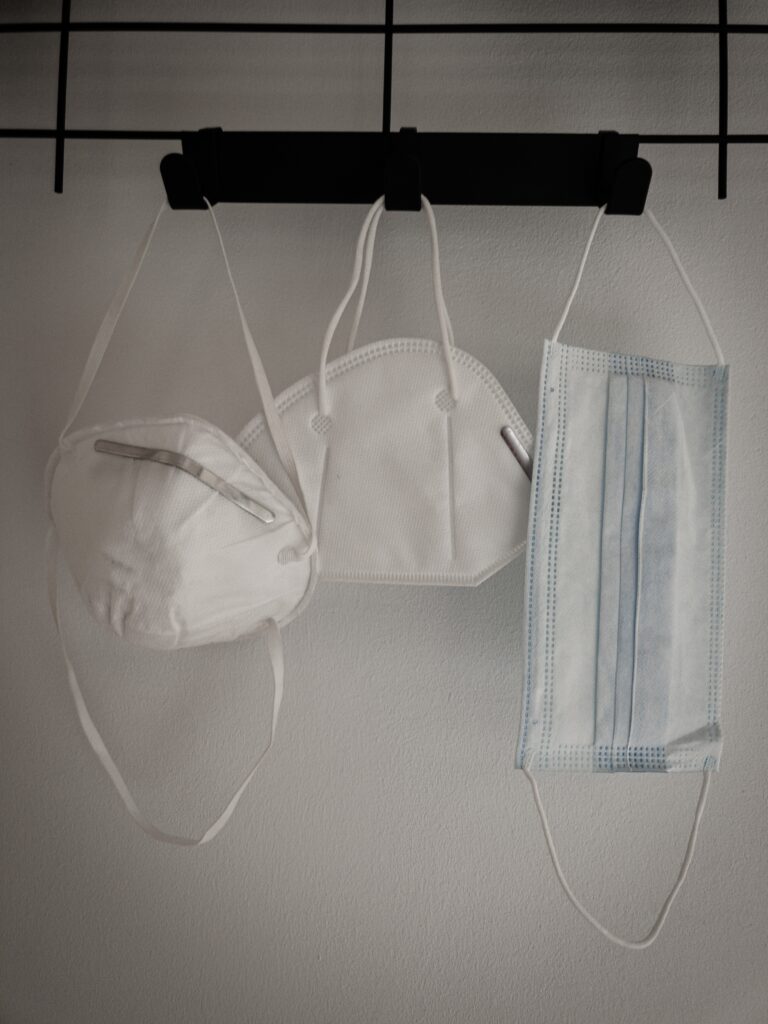
On June 1st, Memorial University of Newfoundland and Labrador (MUNL) lifted its mask mandate. While face coverings remain strongly recommended indoors, they are now optional.

There is a remarkable 99% vaccination rate among the MUNL community. It seems like the perfect time to lift the mask mandate- after all, as of June 22, there were a mere 87 cases in the province of Newfoundland and Labrador. It is important to reinstate normalcy in the learning environment.

Screenshot 2022 06 27 193608
Photo credit: Peter Cowan, Memorial University

Studies have shown that removing masks in classrooms leads to more effective learning. It is also difficult to enforce a mask mandate. Masks clearly help reduce the spread of COVID-19. In the unfortunate emergence of a new variant, a mask mandate would reduce the risk and lead to a stable, dependable policy. At the same time, students must have a post-COVID 19 university experience and feel a sense of routine in this ever-changing world. While it is important to remember that we are still in a pandemic and take necessary precautions, now is the time to ease into a stage of coexistence with the virus.

While the university was the first major organization in the province to implement a vaccine mandate, it also suspended the vaccine requirement on June 1. However, this raises the question of whether this decision puts immunocompromised members of the community at risk. Vaccinations have clearly shown to be effective against the transmission of COVID-19, so it is slightly worrisome that the vaccine mandate is no longer in place. Rates of hospitalization and severe COVID-19 cases are higher among unvaccinated individuals. Vaccine requirements put those anxious about the pandemic at ease and can prevent an outbreak in the community. 

Although vaccinations are a personal choice, it protects the community, especially those at risk from severe disease. Therefore one should still be cautious and keep in mind that there are members of the community who are either vulnerable or live with those who are vulnerable.

When asked about the recent development, one student stated, “I think it’s about time. If people aren’t comfortable with the mask mandate being lifted, they always have the option of wearing a mask anyway.”

Another student stated, “I agree, why should MUNL still have a mandate when the rest of the province lifted it. There’s always the choice to wear it if you’re not comfortable without it.”

On June 16, MUNSU: Memorial University of Newfoundland’s Student Union closed its office for one week due to a surge in positive COVID cases among workers. The student union argued that the university could have set the ideal standard among Canadian universities but failed to prioritize the community’s safety. As a result, some students wonder, if some students no longer feel safe, does the university have a responsibility to amend its policies accordingly?

Screenshot 2022 06 29 162549 2
Photo credit: MUNSU, via Twitter

It is clear that the majority of the community is ready to move into a new chapter and make the most of this newfound stability and reduction in cases. However, it is essential to respect the choices of everyone, regardless of whether or not one agrees with them.

One thing that we can all agree on is that we want a safe learning experience and a safe St. John’s.

MUNL Student Starts Period Priority Project

0

Proud menstrual equity advocate, Memorial Political Science student, and founder of Period Priority Project, Leisha Toory, is making menstrual products more accessible in Newfoundland and Labrador.

Period Priority Project is a period supply bank for people who menstruate and need menstrual products and relies on the community for donations.

To date, Period Priority Project has distributed 4120 menstrual products since it started in May 2022. Donations are given to women’s shelters, food banks, indigenous organizations, and other initiatives in St. John’s, Nain, Rigolet, Happy Valley-Goose Bay, and the Yukon.

‘A Human Right’

Toory’s goal for The Period Priority Project is to achieve menstrual equity and end the stigma associated with menstruation.

“Menstrual health is a human right, not a privilege or a luxury. We’ve normalized that menstrual products are expensive,” Toory commented.

Toory’s Period Priority Project acknowledges that period supply is a necessity and advocates for accessibility, affordability, and safety of menstrual products.

“People shouldn’t have to choose between food, shelter, and menstrual products,” said Toory. 

Period Priority Project advocates for period supply accessibility, believing menstrual products should be free to those needing them.

The project also aims to make a difference with each donation so that one less person has to worry about the accessibility and affordability of the most basic necessity – hygienic period supply.

‘People who mensurate’

Period Priority Project uses the term ‘people who menstruate.’ This is because any person with female reproductive organs at birth may menstruate; this process is not limited to cisgender women and girls.

As a result, Period Priority Project acknowledges that non-binary and Two-Spirit people may also menstruate. Transgender people with female sex organs who were assigned the sex female at birth may also menstruate (Period Priority Project Website). 

Toory’s goal is to eliminate period shame, as menstruation is a normal biological function, and encourage conversations about menstruation.

At Memorial University, free menstrual products supplied by the Period Priority Project can be found in the Gender Inclusive Washrooms inside the Arts & Admin Lobby, on the 4th floor of the Core Science Facility, and the QEII Library.

  • AA2018A & AA2018B (Arts & Administration Lobby)
  • CSF 4200C (Core Science Facility 4th Floor)
  • L3020 (QEII Library 3rd Floor)

Donations

Anyone who wishes to donate to Period Priority Project can contact Leisha Toory by email: tooryleisha@gmail.com OR donate products at the St. John’s Farmer’s Market on Wednesdays 5-9 pm, where there is a donation box. 

For more information follow @period_priority on Twitter.


A Look at Canada Day

0

On July 1st, we all gather to celebrate Canada Day. Let’s take a look at the history behind the day.

The British North America (BNA) act led to the creation of Canada on July 1st, 1867. This act united three of five British North American colonies (Nova Scotia, New Brunswick and the Province of Canada) into one federal state (UK Parliament). The Province of Canada included both Quebec and Ontario. The BNA act established the division of powers between the Federal and Provincial Governments. This act was critical for the initiation of federalism in Canada and is still relevant today.

In June 1868, Governor General Lord Monck formally signed a proclamation that stated all of Her Majesty’s subjects across Canada must celebrate the creation of Canada on July 1st. This celebration was known as Dominion Day since Canada was declared a self-dependent dominion. The word ‘dominion’ originates from Latin and means ruled. The term was used by the British to describe their colonies. Initially, the Fathers of Confederation wished to call their new country the ‘Kingdom of Canada.’

However, they were wary that the imperial term would offend the Americans and didn’t wish for a repetition of the atrocious American Civil War. The Fathers of Confederation were a group of thirty-six men who represented British North American colonies at the conferences and were instrumental to the establishment of the Dominion of Canada.

HS 01FathersofConfed new3
Photo credit: HOC-CDC, via House of Commons

In May 1869, a bill to make Dominion Day a public holiday failed to pass in parliament. Eventually passed in 1879, Dominion Day was celebrated similarly to how Canada day is celebrated today, with parades, pageants, and fireworks as the day’s main highlight. Dominion Day was a means for Canadians to display their dreams and hopes for the nation proudly. It was also an opportunity for marginalized communities to express their discontent.

For example, in the mid-1920s, members of the Chinese community in British Columbia assembled and protested Dominion Day with their event: ‘Chinese Humiliation Day.’ A day in response to recent legislation that blocked Chinese immigration from Canada.

In 1967 to celebrate the centennial of the creation of Canada, there was an attempt to reinvent what it means to be Canadian where Indigenous members performed. Unfortunately, they often fit the portrayal of assimilation- the non-acceptance of one’s culture, rather than integration, which involves the acceptance of both cultures.

In 1982, Canada achieved independence, and Dominion Day was renamed Canada Day. After this, the representation of Indigenous people gradually shifted and celebrating rather than assimilating Indigenous culture was adopted throughout the nation.

21997971 web1 RJB70069808
Photo credit: Dave Chidley, via The Canadian Press

Recently, Canada day has been controversial after a thousand unmarked graves, primarily children, were discovered at former residential schools in BC and Saskatchewan in 2021. Approximately 150,000 Indigenous children were sent to residential schools to rid them of their Indigenous roots. In an attempt to honour the victims of this tragedy, thousands wear orange and use the hashtag #cancelcanadaday. Orange is now a symbol of the acknowledgment of the victims of the residential school systems. Organizers of Cancel Canada day 2022 argue that Canada Day should get used as a reflection of Canada’s horrific colonial past rather than as a day of celebrations. Critics of Canada day say that these recent discoveries have led to a loss of ideology of what it means to be Canadian.

On the other side, some people argue that Canada day should continue to be celebrated and can even be used as an opportunity to educate citizens. We can focus on what makes Canada such a great nation and remember to educate ourselves continually.

‘The Clash’ and Coming Home: Commentary on the Premier Youth Council’s Media Advisory

0

“Should I stay or should I go?” The age-old question, posed poignantly by The Clash, continues to apply to several situations. In this case, we can apply it to Newfoundland: a province that seems to be having trouble getting young people to stay in the province after graduation. 

At the Premier’s Youth Council media advisory, Jenna Reid posed some questions for those attending. One of which revolved around the idea of tuition rates and international students and why students choose Memorial. Premier Andrew Furey replied by explaining that we shouldn’t “attach a price tag to it [the university]” because Memorial University has its own merit as a “world-class institution.”

Therefore, I asked some students why they went to Memorial University.

Some engineering students explained that they liked the program’s prospects and the cheap tuition. Other students said the price. In conversations with humanities students, most said it was also low tuition rates. 

If the Premier doesn’t believe we should attach a price tag to the university, it seems that many students disagree. 

This is not to say that the education quality at Memorial is bad. On the contrary, there are many great professors at the university. Plenty of who have aided students’ ambition to learn and gather knowledge. But even the good professors do not change why most students come to this university in the first place.

Now to address leaving Newfoundland, there are several reasons why someone might do so.

Firstly, I find that many students don’t want to get “stuck” in Newfoundland––that is, it’s hard to leave once you stay for too long. For others, they want to go somewhere with a better reputation, like Dalhousie or the University of Toronto. Sometimes, it’s just a matter of scholarships or wanting to go somewhere away from home.

Others choose to stay in NL because it’s close to family, cheap, or because they don’t want to leave. So it’s not to say that Newfoundland does not have good qualities, but does it have the best? Probably not.

To summarize, not even the Clash can answer their own question for anyone in NL; they decide why they should stay or go. Many students attending MUN seem to have a good idea of their answer, though…

A Newfound Crisis: Tuition Hikes, Inflation, & NL Youth Retention 

0

Newfoundland youth are wondering if it is worth it to stay in NL long-term.

Despite steep tuition increases starting this fall and the rising cost of living, the Premier’s Youth Council believes young people in Newfoundland and Labrador will still attend Memorial University of Newfoundland and Labrador (MUNL) and stay in the province to work after graduating. But some MUNL students are pouring cold water on that belief.

Benjamin Oates, the Premier’s Youth Council Co-Chair, agrees there are issues but thinks they can be fixed.

“People who want to stay in Newfoundland and Labrador and those who want to come will,” Oates said.

288517682 3242006549407739 1249454391347321896 n
Photo Credit: Jenna Reid

22-year tuition freeze

Last summer, Memorial University announced the end of its 22-year tuition freeze.

First imposed in 1999, under the freeze, full-time students from Newfoundland and Labrador paid $2,550 per year in tuition– the lowest rate in Canada. 

Canadian students from outside the province paid $3,330, and international students paid $11,460 for a year of full-time studies. Amounts do not include additional fees and residence costs.

The Muse 1999
Front Page of The January 22nd,1999.
Photo Credit: Screenshot of MUN Digital Archives

However, in Fall 2022, this will change for Memorial’s upcoming students.

For full-time NL and Canadian students starting in Fall 2022, rates will triple as full-time tuition rises to $6000/year.

For international students, tuition will rise to 20,000/ per academic year. Both Canadian and International students will see 4% increases each year until 2026.

MUN Fees
Photo Credit: Screenshot of Undergraduate Course Rates (via MUN’s Website)

Premier Furey notes such rates are still below international standards- something that could positively affect youth retention in Newfoundland and Labrador, rising tuition rates will cause upcoming students to consider other options.

Cheap tuition undervalues MUNL

Meanwhile, Premier Furey believes cheap tuition undervalues MUNL.

“I think it diminishes the value of the university if we just attach a price tag to it. You have to hit the sweet spot of recognizing the value of the university while also attracting people to it,” said Premier Furey.

Student Perspective

Disclaimer: By request, each student mentioned will remain anonymous.

During COVID, one student described their incentive to leave Newfoundland after finding the support at MUNL to be little to none- after being discouraged from pursuing nursing and speech therapy due to their 3.0 GPA. 

Since leaving Newfoundland and Labrador and relocating to Quebec, the student has been accepted into Nursing at Vanier College: a three-year program with an exchange in Malawi.

“Even with the language barriers, it felt so much more prosperous than Newfoundland,” they said. 

While the student would love to return to Newfoundland in the future, 

“For now, it is much easier to prosper and excel in an environment where you have the support, the job opportunities and other necessities lacking at MUNL and in Newfoundland and Labrador.”

Cost of Living

On June 22nd, 2022, Statistics Canada announced that Canada’s inflation rate climbed to 7.7%. The most significant yearly increase since January 1983. 

In Newfoundland and Labrador, the consumer inflation rate was 8.0% in May 2022, marking the highest year-over-year increase since April 1983, according to the Government of NL.

The government claims such increases “were mostly influenced by higher energy and food prices.” 

Food prices were up 9.1%—the highest 12-month increase since 2009. Combined with increasing tuition, students are feeling the effects. 

One student says the tuition hike will hurt international students more than Canadian students. 

“To attract and retain immigrants and domestic students to the province, the university must prioritize making education accessible and affordable for all students. Adding additional courses, books, housing, and food expenses to this, it is clear that there is a price tag to education at this university (contrary to what Premier Furey commented), and it is getting too high for students to pay”, said the student.

Most full-time international students are only eligible to work 20 hours a week (according to the Government of Canada) while studying full time and were attracted to Newfoundland and Labrador for MUNL’s cheap tuition. 

“The only thing that draws people to MUNL is the cheap tuition; we do not have a quality campus, we are not in the top universities in Canada, and all we have is cheap tuition which is currently rising compared to the schools that are on these lists,” said one student.

“It diminishes the value of the university if we just attach a price tag to it.”

While Premier Furey believes MUNL’s value is diminished by its association with cheap tuition rates, the Government of Newfoundland and Labrador has forced tuition to rise.

51352940736 5931eb7368 c
Photo Credit: Memorial University (via Flickr)

In April, it was announced that MUNL’s Core Operating Grant would be cut by $13.6M, with additional cuts equating to $68.4M from Memorial’s budget over the next five years in Budget 2022.

President of Memorial University, Dr. Vianne Timmons, described Budget 2022 as “tough” for the university, while students are questioning why to stay in Newfoundland and Labrador.

The History of Pride Month

Have you wondered how Pride month came to be? Pride month is celebrated every June to honour the LGBTQ+ community and commemorate the Stonewall Uprising of 1969. The month is dedicated to celebrating LGBTQ+ culture, rights, and voices while honouring activists who have tirelessly sacrificed so much to secure basic human rights in the community. It is pertinent to understand the history behind pride month and why it is so significant.

On June 28th, 1969, police raided The Stonewall Inn, a popular gay bar in Manhattan. While these storming’s were deemed normal at the time, what made this raid different was the pushback the police faced from thousands of protestors who took to the streets. While the police barricaded themselves in the bar, the protestors attempted to set the bar on fire but were ultimately stopped by the fire department. The protestors continued rioting for five more days.

The Stonewall Uprising is often credited with invigorating the gay rights movement and led to the establishment of notable organizations such as the Gay Liberation Front and GLADD. The uprising led to the first pride march the following year to demonstrate against the centuries of abuse and discrimination faced by members of the LGBTQ+ community, and approximately 4000 marchers were present.

Larry Fink photo 1000x1400 2
Photo Credit: Leonard Fink, via The LGBT Community Center National History Archive

Previously the phrase “gay power” was used in place of “gay pride,” to highlight the division and combat between the police and the LGBTQ+ community. Activist L. Craig Schoonmaker is credited with devising the phrase: “A lot of people were very repressed, they were conflicted internally, and didn’t know how to come out and be proud. That’s how the movement was most useful, because they thought, ‘Maybe I should be proud.” He further explained that the term pride “makes people more self-assertive,” by allowing them the right to assert their rights. The six colours on the rainbow pride flag signify life, healing, the sun, nature, art, harmony, and the soul.

toronto pride police 20180402
Photo Credit: Mark Blinch, via the Canadian Press

Canada is lauded for its progressive stance on LGBTQ+ rights and has seen a continuous expansion of rights. Homosexuality was decriminalized in May 1969, with the passing of Bill C-150. Although this bill was ahead of its time, it is often referred to as “partial decriminalization”– as members of the LGBTQ+ community still faced discrimination. In 1973, pride week emergence was held in several Canadian cities, and this event is credited with highlighting the concept of gay pride.

In February 1981, Operation Soap, a raid by the Toronto police against four gay bathhouses, took place. The police raid resulted in the staggering arrest of 300 men subject to atrocious conditions while in custody. One day after the raid, over 3000 protestors decided enough was enough and stormed the streets of Toronto. The protestors made their way across the city, and the police were overwhelmed. The protesters almost broke down the doors of the provincial legislative building before police pushed back. This event is frequently referenced as “Canada’s Stonewall.”

bathhouse raids protest scaled 1
Photo credit:  Barrie Davis, via The Globe and Mall

While members of the LGBTQ+ community have faced discrimination since Operation Soap, it is notable that same-sex marriage is legal all over Canada. Today, at least 70 countries around the world still treat homosexuality as a crime. Newfoundland legalized same-sex marriage in 2004.

However, more work needs to be done. For example, in December 2021, Bill C-4 passed an Act to amend the Criminal Code. This bill ensured that conversion therapy, a dangerous and widely discredited theory, was banned nationwide. The bill has been praised for being so comprehensive. Still, it is somewhat disheartening that this was Canada’s third attempt at banning the practice nationwide when it is evident that conversion therapy is a highly harmful practice.

Some members of the LGBTQ+ community argue that one month out of twelve is not enough to celebrate the rich history of pride and advocate for further equality. It is paramount we appreciate the significance of pride month and never forget how arduous the journey has been.

5 NL Student Seats Added at MUNL School of Medicine

0

On Tuesday, June 7th, NL Premier Dr. Andrew Furey was joined by the Dean of the MUNL Faculty of Medicine, Dr. Margaret Steele and second-year medical student Georgia Darmonkow. They announced the addition of 5 seats at the MUNL School of Medicine for residents of Newfoundland and Labrador for fall 2023.

Screenshot 2022 06 22 192529
Photo Credit: Darrell Roberts (via CBC)

There are a total of 80 seats at the school. Previously, 60 seats were reserved for NL residents (with 3 of those for Aboriginal students), 10 for students from New Brunswick, 4 for students from PEI, and 6 for international students and those from other Canadian provinces. As the government of New Brunswick will not continue to reserve ten seats, 5 of these will be redirected towards NL residents, with a provincial investment of $100,000 per year (per seat). Of the remaining 5, 1 seat will be reserved for an Aboriginal student. The province is discussing with the military to fill the four vacant seats. “It’s an investment that pays dividends not in economic returns, but in returns to the health of the people of the province,” Premier Furey commented.

Of the 17 medical schools in Canada, the MUNL School of Medicine has the second smallest class size in the country and the smallest in Atlantic Canada. With the province facing a severe shortage of physicians today, this announcement raised several questions about the efficacy of this plan in alleviating the urgent crisis.

According to Premier Furey, “We recognize that there is an immediate need, and we’re looking at creative solutions for the acute term, but we also need to divert a case to how we can change long term. An opportunity like this to ensure that we’re educating more Newfoundlanders and Labradorians in medicine since they’re statistically more likely to stay here helps solve the problem for future premiers and Ministers of Health as well, so this is an important step. It will not pay dividends tomorrow, but it will pay dividends for the people of NL in 6 to 10 years and beyond. We have to build for the future today.”

Constructing additional measures to increase the number of qualified physicians in the country is also essential to addressing the shortage.

The premier cited changes in medical training and working styles and the opportunity to train and certify immigrant physicians to practice in NL as important factors in solving this issue. “We want to make sure that we’re having a multi-tiered approach to deal with the physician crisis,” Premier Furey commented. “Training more, changing how people practice, and looking at recruiting more are three elements of how we’re trying to deal with the doctor density issue.”