

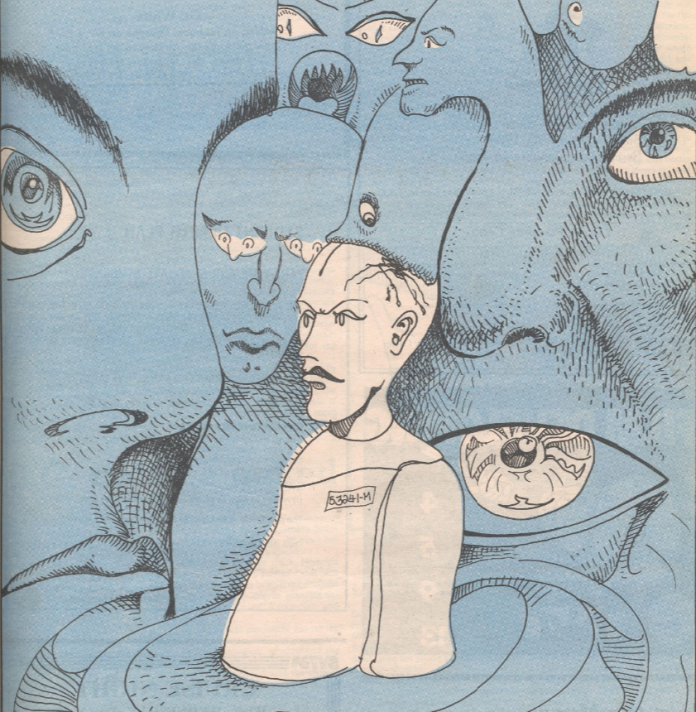
A near-zombie apocalypse is sweeping the nations in the form of a media literacy crisis. Nowadays, everyone seems to be staring at their screens dead-eyed, and when confronted with critique, symbolism, or allegory — they just groan.
MediaLiteracyNow offers a basic working definition, explaining ‘media literacy’ as “the ability to decode media messages (including the systems in which they exist); assess the influence of those messages on thoughts, feelings, and behaviours; and create media thoughtfully and conscientiously.”
The entire media literacy issue can be summarily described with one phrase: “It’s not that deep.”
A real ‘maybe the curtains are just blue’ statement, and social media comments sections are rampant with accounts preaching this sentiment on any manner of content, suggesting that people criticizing a media item are being overly sensitive, too ‘woke,’ or looking into things too much.
However, it is that deep, always.
It’s unclear whether the average ‘media illiterate’ consumer simply does not have the skillset or resources to discern meaning from media, or some consumers are simply wilfully ignorant, turning a blind eye to the sociopolitical power that popular culture possesses.
In both cases, though, it’s an issue of diminishing media to just that; just a film, show, book, or news article that exists in a vacuum, unaffected and uninformed by our current cultural moment, and with net-zero broader implications.
‘Escapist’ media is a utopian idea
Another common counterpoint to critical engagement is the appeal of media consumption for escapism.
Sure, seeking escapism in media is a common and completely valid act; many people look for solace in a comfort movie or show to alleviate the monotony of work, school, and general life under late-stage capitalism.
Some people are, understandably, so exhausted by the day-to-day that they want to avoid further mental labour during their only time to rest.
However, these films and shows, without a doubt, still have some sort of underlying message, and the notion that any art is a purely impartial, escapist entertainment form that does not have anything to say is quite naive.
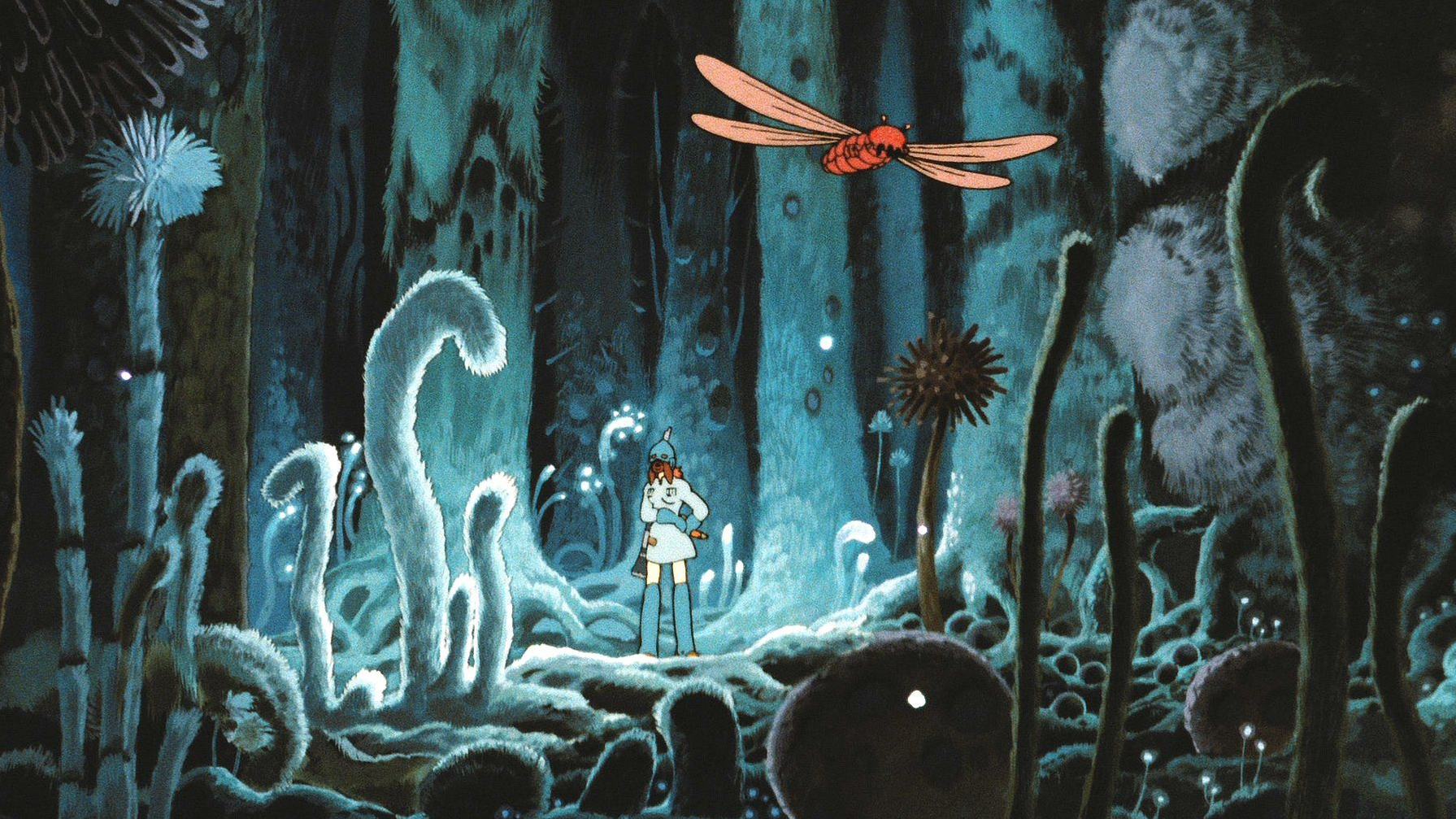
Namely, Studio Ghibli films are often praised as escapist comfort watches, but many of Miyazaki’s richly illustrated worlds use whimsical elements to emphasize the importance of environmental conservation, interpersonal connection, and slowing down – all subversive acts in our impossibly fast-paced capitalist reality that never seems to stop, and thus, powerful political messages.
Stranger Things 5: A case study on media literacy or lack thereof
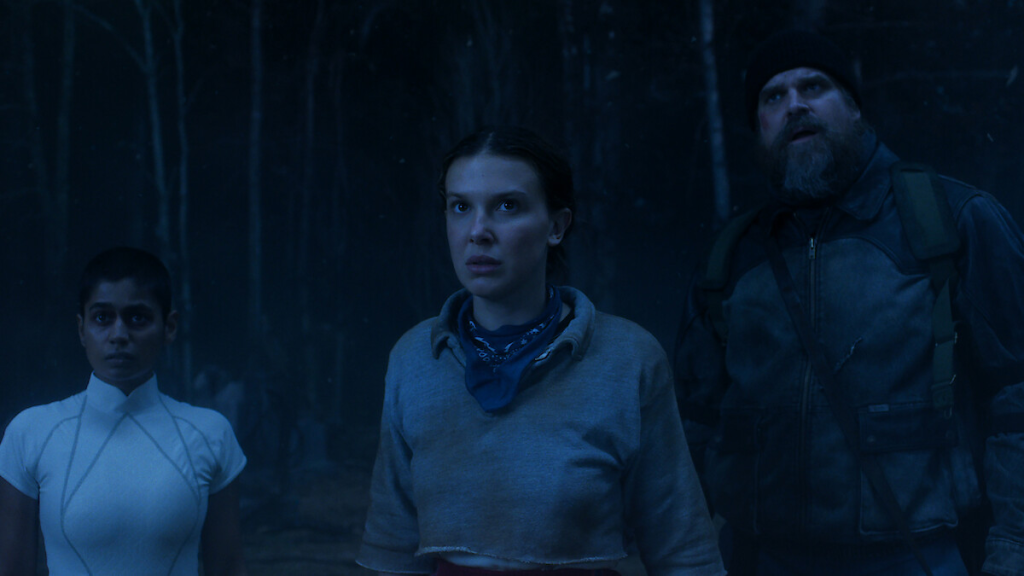
A timely example of poor media literacy being an issue might be the fifth and final season of Netflix’s smash-hit Stranger Things. The globally acclaimed series recently released its victory-lap instalment after a record-breaking 10 years, and the show’s conclusion massively divided fans, sparking convoluted theories online.
The quality of the show’s writing appeared to dip significantly compared to previous seasons, and critical viewers took issue with the final season’s messaging in particular.
At first, Stranger Things lauded ‘outcasts,’ and used interdimensional elements as a layered allegory for childhood trauma, but by contrast, the fifth season appeared vapid in its approach and neglected these narratives.
Outside of countless plot holes and unfinished storylines the showrunners were criticized for, Stranger Things 5 portrays Eleven, a young woman with psychokinetic powers, hunted by the government, exploited, subjected to MK-Ultra experiments and abuse, sacrificing herself along with the show’s sinister parallel universe, The Upside Down.
While her fate is left ambiguous, an unfortunately real line of dialogue from the show says that self-sacrifice is “the only way to break the cycle,” not-so-subtly implying that the only way to end the cycle of abuse is suicide.
Another character, Will, a young gay teenager, is forced out of the closet by his abuser, the main antagonist of the show. This is framed as an empowering act, and accompanied by a surface-level-at-best speech that reads like a performative allyship slogan, ‘gay people are just like you,’ delivered to a room full of people, in the 1980s, no less.
Then, when viewers are getting glimpses into the main characters’ lives during the epilogue, and each character is pictured at college or achieving their dreams, this character is plopped into a gay bar and given an implied, nameless, epilogue boyfriend with no dialogue.
This character is coincidentally the only one in the show that does not have an established on-screen romance, and the show’s only other queer couple was both developed and broken up off-screen.
This does not even mention the fact that every racialized character was either killed off, reduced to simple comic relief, or used as a plot device for another (white) character’s development.
These are just a few select plot points of many. Following the conclusion of the season, people criticized the show for its irresponsible and frankly disempowering treatment of suicide, abuse, female characters, BIPOC characters, and queerness.
Some viewers thought this spoke to a broader culture of misogyny, thinly-veiled homophobia, and rising levels of conservatism seeping through popular culture, which frames minority characters as disposable.
A common conclusion echoed online was that the show positioned itself only ‘for outcasts’ who are white, heterosexual, male ‘nerds.’ These critical responses might illustrate a media-literate consumer.
However, an absolutely staggering portion of the show’s audience failed to see through the nostalgia bait to glaring pitfalls indicative of pressing societal problems.
Berating those disappointed in the final season’s messaging, some fans incessantly prompted ‘why can’t you just enjoy it?’ ‘Just have fun,’ ‘Why do you have to make everything political?’ and ‘It’s not that deep,’ even though the gravity of these offensive portrayals carries significant weight, especially on the biggest television show in the world.
This is far from the only example of this happening, either.
A learned skill
Declining media literacy works both ways. As the above definition says, part of media literacy is conscientious creation.
A large amount of contemporary media is made with the expectation that audiences will be doomscrolling on their phones while watching passively.
Some production companies are getting lazy, spoon-feeding viewers the plot and churning out surface-level ‘slop’ as fast as possible to make a quick buck, unconcerned about potentially harmful effects, and impacting viewers to become more passive.
This has, and will continue to make people more susceptible to harmful propaganda and mis/disinformation.
Passivity is a dangerous thing.
It leads to the establishment of damaging stereotypes or cultural myths, and it can pave the way for creating an uncritical, zombie-fied general population, which is counterproductive to social progress.
Media literacy is a learned skill.
In the first year of my undergrad, I took all assigned class readings as gospel, all narrators as reliable, until I showed up to class discussions and my professors went “Oh, this guy? He’s controversial for [insert reason]!” which was initially lost on me.
I often see people saying we need to be taught media literacy in school. I can only speak for folks who went through the Newfoundland public education system, but that was the primary purpose of high school English.
Though curricula could stand to be modernized, the books you were forced to read in high school and those Robert Frost poems you begrudgingly picked out metaphors from were meant to teach you skills about deciphering deeper meanings and subtext.
To ‘have media literacy’ is often equated to ‘having intelligence,’ and to suggest someone lacks it is perceived as an insult.
This is by no means suggesting that anyone is unintelligent or aiming to invoke shame over missed allegories, just that close analysis and impassivity are small acts of resistance against total zombification that you can partake in as a media consumer.
Put down your phone when you’re watching that show or movie, be critical, engage meaningfully, question things, watch/read/play things that challenge you, and really take the time to sit with them – because it truly is that deep.