


“Vulgarity is neither fashionable nor intellectual,” claimed a blistering letter to the Editor in a February 1991 issue of The Muse.
This was in direct response to the student publication’s most controversial issue, which made national news. Memorial’s student publication was under investigation by the RNC for a sex column in its annual Gay and Lesbian Supplement.
Both then and now, The Muse wears this controversy as a badge of honour – the outrage towards its coverage was testament to its mission of keeping students informed without shying away from ‘difficult’ or ‘inappropriate’ topics.
Many following editions of the paper would continue this trend by covering issues of eroticism – editorial decisions that appeared shocking to many readers.
The Gay and Lesbian Supplement

February 14th isn’t just a holiday bleakly corporatizing the metaphysical phenomenon colloquially known as love – in Canada, the date also observes ‘Pink Triangle Day,’ a day of historic recognition for 2SLGBTQIA+ people.
Pink triangles are both a reminder of the violence queer people faced in WWII concentration camps, and a reclamation of the once-oppressive symbol. Pink Triangle Day is no longer as widely observed and can be criticized for its exclusion of trans issues.
Starting in 1990, The Muse marked this historic day double-feature with an annual ‘Gay and Lesbian Supplement.’
As February arrived each year, Muse staff would cover the ongoing struggle for equality. The masthead would survey students, debate the function of labels or the ethics of certain relationship dynamics, and, most notably, publish factual and informative HIV/AIDS coverage debunking harmful cultural myths amidst rampant fear-mongering.
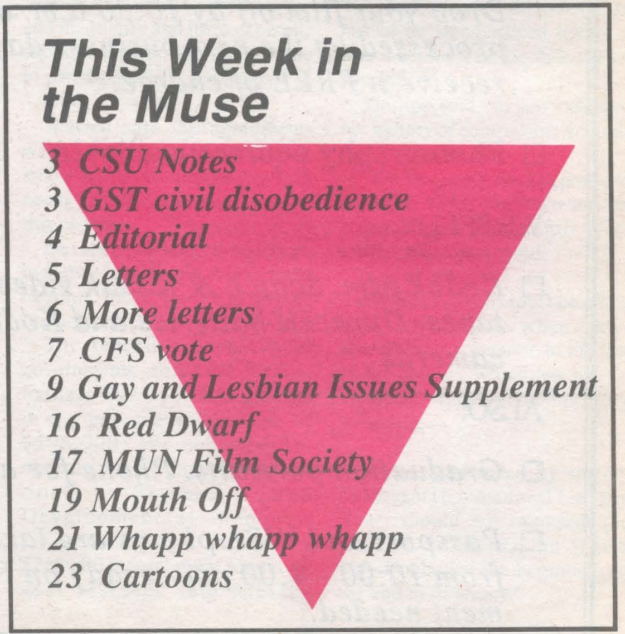
Many students submitting articles and letters for such supplements used pseudonyms to avoid being outed. This was during a time when these issues were seldom spoken about in media, other than alarmism or to justify bigotry.
Published in the infamous 1991 issue, an article titled ‘A gay man’s guide to erotic safer sex’ transparently measured the HIV/AIDS risk factor for specific sex acts, albeit with some anecdotal evidence and descriptive liberties taken, and complete with a photo of a man performing oral sex on another man.
In a time when access to information and the internet was less than democratic, and few sexual health resources were available to queer people, even if they mustered the courage to seek them out, this type of coverage was nothing short of life-saving.
Most people, however, did not agree with this sentiment, so vehemently so that The Muse’s editorial staff decided to make their subsequent issue a ‘Letters Supplement,’ giving students a chance to air out their grievances.
A medical student called the supplement “revolting” and said that the paper had “successfully made gays and lesbians seem perverse while simultaneously offending the majority of St. John’s.”
Another letter, from “20 disgruntled students,” banded together to divulge a quite passionate, profanity-ridden spiel on why “The Muse is not a porno magazine,” claiming they had only seen content similar to ‘A gay man’s guide’ in explicit publications.
Most letters claimed to have no issue with gays or lesbians, while calling them ‘immoral,’ ‘sick,’ and ‘perverted’ in the same breath. This response brought to light long-running, harmful misconceptions that conflate queerness with sexual perversion or deviancy.
In the same issue, Editor-in-Chief Dawn Mitchell wrote that the reaction was “unexpected and unwarranted.”
She further explained that the piece was intended to educate, and “despite this controversy, however, the staff maintains its right to determine the editorial policy of the Muse and will not be deterred from its attempts to expose those issues which we feel are not addressed by the commercial media.”
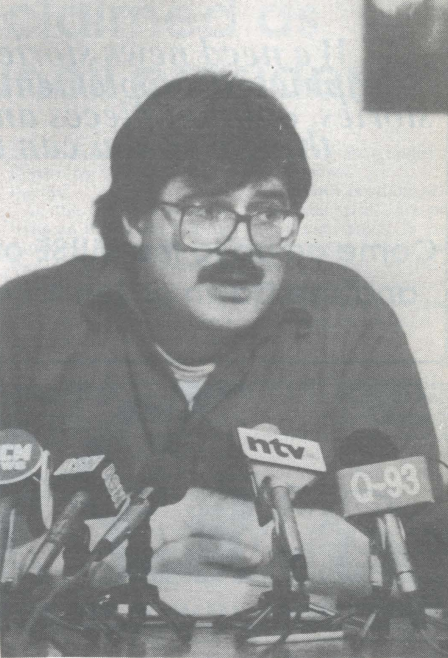
Following the backlash, community members and students held a press conference at the LSPU hall in support of The Muse.
Associated persons maintained the educational quality of the coverage. At the press conference, MUN sociology professor Gary Kinsman said that “hopefully, more people will realize we have to deal with this issue, even though it may offend a few people. In many ways, this is a health emergency.”
Many other student publications like UBC’s The Ubyssey, Simon Fraser University’s The Peak, Concordia’s The Link, and UofT’s The Varsity reprinted the article to display solidarity.
The sex column renaissance of the early 2000s
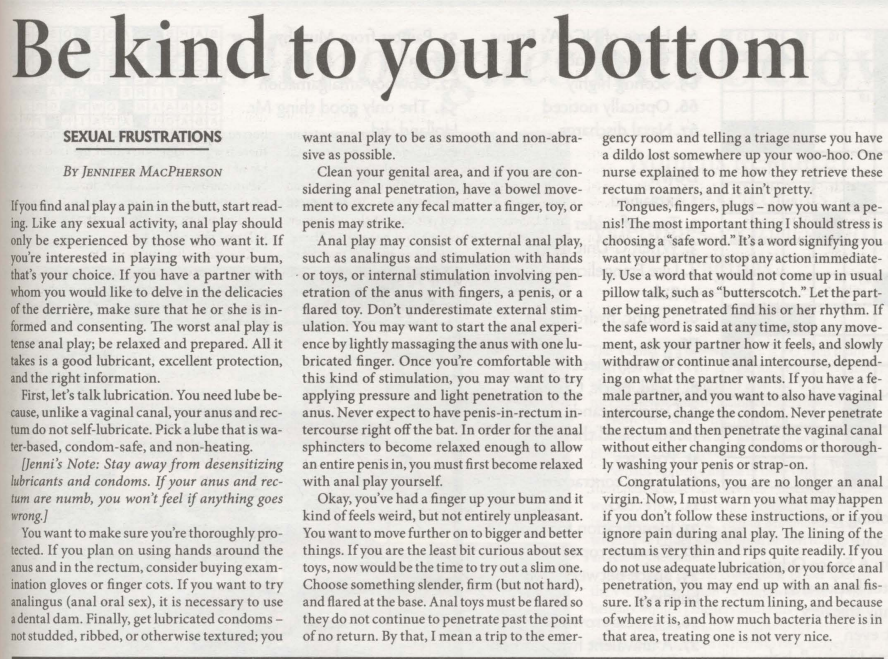
A few years later, The Muse’s sex coverage expanded to include not just activism, sexual health, and safety, but to also center discussions around pleasure, mutual respect, and comfort.
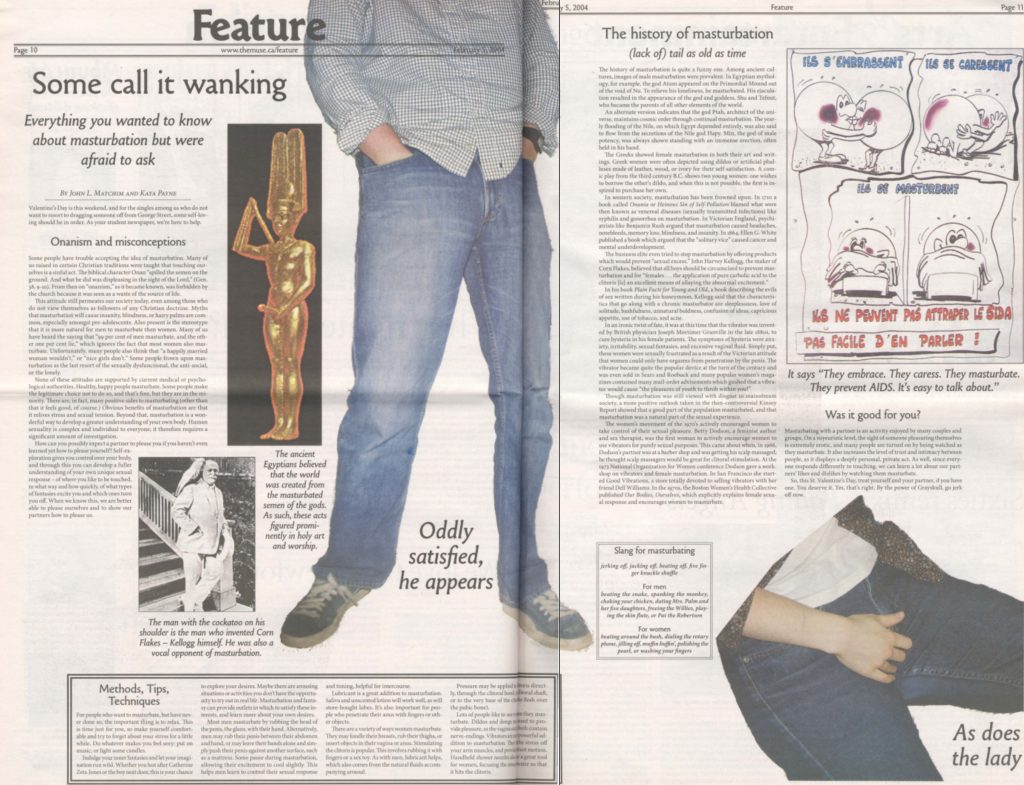
The early 2000s, in particular, veered towards ‘tutorial’ style articles that are, admittedly, quite surprising to read, though I’ll let you decide for yourself.
Some articles of considerable shock-value include ‘Some call it wanking’ and ‘Mind-blowing cunnilingus,’ published in 2004, and ‘Be kind to your bottom,’ published in 2005.
During these few years, the publication printed regular columns titled ‘Sexual Frustrations’ and ‘The Sex Geek.’
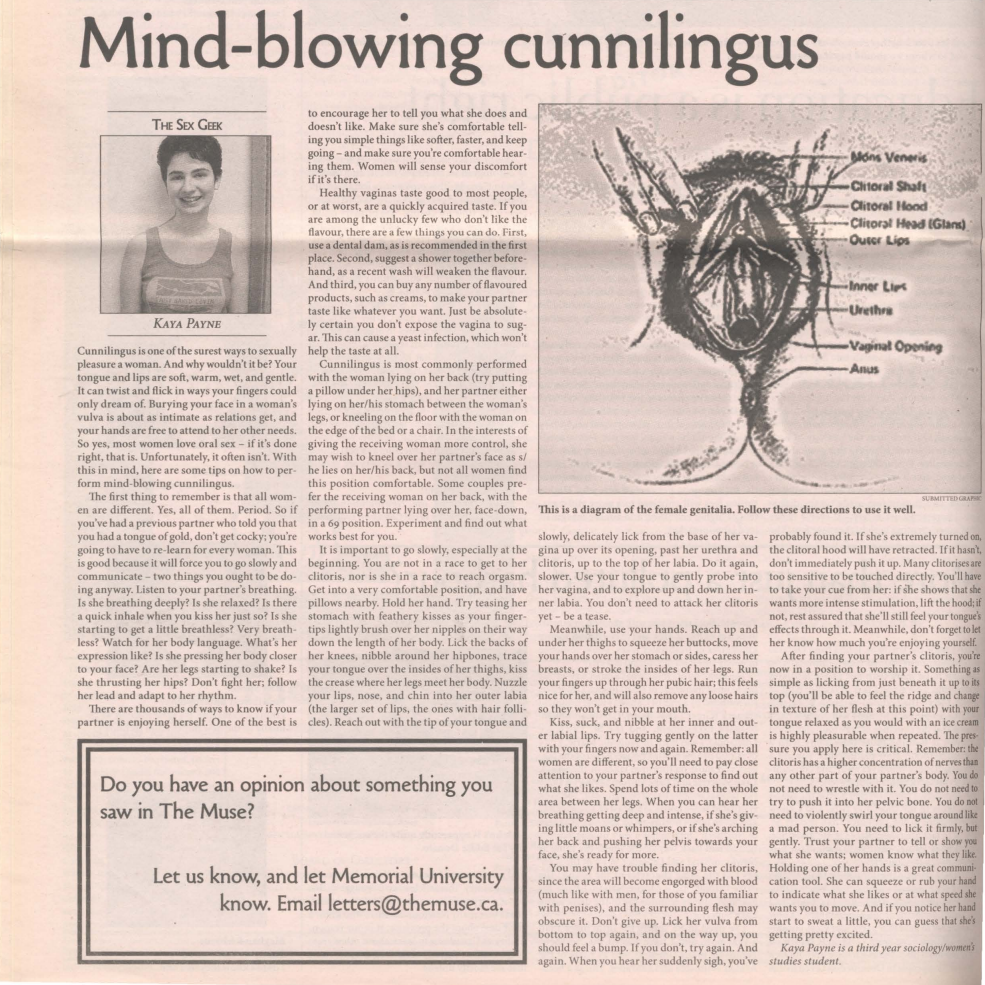
To our knowledge, these articles did not spur such spirited public feedback, but there are little reliable ways of knowing how the average MUN student in the 2000s reacted to such coverage.
Musings and questions going forward
The Gay and Lesbian Supplements ceased production in 2001 – though it’s worth reiterating that queer issues are not inherently sexual topics, and the paper sustained coverage of the 2SLGBTQIA+ community afterward.
General coverage of sexual issues and health appears to taper off in the early 2010s.
While the internet has its blessings, it appears web-only journalism has increased self-censorship on certain fronts, affecting what students feel they are ‘allowed’ to say in print versus online publications.
It’s much less anxiety-inducing to discuss ‘taboo’ or ‘inappropriate’ topics with the knowledge that it’s only being distributed in print to a small, captive audience, and writers aren’t petrified of the elusive looming presence of virality, future employers stumbling across it, or being haunted by their digital footprint.
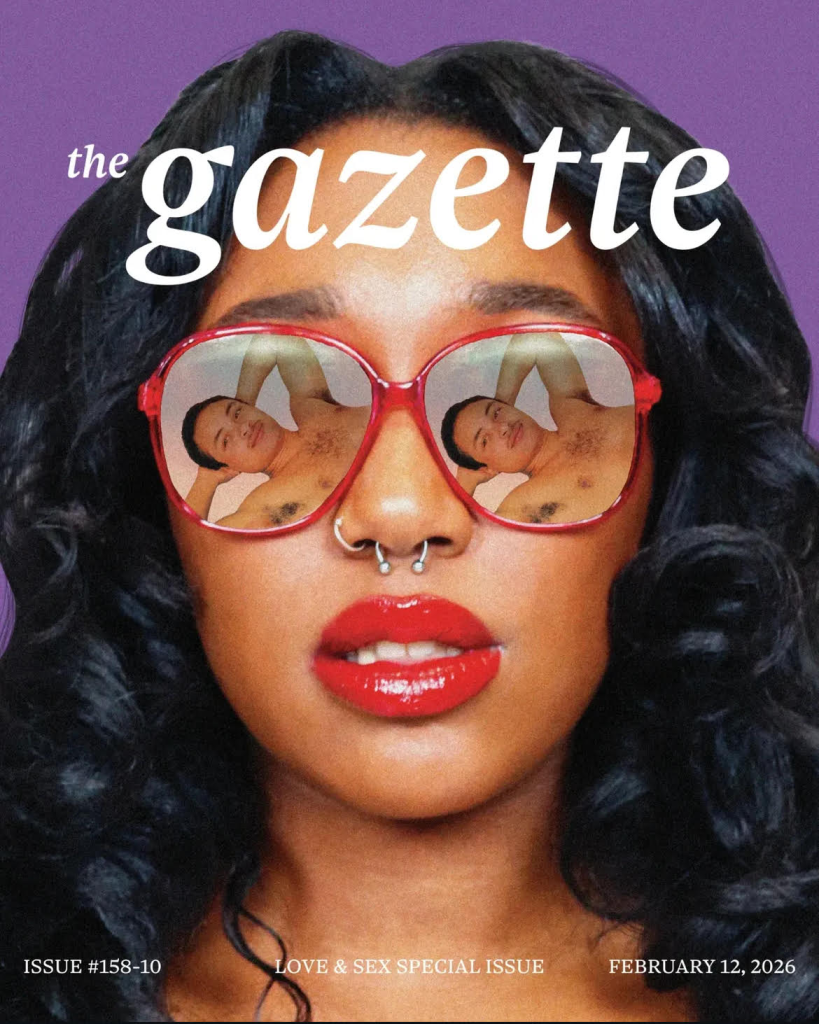
This all being said, a large portion of student publications across Canada still do ‘Love and Sex’ issues for February, and based on recent conversations with editorial staff from other papers, these special issues appear to be their most-read and highly anticipated yearly.
Jenna Olsen, Editor-in-Chief of Dalhousie University’s student-run publication, The Dalhousie Gazette, says that “The Dal Gazette’s love and sex coverage has been massively popular. I think university media should be radical and provocative, and because our only oversight is our student-run editorial team.”
“Some of our most popular pieces from the last two years have been sexually provocative content,” Olsen said.
Regarding some of their more provocative print coverage, the Dal Gazette team expected some reprisal towards their content and preemptively addressed readers. To Olsen’s surprise, students seemed unfazed.
“We printed a full page close-up of a bare boob in our limited edition fashion magazine, and it was the talk of Dalhousie campus. I was expecting some backlash for that one, but I didn’t even get one complaining email.”
While media ecosystems and what is deemed ‘acceptable’ to make the subject of an article have changed drastically since the 1990s, students at other universities are still itching to see their school’s sex survey published in a February issue.
Does this suggest a need for increased transparency around sexuality despite our supposedly ‘open’ mid-2020s public sphere? Does this increased interest speak to how people are continuously fascinated by the taboo and inappropriate? Maybe it attests to vulgarity indeed being fashionable and intellectual?
These are questions that have arisen for us recently after discussing the Gay and Lesbian Supplements with Muse alumni, and Love and Sex issues with editorial peers.
So, dear Muse readers, this is where you come in.
Is the new-gen Muse lacking this kind of coverage? Are we too soft now? Are all MUN students just prudes? Would you want to see a MUN sex survey? Or a Love and Sex print issue?
Please let us know here, or on social media @themuseyyt.