

*This article first appeared in The Muse’s 75th Anniversary Print Supplement magazine, published January 2026.
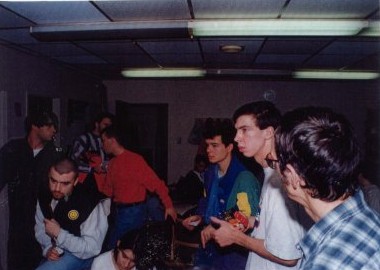
“I started at MUN in 1994, and I walked into The Muse first week of class and basically never left,” NTV anchor Michael Connors recalled over a grainy Zoom call. Staff members donning headsets and black NTV sweatshirts zipped past the all-glass walls of his office in preparation for the evening newshour. “I walked in, and I got involved, and that was that… My degree was in History, but my parents told me I majored in The Muse.”
In addition to being a fixture on the television screens of Newfoundlanders and Labradorians weekdays from 6 pm onwards, Michael Connors is also a proud alumnus and former Editor-in-Chief of The Muse. After 30 years and an expansive career in legislative reporting and broadcast news, Connors reflects on the student publication’s significance to him.
The 90s to now
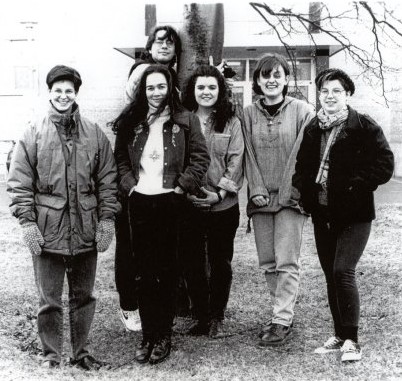
The Muse has changed a lot over the years, but the 1990s saw the student publication at its most prolific. Shifting from pioneering coverage of sexual assault and the HIV/AIDS crisis in the decade’s earlier years, to news-driven coverage of student issues and campus life in the late 90s, staff at this time worked tirelessly to deliver a 28-32 page paper to newsstands across campus every week.
“I think The Muse goes through phases,” Connors explained, having been involved from 1994-1999. “It was on a swing back from a heavily activist phase towards a more careerist phase, you could call it.”
Connors highlighted that the paper’s expansive campus news beat focused on issues directly affecting Memorial’s community. He recollected the inaugural Day of Action protests opposing rising tuition costs, disputes over how student media was funded, and conflict with the student council in terms of how The Muse covered them as memorable topics during his time at the paper.
Electoral bodies serve a purpose, of course, but the news anchor maintains that sharing verifiable information with students is crucial for cultivating any sort of democratic post-secondary environment. He also noted being there for the first constitution passed by the student council, which guaranteed the newspaper’s autonomy.
From the Muse-room to the newsroom
“The Muse is where I kind of learned and found out what it was that I could do,” Connors said, when asked if his experience in student media aided his journalism career. “I had this idea for a long time that I wanted to be a journalist, but didn’t know for sure if I could actually do it.”
Working alongside David Cochrane, who now hosts CBC’s Power & Politics, Connors honed his skills through student journalism. The two churned out large volumes of content, and quickly, approaching all Muse matters with a degree of seriousness which translated into quite fulfilling careers for them both, as they had “a sense of what the workload could be like and the ability to deal with that.”
Despite Connors’ earnest inclination, though, he credited his mistakes as the biggest learning opportunities to adequately prepare him for work in the media sector. “We were in control of [The Muse] ourselves. It was completely student-controlled and student-run. We made a lot of mistakes, too. [It gave] the freedom to make mistakes and to learn from them, to get a taste of what it’s like to actually manage an organization like that,” he said.
Muse meet-cutes
When graduating from University and saying goodbye to your beloved student publication, one might leave with a better resume, various print memorabilia, and hopefully a few future job references. For Connors, he left The Muse with his life partner in tow.
An acclaimed author of the Newfoundland-centred YA trilogy Call of the Sea, and also former Editor-in-Chief of The Muse, Amanda Labonté is Connors’ wife of 23 years.
“Don’t think we were the first or the last [relationship that came out of The Muse],” Connors laughed, “I was two years ahead of her, and she came in her first year. We were friends. We didn’t actually start dating until we’d known each other for a couple of years…We were both kind of, you know, quiet sort of understated sort of personalities.”
Perhaps some student journalists have a ‘type,’ so to speak, but there’s nothing wrong with that! As Connors explained, “you spend a lot of time there… in a way it becomes a social circle as well, and it’s not unusual for relationships to form.”
The couple’s involvement in student media also transcends generations. Our very own Sports writer, Andrew Connors, Labonté and Connors’ eldest son, is carrying on the family legacy through his involvement with The Muse.
Why care 30 years later?
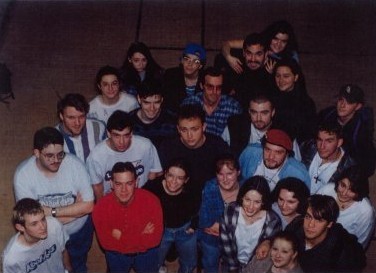
Exhibiting sustained support and interest in MUN’s student publication many years later through creating a Muse Alumni Facebook Group and encouraging his son’s endeavours – it’s clear that Connors remains deeply fond of his time at The Muse despite his illustrious career in media since convocation.
He touched on the importance of student publications, saying that “when you’re living in a society where so many of our institutions seem to be kind of under threat or under attack globally, to be able to maintain even something small like this…that sense of community and that presence on campus, that’s hugely important and I hope it never goes away.”
Though positions in news media are harder to come by now, he still encourages people interested in the media industry to go for it. “It was five amazing, formative years of my life,” he said. “That’s where I point to… where it all began for my career and my life. I don’t know what my life would have been without it. It was a great experience, and I would never trade it for anything.”