

If you’ve ever cheated on an exam before the prevalence of generative AI, I have a question for you: How did you do it?
Maybe you’ve written yourself a note with terms and equations to secretly unfurl and read underneath your arm. Maybe you’ve looked over your peers’ paper. Perhaps you and a friend communicated with each other using hand signals or coughs.
Regardless of how you did it, you probably always knew of ways to cheat if push came to shove. If so, then you are familiar with the art of cheating.
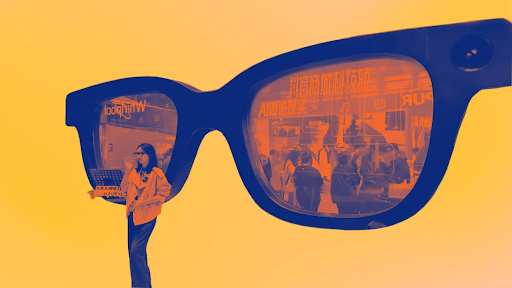
What I bet you didn’t do to cheat back then was scan your paper with AI-powered smart glasses to get every answer exactly right.
Since the rise of AI technology within the last few years, you may have noticed that academic dishonesty has become more prominent.
I mean, how couldn’t it? The general public now has the resources to have AI do their entire assignment for them, which is something that is just begging to be abused by those who try to get through life the easy way. The existence of AI itself, in many ways, justifies and exacerbates academic dishonesty.
In response, many MUN professors are taking a firm, anti-AI stance in their classes, mainly because of its high usage for academic dishonesty – along with a myriad of other political, philosophical, and environmental issues.
I don’t blame professors for taking such a firm stance against AI; academic dishonesty is a very serious and rapidly growing problem today — especially where public education rewards high grades over genuine learning.
This op-ed is in no way glorifying the idea of cheating as some “noble” practice. I do not believe that cheating is okay in any way.
But, in much the same way that crass bathroom stall vandalism is an art form, so too is cheating considered a form of art; you may not like it, but there are still those who admire the transgression.
At the same time, however, wasn’t cheating, strangely, a more “honest” practice before AI?
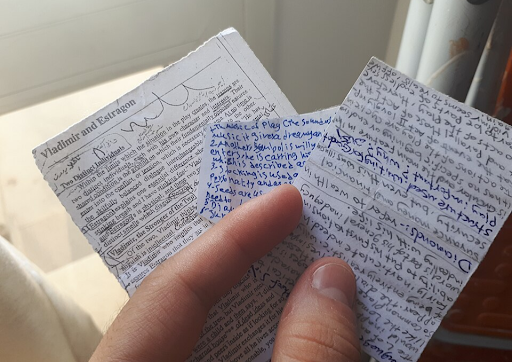
Yes, cheating is an inherently dishonest action, but doesn’t the risk of cheating mean using your limited exam resources to cheat more elaborately and honestly?
Even in cases where a small group uses hand signals to communicate answers, isn’t the process of learning and using a silent language in plain sight without getting caught a more creative way to cheat on an exam than typing into the little computer on your watch?
Since the rise of AI, I’ve been noticing two main things about academic dishonesty; it’s become more prevalent than ever before, and it’s lost its heart.
The rise of AI has stopped the humanist process that is dynamic cheating — the process of cheating in critical and creative ways — and has taken away the critical thinking processes behind properly executing a cheat.
I say “dynamic cheating” here, as the introduction of AI has completely changed the way we think about what cheating is; to cheat on a paper today, you don’t necessarily need dynamic cheating — cheating today could simply mean to displace any critical thought with the latest model of Grok.
While you may not necessarily love bathroom stall vandalism, imagine if every little message on the walls were written by an overly-agreeable robot. Personally, I would miss seeing those “Cool S’s”.
There is something distinctly human about transgressive rebellion that makes its effort something that can be silently admired despite its perceived illegitimacy. The same here applies to dynamic cheating; the art of cheating.
However, in a post-AI era, this transgression — the art of cheating — is being replaced with something that is somehow even more shallow and isolated; the machine of cheating.
It sounds strange, but since AI, there is no longer a “learning curve” or any sort of “skill expression” when it comes to cheating. The act cheating on an exam, for those who want to break the rules, is a prompt away.
To put it simply, cheating has become pay-to-win; anybody can reap the rewards of cheating on an exam if they fork over a few hundred dollars for Meta AI glasses. In this way, academic dishonesty has become something that is commoditized and commercialized.
With AI, cheating will still be around (arguably more so now than ever before), but it is the art of cheating which AI is killing, and I think that it — like the various other art forms which AI conglomerates seek to replace — is no exception to AI’s disruption of arts and culture.