

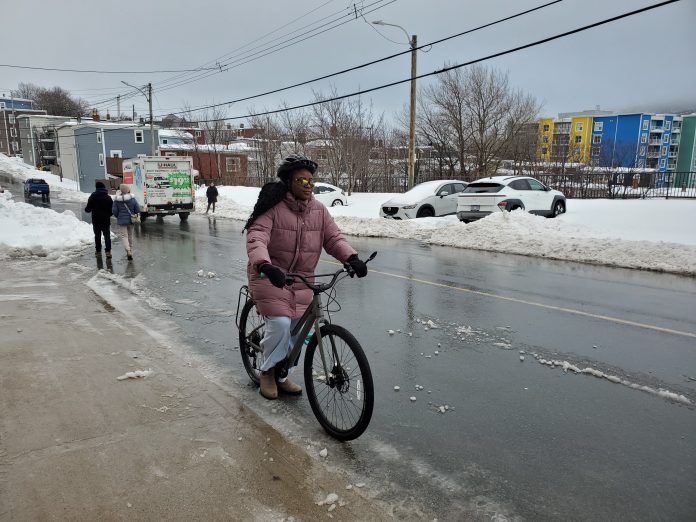
For many people, bicycling seems like a strictly warm-weather activity.
Winter is often viewed as a season for parking the bike and waiting patiently for spring. The promise of snow-covered streets, icy paths, freezing temperatures, and short daylight hours can make winter riding appear uncomfortable or even dangerous.
Concerns about slipping, mechanical problems, or simply arriving at work cold and wet discourage many otherwise enthusiastic cyclists from continuing once temperatures drop.
Yet much of this hesitation comes from misconceptions. St. John’s, and many other cities across the country, have a growing community of year-round cyclists who ride safely even through snow and cold every year.
A combination of winter appropriate clothing, improved bike equipment, and better winter maintenance practices mean that riding in winter is far more manageable than people expect.
Snow can actually create calmer streets by slowing traffic, and cold air, when dressed for properly, can feel refreshing rather than punishing.
Winter cycling can be surprisingly practical. Roads and shared-use paths may be less crowded, commute times can become more predictable, and cyclists can avoid scraping windshields or waiting for public transit delays.
Another common worry is safety, particularly due to icy road conditions. Although winter riding requires adjustments, cyclists who adapt their speed, braking habits, and route choices often find conditions predictable and controllable.
Much like walking carefully on snowy sidewalks, winter cycling becomes easier with experience and preparation. The challenge is real, but it is not insurmountable.
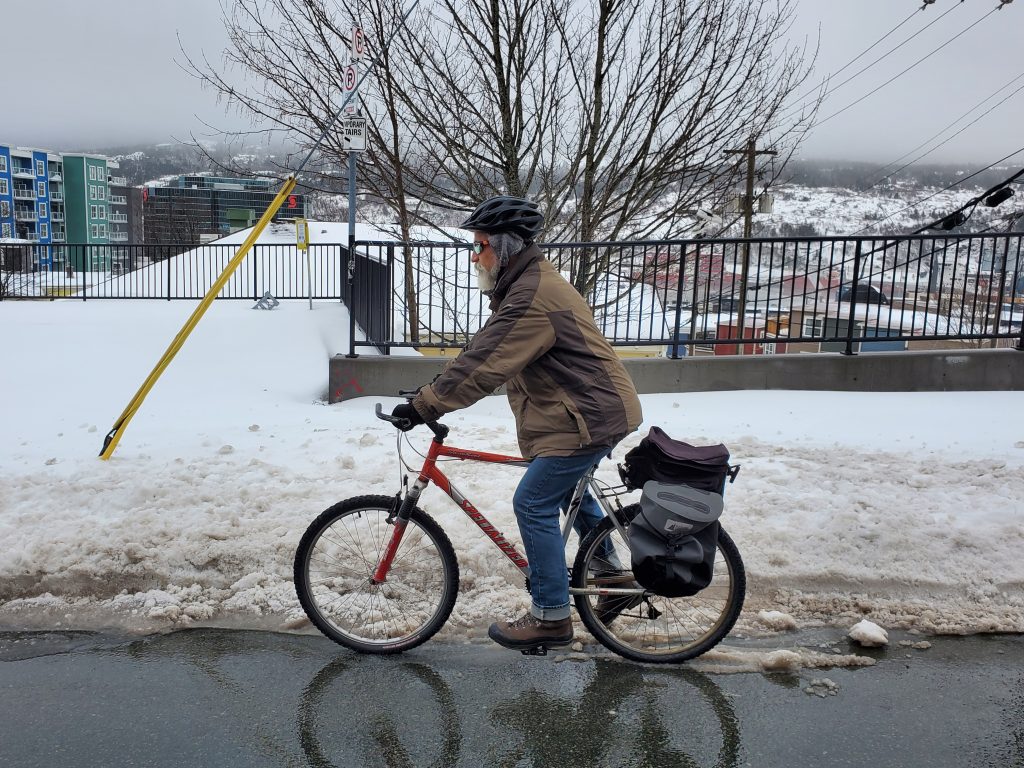
The Benefits of Cycling in Winter
Continuing to ride through winter offers significant physical and mental rewards. Firstly, regular cycling helps maintain fitness levels that often decline during colder months, supporting cardiovascular health and overall well-being.
Also, outdoor activity during winter can improve mood and combat seasonal fatigue by increasing exposure to daylight and fresh air. For many riders, winter cycling ultimately transforms from a challenge into a deeply satisfying routine.
Finally, from an environmental perspective, replacing short winter car trips with bicycle travel reduces emissions during a season when fuel consumption tends to increase.
Practical Advice from Winter cyclists in St. John’s
1. Dress in Layers, Not Bulk
Winter cyclist David Tourigny noted, “Personally, I wear good snow pants from the Rossignol brand so I’m never cold.” Staying comfortable begins with clothing strategy. Instead of wearing one heavy coat, use multiple layers that trap warmth while allowing moisture to escape. A breathable base layer keeps sweat away from the skin, an insulating middle layer retains heat, and a wind-resistant outer layer protects against cold air and precipitation. Avoid overdressing. Cycling quickly generates body heat, and sweating excessively can lead to chilling later in the ride. Aim to feel slightly cool when starting out—you will warm up within minutes.
2. Protect Hands, Feet, and Face
Another winter cyclist, Brent Keeping says, “I have noticed more cycling in general since COVID. I’m a commuter and I do ride off and on during the winter. My advice for any winter riders is to dress for it in layers. I especially like the handlebar mitts. They’re a game changer for me, plus face coverage due to wind chill.” Maria Lopez Gomez notes that she wears ski goggles sometimes. Extremities are the first parts of the body to feel the cold. Insulated gloves or mitts designed for cycling help maintain dexterity for braking and shifting.
Warm socks paired with waterproof footwear or shoe covers prevent numb toes. A thin hat or helmet liner under the helmet reduces heat loss, while a neck warmer or face covering protects exposed skin from windburn. Eye protection is also helpful to shield against snow, wind, and road spray.
3. Plan for Comfort at Your Destination
Think beyond the ride itself. Bringing a change of clothes, storing gloves indoors to dry, or having access to warm beverages can make winter commuting far more appealing. Dry gear makes the return trip much more comfortable.
4. Prepare Your Bike for Winter Conditions
A well-prepared bicycle performs far better in cold weather. Wider tires provide more stability on snow, and lowering tire pressure slightly can improve traction. In icy regions, studded tires offer dramatically increased grip and confidence.
Fenders are highly recommended to reduce slush spray and keep both rider and drivetrain cleaner. Maksym Masli who “cycles every day to work, no matter what weather” advises people to “have studded tires and dress for the weather,” for driving in winter. Maria Lopez Gomez added that“studded tires are a must” and recommends “an old bike that you don’t mind ruining due to salt on the road.”
5. Maintain Your Bike More Frequently
Winter riding exposes bicycles to water, grit, and salt that accelerate wear. Cleaning the chain regularly and applying lubricant designed for wet conditions keep components functioning smoothly.
Checking brakes and tire condition more often than in summer prevents small issues from becoming safety hazards. Even a quick rinse or wipe-down after rides help prevent corrosion caused by road salt and moisture and can extend the life of key parts. If you’re choosing a winter bike, consider one with an aluminium frame. In addition to being lighter, they don’t rust like steel, but should still be washed.
6. Increase Visibility
Winter brings shorter days, overcast skies, and reduced visibility. Bright clothing and reflective materials make it easier for drivers and pedestrians to see cyclists.
Front white lights and rear red lights should be used not only at night but also during daytime conditions such as snowfall or fog. Keeping lights charged and lenses clean is especially important when roads are wet or slushy. Maria Lopez Gomez recommends reflective gear. Similarly, Brent Keeping recommends that “a taillight really keeps vehicles away from me at night – even more than I get in daylight.”
7. Ride Smoothly and Predictably
Winter riding rewards calm, deliberate movements. Sudden braking, sharp turns, or rapid acceleration can reduce traction on snow or ice. Brake earlier than usual and apply pressure gradually, especially when approaching intersections.
Corner slowly and keep the bike more upright when turning. Choosing a lower gear helps maintain steady control and reduces wheel spin when starting after a stop.David Tourigny noted, “The wind sometimes is a lot, but I just make it into a fun moment and take my time to not fall on ice or whatnot.”
8. Choose Routes Carefully
Not all streets are equal in winter. Roads that receive regular snow clearing or are frequently travelled tend to provide more reliable riding surfaces. Shared-use paths, protected bike lanes, if they have been ploughed, and quieter neighbourhood streets are often safer options than busy arterial roads.
Allow extra travel time so you can prioritize safer routes rather than the fastest ones. Give some thought as well to where you’ll lock up your bike at your destination. MUN has over 60 bike racks throughout campus, of which 17 are sheltered.
There are also bike lockers on the St. John’s, Signal Hill, and Marine Institute campuses. Chris Cordova told us, “I bike commute from Georgetown to MUN about once a week and I’m lucky to have a park trail, small streets and walkways to get there without traffic. I also fat bike in Pippy Park most days when there isn’t a storm.”
David Tourigny had similar advice, “If you’re a good cyclist, it’s feasible, unless it’s a particular day with crazy weather. You just need to know your safe route, stick to it and be more attentive than usual.”
9. Stay Aware of Changing Conditions
Winter surfaces can vary dramatically within a single ride. Packed snow, loose snow, wet pavement, and hidden ice (or “black ice”) may appear in quick succession. Watch for shaded areas, bridges, and intersections where freezing occurs more easily. Listening for tire feedback and adjusting speed accordingly helps riders respond before losing control.
Brent Keeping recommended, “that riders be careful of black ice along the road edges resulting from daytime snow melting at this time of year. Riding more to the centre of the lane is safer in my opinion, not only for black ice but because the snowbank takes away manoeuvring room.”
What next?
If you’re interested in joining others for a winter ride, contact the MUN Bike Hub to see what’s going on and who’s up for a short ride or an out-of-town excursion on the weekend. If you’re interested in winter outdoor activities in general, contact the Graduate Outdoor Society, no need to be a graduate student, to see what activities they have planned.
Winter cycling may initially seem intimidating, but with adequate preparation and realistic expectations it becomes both achievable and rewarding. Many of the concerns that discourage riders can be addressed through proper clothing, equipment, and riding techniques.
The benefits of winter bike riding go beyond just maintaining mobility. It also supports physical health, mental well-being, and environmental sustainability. Rather than viewing winter as the end of cycling season, more and more riders are discovering that it offers a different and often quite enjoyable way to experience the journey by bike.