



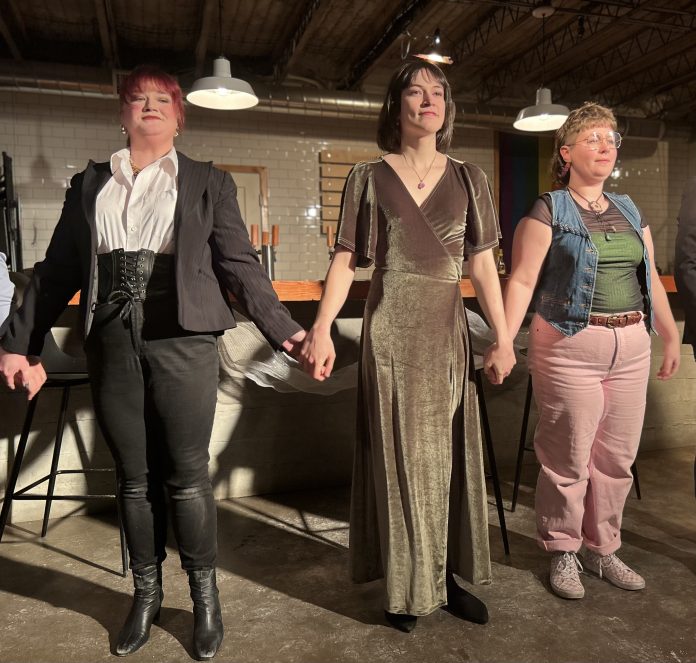
An absolutely electric and emotional performance ignited the second floor of Bannerman Brewing for three nights at the end of January.
Dolly’s House, a play by Capacity Theatre, is a modern, queer adaptation of Henrik Ibsen’s A Doll House.
“We love making [classics] more accessible and taking those questions from so many years ago and posing them in modern contexts.” said Emma Cole, managing producer.
Beautifully directed by Cassandra Munroe, & Written by Gabrielle Therrien, the play stars Olivia-Graeme McNabb as Nora, Kathryn Billard as Valerie, Belle Warner as Christie, Simon Alteen as Richard, and Andrew Halliday as Carson.
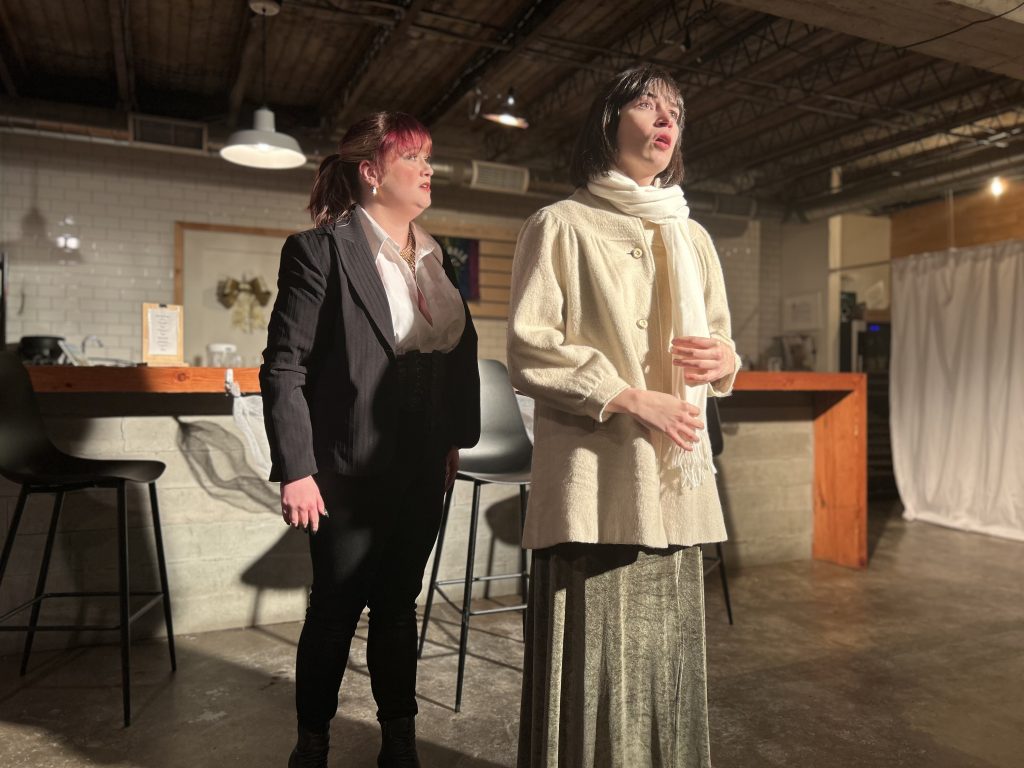
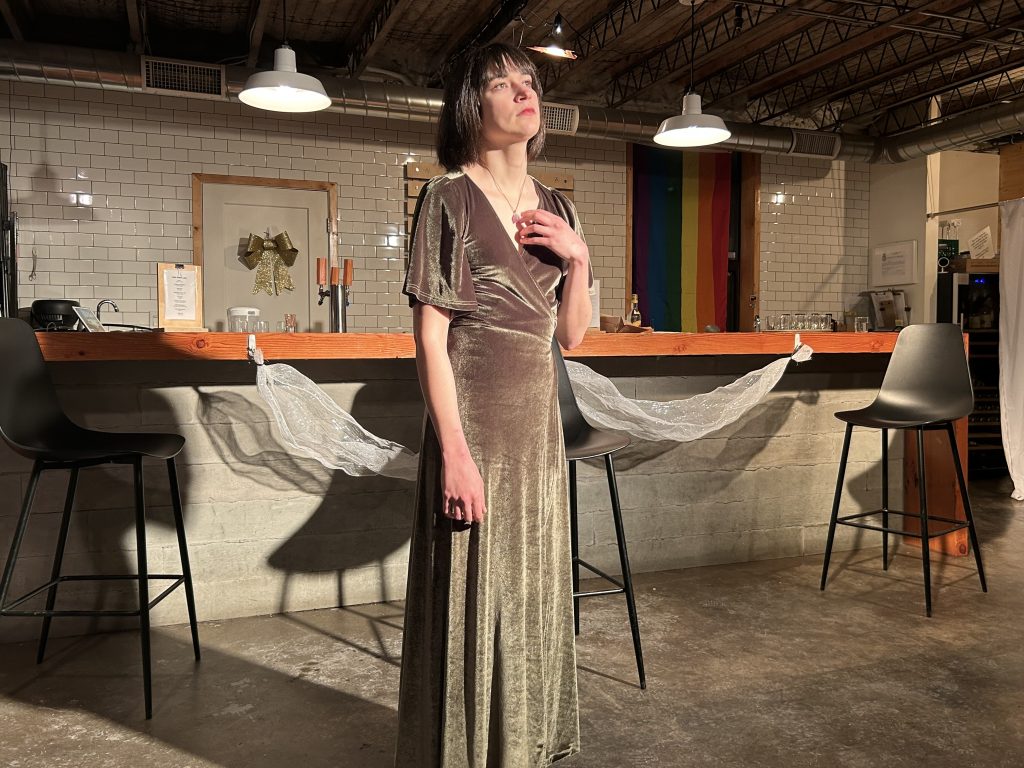
The entirety of the play takes place in a bar, so for that reason, the upstairs bar of Bannerman Brewing was a fitting staging.
It’s “an unconventional space but it’s an excellent performance space” and “it adds that much more realism,” said McNabb.
The play explores dynamic, yet toxic relationships that viewers can relate to, in some form or another.
In a queer adaptation, Cole wanted people to “take away the question of how power imbalances can erode relationships, even outside of traditional gender dynamics” and how such imbalances can “permeate relationships that don’t seem like they could be affected by those toxic imbalances.”
When the characters get flushed out, it’s obvious that not everything is so black and white.
It’s clear the writers wanted no character to be perfect, and that “none of these characters are necessarily evil, they’re all making, or most of them are making bad or difficult choices” said Munroe.
“I think it’s beautiful to see how much humanity is behind that, and let our audience kind of wash in what it is to just be human.”
Rebecca’s Review
Dolly’s House might be one of the best plays I have seen in a long time.
While remakes or modern adaptations of classic works can feel lacklustre, this production held me completely captive. I didn’t want to blink for fear of missing something.
The chemistry across the entire cast was phenomenal; raw, electric, and deeply emotional.
Belly laughs were quickly followed by moments of heavy tension, filling the room as we collectively watched in anticipation, wondering what the characters would get themselves into next.
Each cast member embodied their role so fully that it felt as though every character had been written specifically for them.
Olivia-Graeme McNabb’s portrayal of Nora undeniably stole hearts throughout the audience, her witty dialogue and liberating performance leaving a lasting impression.
Ultimately, the play was woven with a generous mix of real-life struggles, exploring how we navigate fiery emotions within ourselves and our relationships with those around us. No character was “perfect” or “clean,” but instead deeply human, and all the more compelling for it.
James’s Review
Dolly’s House was tremendously relatable in terms of how complicated life can get. After every scene, the audience was left wanting more and more secrets of the characters because we needed to know them on a more personal level.
The play combined comedic style in the early half with dramatic depth throughout, which really hooked viewers.
But what really sold it for me were the acting performances of the crew. Olivia-Graeme McNabb absolutely stole the show in her performance as Nora, and in a cast where they are all such amazing actors, that’s saying something.
McNabb’s Nora was so physically expressive and funny that I couldn’t help but draw comparisons between her and Jim Carrey. And when a scene required emotional and dramatic depth, she delivered.
Of course, the play had its villains too, particularly Andrew Halliday as Carson. This guy can play the worst person you know so well that I was afraid I’d have to talk to him after the show.
At least, that’s how I felt up until the climax of the play, at which point I realized that there are no villains, just people and very human problems.
Hannah’s Review
Dolly’s House honours its source material through its refusal to shy away from the uncomfortable. It will be enjoyed by those who admire Ibsen’s work, those who are seeking an introduction to his work, and anyone who simply enjoys good theatre.
The production takes Ibsen’s tale of patriarchy and power and reimagines it through a queer perspective that tackles addiction and autonomy like never before.
Like Ibsen’s original, at the core of the story is a highly multidimensional woman (played by the magnetic Olivia-Graeme McNabb) who must keep her world from crashing down when past and present collide.
McNabb’s performance as Nora is a masterclass in the absolute embodiment of a character. Nora represents the dichotomy of many women both in Ibsen’s time and the present, someone who must always be strong for those around her, yet is always treated as though she is far too fragile to be without them.
McNabb’s Nora is a showcase of femininity, fear, and eventually freedom.
Despite the intensity of its subject matter, Dolly’s House is imbued with humour and charm from both the cast performances and the script itself. Somehow, Therrien and Munroe have balanced the careful line between feel-good comedy and nail-biting tension.
We asked what the audience may take with them after they leave the performance. McNabb hopes “they continue to examine the questions posed about relationships and autonomy and what those questions mean in a queer context.”
Cole hopes to highlight the importance of questioning power imbalances, and how they “can erode relationships even outside of traditional gender dynamics.”
“I think it’s so important to look at how none of these characters are necessarily evil, they’re all making, or most of them are making bad or difficult choices… I think it’s beautiful to see how much humanity is behind that, and let our audience kind of wash in what it is to just be human and make mistakes and learn and grow, and continue to find ourselves.” Munroe said.
We highly recommend folks to keep an eye out for other projects by Capacity Theatre, and its talented cast and crew members.