

As an avid fan of co-operative video games, there is nothing more insulting than hearing a video game you are passionate about be simplified down in online spaces as “typical friendslop”.
Friendslop is a term that refers to low-budget and low-cost co-operative indie games. Usually, “friendslop” is the type of game you play with some friends for a while before dropping it entirely and playing something else; a form of disposable media based upon short game length and cheap consumer cost.
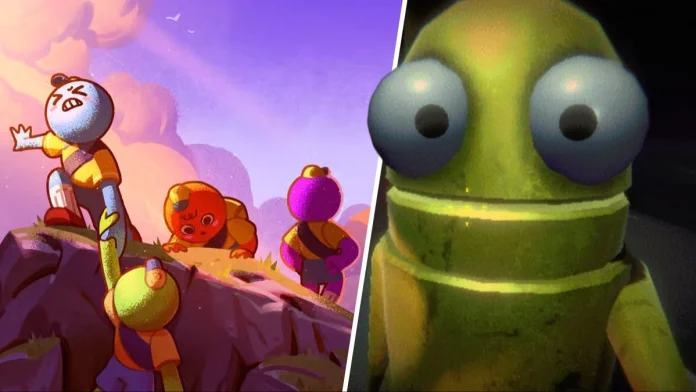
According to Google Trends, Google searches for “friendslop” first appeared around 2025, coinciding with the release of the wildly popular video game PEAK by Aggro Crab. The term stuck online, and people began using it to refer to other co-op indie games, like Innersloth’s Among Us and House House’s Big Walk.
The term isn’t always used in malicious contexts; in fact, it’s often the opposite. If “friendslop” simply meant a game you play with friends for a few weeks before dropping it, then there really isn’t anything inherently wrong with that interpretation, and I understand that perspective.
However, more often in online discourse have I seen “friendslop” used in negative connotations, in which people dismiss a game’s potential because of its status as “slop”.
Slop, a word that I’m sure needs no introduction in 2026, refers to that which is low-effort, low-quality, and often mass-produced; this is why “slop” is more often than not used to describe AI-generated content (AI slop), as AI content online is often described as “low-effort, low-quality, and mass-produced.”
Because of the negative connotation of the suffix “-slop”, the term “friendslop” has not only become a term used to describe a genre of video games, but also an excuse to unfairly criticize any particular co-op indie game as low-effort and low-quality; “friendslop” is just as much a video game genre as it is an insult to the games it labels.
In my opinion, I think that the term “friendslop” does more harm to co-operative indie video games than it does good, and I believe this new friend-focused game genre is deserving of a more positive image in online discourse.
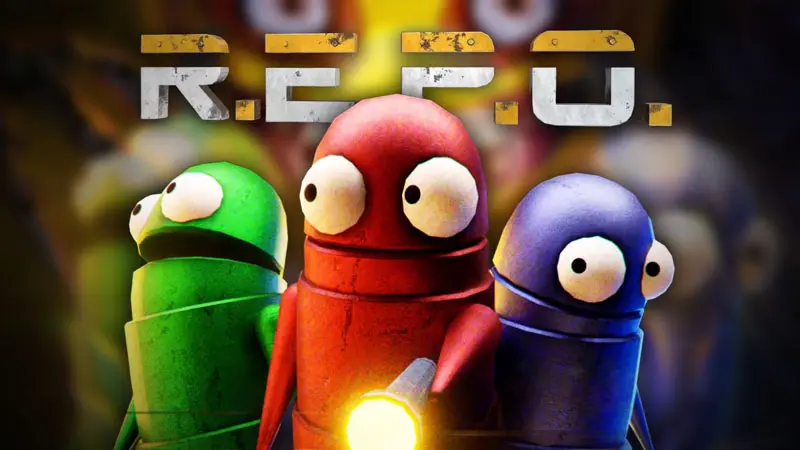
To examine a case study, Semiwork’s R.E.P.O. has been praised online as one of the best co-operative indie video games to come out in recent memory, expanding heavily upon the core foundations of Zeekerss’ Lethal Company, and selling approximately 20 million copies.
According to Steam Review analytics, 96.1% of all feedback for R.E.P.O. (from Feb. 2025 – Jun. 2026) has been overwhelmingly positive, praising the game for its refreshing gameplay loop, engaging mechanics, and distinctly funny game moments—whether it be accidentally falling down a pit, or high-stakes moments fleeing from monsters.
However, when R.E.P.O. finds itself within online discourse, what the game offers is often dismissed and boiled down to one word: “friendslop”.
This same principle is applicable to almost every other hit co-op indie title to come out in the last five years; critically-acclaimed or not, your favourite co-op indie video game is “slop” (at least, that’s how the gaming community at large is describing it).
When a new co-op indie game hits the market, it should stand alone as its own experience. However, the term “friendslop” strips away the identity of these stand-alone games, and groups the developers’ passion project into the semantic soup that is “slop”. This pattern is problematic, especially when—more often than not—the game was never “slop” to begin with.
So no, that co-operative video game your friend has been mentioning isn’t “friendslop”. Consider giving it a chance, and you may be pleasantly surprised by its qualities.