

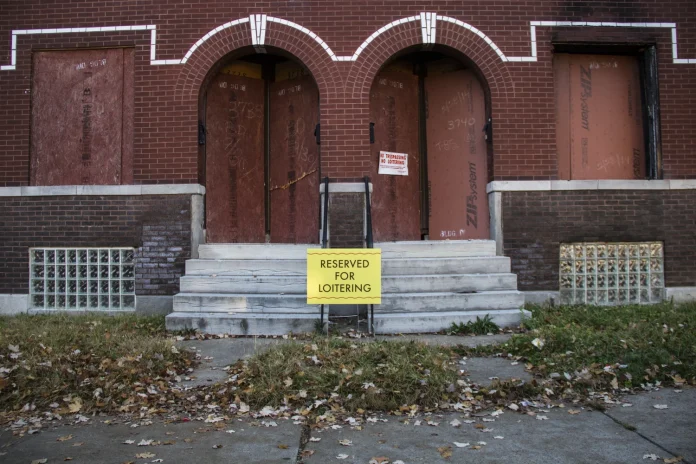
‘Loitering,’ reframed as an intentional presence in public space, positively contributes to communities, and should be encouraged.
What is loitering?
Loitering (verb): To delay an activity with idle stops and pauses; to remain in an area for no obvious reason; to lag behind (from Merriam-Webster); to linger, hang about… to stand, sit, or recline without a purpose (from various municipal codes).
I’m not sure about you, but the above sounds like a dream. I yearn for delaying an activity with idle stops or pauses; to stand, sit, or recline without a purpose.
Why must a purpose be required? Sometimes, as a small act of resistance, I lag behind. What a joy it is to know you will be a few minutes late, and stretch time just slightly beyond what is expected.
And yet, my reasons for loving loitering go beyond this whimsy. They rest on something more structural, something closer to community health.
This positive light I shine on loitering might be surprising, given its negative connotation.
‘To loiter’ is often synonymous with suspicion; it is, in many places, explicitly criminalized. Take Cambridge Dictionary‘s definition: To wait in a place “looking as if you are going to do something illegal.”
The justification for this criminality begins to unravel under scrutiny. How does loitering differ from simply ‘hanging out’?
At what point does presence become an offence? Is spending time in a place only acceptable if it is purposeful, or perhaps transactional, if we have paid to be there?
This definition should give us pause: loitering is framed as waiting while appearing as if one might do something illegal. A look, then, becomes the offence.
This subjectivity is not incidental; it is foundational. Historically, loitering laws have regulated not behaviours, but people. Emerging from 14th-century vagrancy laws, they were designed to control those deemed ‘out of place.’
Poor, homeless, racialized, and Queer communities have long been surveilled simply for existing in public.
In this way, loitering is unique in the criminal sense. It is not what one does, but who one is, and where one stands, that comes under scrutiny; an unease that still lingers in how we police presence in public space today.
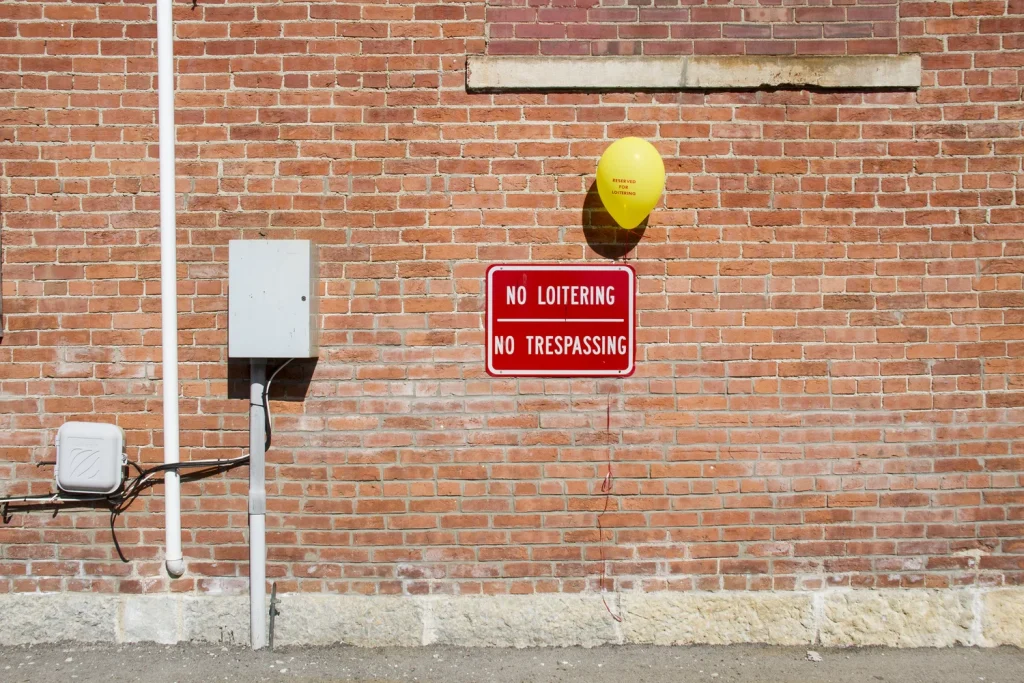
Why loitering is good
While I believe traipsing, idling, and moving about without intention is a lovely way to spend a day, my reasons for promoting loitering extend beyond lightheartedness.
Encouraging people to spend time in their communities builds connection in ways that are both subtle and profound. As with active transportation, loitering increases incidental interactions – the small, fleeting encounters that accumulate into familiarity, and then into trust, belonging, and shared space.
Importantly, these interactions are cost-free and accessible. You are not required to purchase anything to remain in a public space, nor is an exclusive membership required.
In this sense, loitering reasserts the role of the public sphere as a democratic meeting place. First described by Jürgen Habermas, the public sphere is one in which individuals gather not as consumers, but as participants in shared life.
It stands in contrast to the private sphere’s controlled domain. One of the beautiful things about community is precisely this diverse matrix of lives that come together, sometimes unexpectedly.
There are also concrete health benefits to loitering, both physical and mental. Time spent outdoors supports vitamin D synthesis and has been associated with lower cortisol levels.
Lingering in communal spaces also promotes physical activity in an incidental, low-barrier way; a short walk becomes slightly longer and a destination becomes a place to pause.
Ironically, loitering is often framed as a precursor to crime, frequently reported as “suspicious behaviour.” And yet, the opposite may be true.
Urbanist Jane Jacobs described “eyes on the street,” the idea that the presence of ordinary people creates a form of natural surveillance. When people are around, hanging out, idling, simply existing, there are fewer opportunities for crime to occur unnoticed.
A lively street feels safe not because it is controlled, but because it is inhabited. By contrast, empty spaces such as vacant lots or deserted parking areas often feel unsafe precisely because they lack this social presence.
There is a simpler explanation: Having people around makes life more enjoyable.
There is a quiet joy in stepping outside and seeing others doing the same. Sitting, chatting, passing through, or, indeed, doing nothing in particular.
It is a shared, unspoken, and deeply human experience.
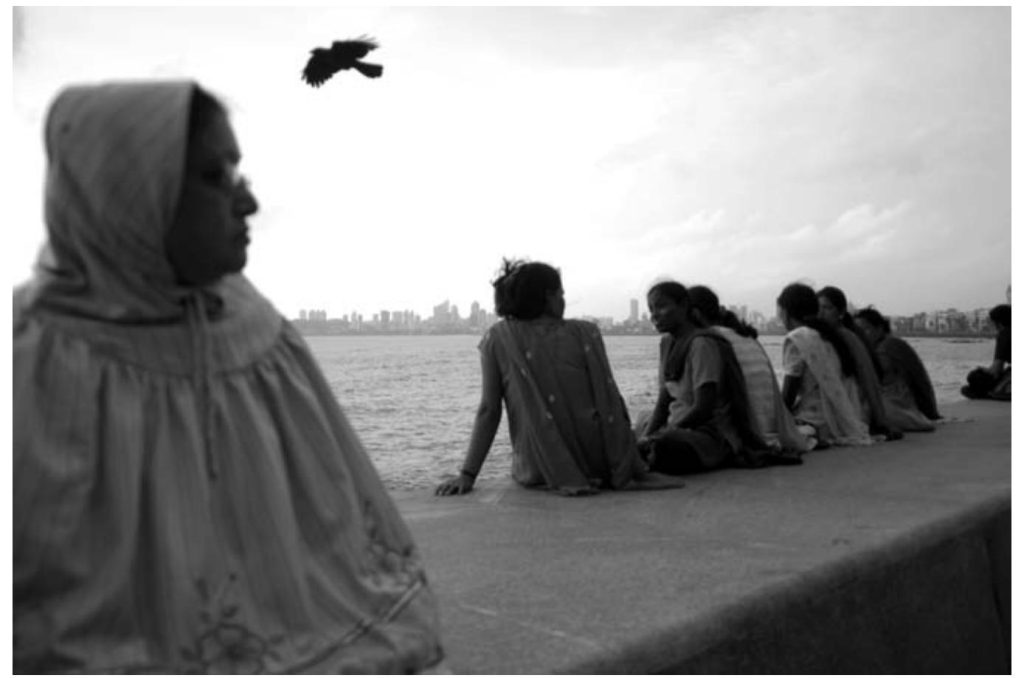
Encouraging loitering in our communities
If we accept that loitering has value, the next question becomes: How do we encourage it?
A useful starting point comes from anthropologist Marc Augé, who distinguishes between “places” and “non-places”. Non-places are those we move through without attachment, such as transit hubs, corridors, or parking lots.
They are functional, but not meaningful. The challenge is to transform public spaces, including sidewalks, parks, street corners, into places worth staying in.
This begins with the physical environment. Interventions can be modest or ambitious. A single bench can invite pause; larger investments, such as community centres, expand these possibilities. What matters is not scale, but intention: Creating spaces that signal permission to remain.
Equally important is the presence of activities. Chess tables, hopscotch markings, little free libraries, community gardens, or seasonal events provide gentle invitations to linger.
Safety is another crucial component. Crime Prevention Through Environmental Design emphasizes visibility, lighting, maintenance, and activity support. A well-lit, well-used space is both safer and more inviting.
Finally, comfort matters: Seating , shade, washrooms, water, and thoughtful, human-scale aesthetics all contribute to spaces people want to spend time in.