

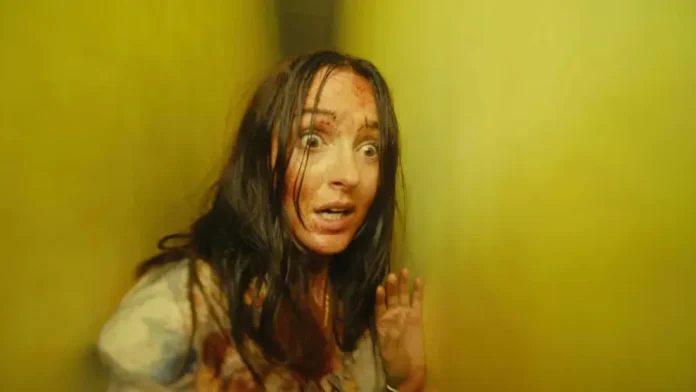
Following the immense success of the YouTube series of the same name, Kane Parsons’ full-length directorial debut, Backrooms, is in theatres now, and it’s just as open to interpretation as the web series Parsons made into an internet phenomenon.
While there are many ways to interpret the film, primarily as a metaphor for memory loss and trauma, what immediately stood out to me is how the movie can be seen as an interpretation – and, in some ways, a critique – of artificial intelligence.
I’ll start with a brief review of the film, just to lay some groundwork.
I’m a big fan of Backrooms. It manages to perfectly encapsulate the feeling of dread and uneasiness of both the series and the old 4Chan posts that Parsons based his series and the film on, while still creating a unique identity for itself.
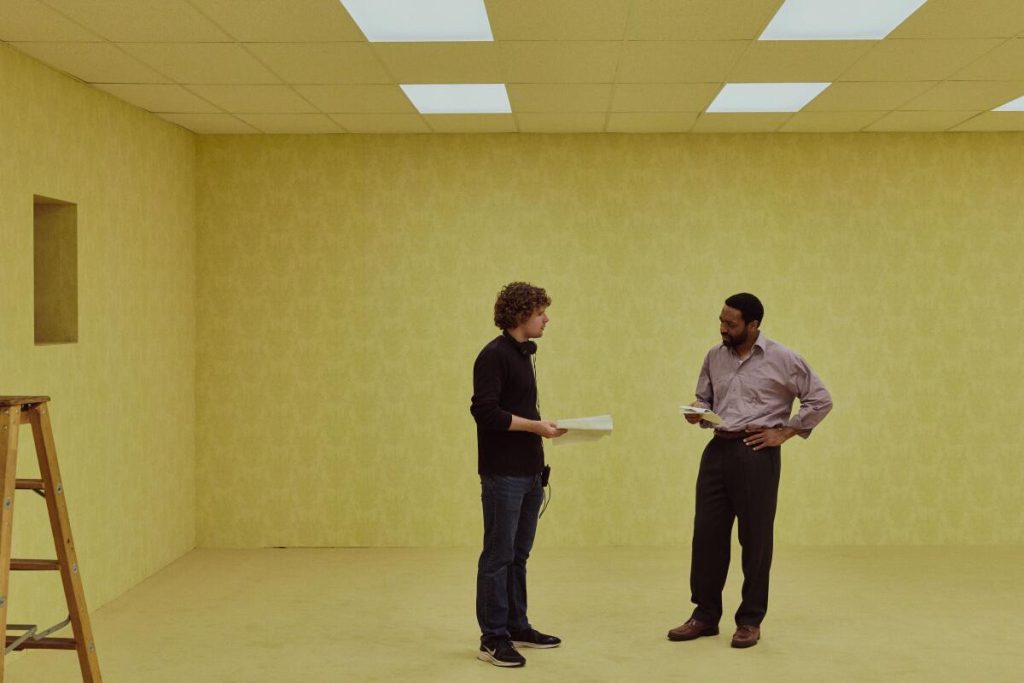
The film takes a back-to-basics approach, trimming the fat off the now incredibly dense lore of the Backrooms. It’s back to yellow wallpaper, tan carpets, oppressive lighting, and how people who wind up here deal with the mental toll of it all.
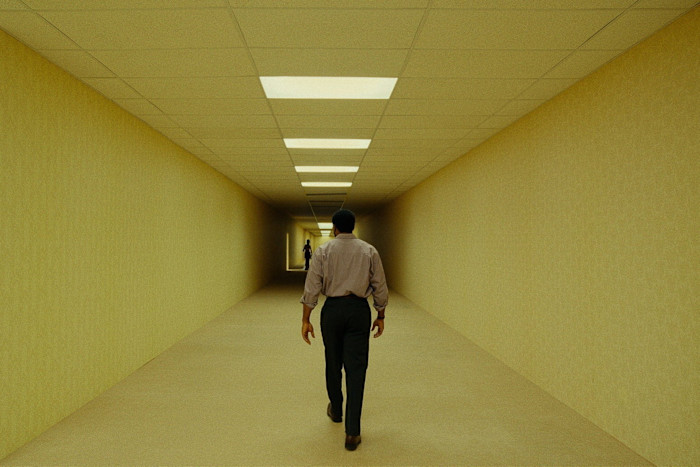
The cast brings their best, particularly Chiwetel Ejiofor as Clark, and it was a pleasure to see horror icon Mark Duplass of Creep fame in a supporting role. The cinematography, in tandem with the score, helps to create the pure creepy vibe of the Backrooms. Additionally, the found footage segments, a nod to Parsons’ YouTube series, are a welcome addition.
While the story suffers some sizeable pacing issues in its second half, it doesn’t take away from the filmmaking prowess at hand. Parsons took a big, bold swing for his first film, and he largely nailed it.
So how does this film create a metaphor for AI? To put it simply, it comes down to the nature of the Backrooms themselves.
From here on out, there will be spoilers for the film.
If you’re interested in watching it, I highly recommend doing so before continuing to read. If you want a score beforehand, I’d give it an 8.5/10, and a strong recommendation.
Essentially, the Backrooms replicates the memories of anyone who has entered it and adds rooms based on those memories to its layout. It then repeats these memories over and over, creating more and more of these rooms.
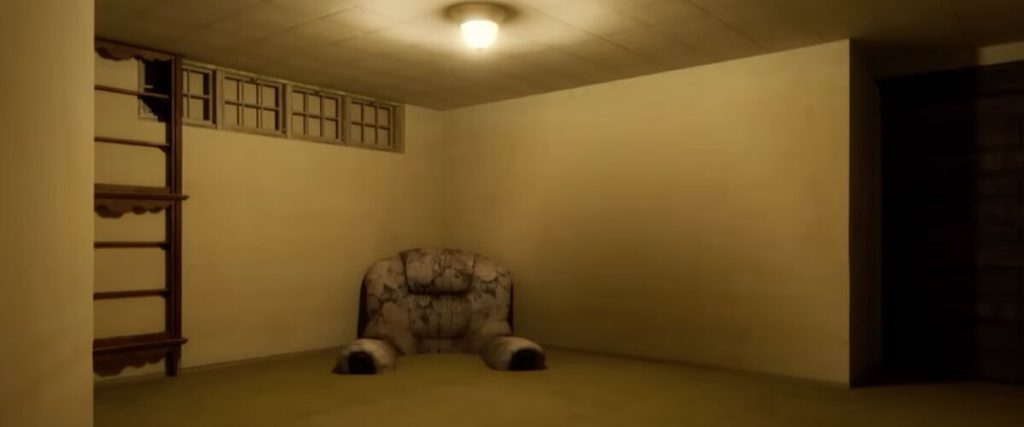
However, there’s a catch. The Backrooms’ memory isn’t perfect, and as it remembers something more times, it remembers it less, getting more details wrong, such as misshapen paintings or couches clipping into the floor. These replications get simpler and cruder the more they are copied, to the point of becoming unrecognizable.
This is even replicated in the ‘Still Lives,’ poor imitations of human beings. Their appearances are distorted and even mutilated nearly beyond recognition, with improperly aligned and duplicated facial features, far too many fingers, and so on.
When putting all this together, the commentary at play here becomes clear. Just like the Backrooms, AI needs human input to create something – it cannot do it on its own. Even generative AI still needs prompting from humans to produce a result.
Another note of similarity is how both AI and the Backrooms will, in many cases, take things against the will of their owners. The people who enter the Backrooms do not consent to their memories being replicated; it just happens. Similarly, AI trains itself on anything it can find or is fed to it, such as art posted online, often against the wishes of, or completely unknown to, its original creators.
Similarly, as it receives more and more information, facts become distorted or are just plain wrong. It’s unreliable for many applications because it could just straight up lie to you. Think of all the times the Google AI overview has tried to feed you false information.
Like the Backrooms, AI doesn’t produce things on its own, because it can’t. It needs to take our ideas, our thoughts and memories, completely against our will, and attempts to replicate them to create its own reality, one twisted and distorted from what we know to be true.
While another strong reading of the film might be the Backrooms as a metaphor for memory loss and the trauma that can stem from it, considering Parsons’ stance firmly against AI, it’s unsurprising that his passion project can be read as a critique of it.
Rating: 8.5/10