

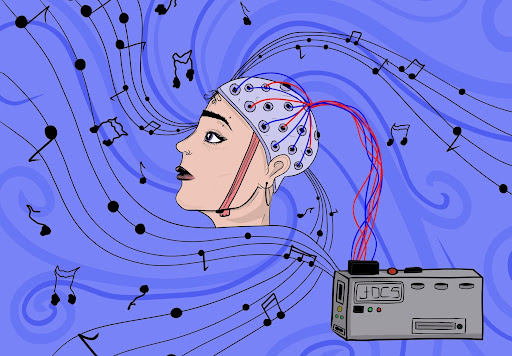
The human mind is perhaps the greatest mystery in our universe. A 2.2 pound biological mass, locked away inside of our skulls. It contains each and every secret of life, produces everything that our experience entails; if only we knew how to unveil its mysteries. Our still-primitive understanding of this system is something that is slowly but continually built upon by neuroscientists across the globe.
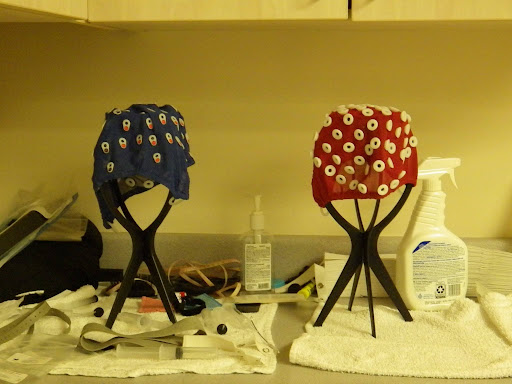
Neuroscience as a field draws on a number of methods to understand the brain. We have imaging studies and behavioural studies that allow us to make connections between the internal mind and the behaviour it produces. However, perhaps the most abundant source of information results from observing behaviour abnormalities when brain areas are damaged. We do these studies on animals by inflicting lesions on brain areas, and human cases are studied when available. But for researchers with a burning passion to discover, it isn’t enough to rely purely on animals or to wait around for the perfect case study candidate to show up on their doorstep.
How is it then possible for us to inhibit areas of the human mind without causing permanent damage? The answer lies in a fascinating new technology called transcranial direct current stimulation (tDCS). tDCS works by applying a small electrical current to the scalp, which makes the neurons in the desired brain region more or less likely to fire.
We spoke to Danica Roubichard, a psychology masters student here at Memorial University. She tells us that this technology allows us to “interpret a causal relationship” between cognitive processes and brain regions. The ability to ethically and safely inhibit areas of the human brain to understand ourselves makes this a potent technology in the field of neuroscience.
In Roubichard’s case, she’s using tDCS to understand how the motor cortex (brain area associated with producing movement) affects our ability to memorize and understand the musical pieces we’re hearing. While inhibiting the motor cortex, Roubichard asks musicians to listen to musical pieces they’re familiar with. Under the inhibiting effects the tDCS imposes on them, they are asked to complete a task, one that any experienced musician should have no trouble accomplishing: finding the mistakes hidden in the music.
For curious minds with scientific interest, research is a way to solve the mysteries of the universe, but any good research has to start with an idea. Roubichard traces her big idea back to her final year of her bachelors. She learned about how the presence of lyrics in music can affect the way we remember it, and thought to take this idea even further: what if musicians process non vocal sounds in a similar manner, if their brains had a unique connection between music and the physical motions they produce to play it.

She took this concept taught in class, and likened it to her own experience with hearing classical music pieces, claiming that within her memory of them lived an association to the movements she had to produce when playing. “I listen to some of the pieces that I’ve played… I would be thinking about where my hands were on the piano when I was listening to these pieces, “ she said.
She had the education, she had the idea, but to take that into research wouldn’t be a straightforward path. In the world of academia, it takes supervision from already established researchers to achieve the goal of better understanding the world. When that idea requires inter-departmental knowledge, arranging supervision becomes that much more difficult. Roubichard expressed her gratitude towards two separate supervisors with expertise in cognition and music respectively.
Roubichard advises students interested in research to find what they’re interested in, even if that thing is “outside of university,” pointing to a colleague of hers who is planning to take her interest in swimming into research. That self-directed interest allows you to bring in an area of personal expertise into your formal education, that personal association with the research “encourages you to do your own work.” These advantages also translate into authenticity and unique research ideas. Roubichard claims this helps researchers “stand out”.
For some, ignorance is bliss. Others may strive to improve their understanding of the world through indulging into the seemingly infinite world of published research. Some of us, like Roubichard, have questions about the world that haven’t yet been answered. That’s why science exists. So now, it’s only right to ask: what do you want to know about the world?