

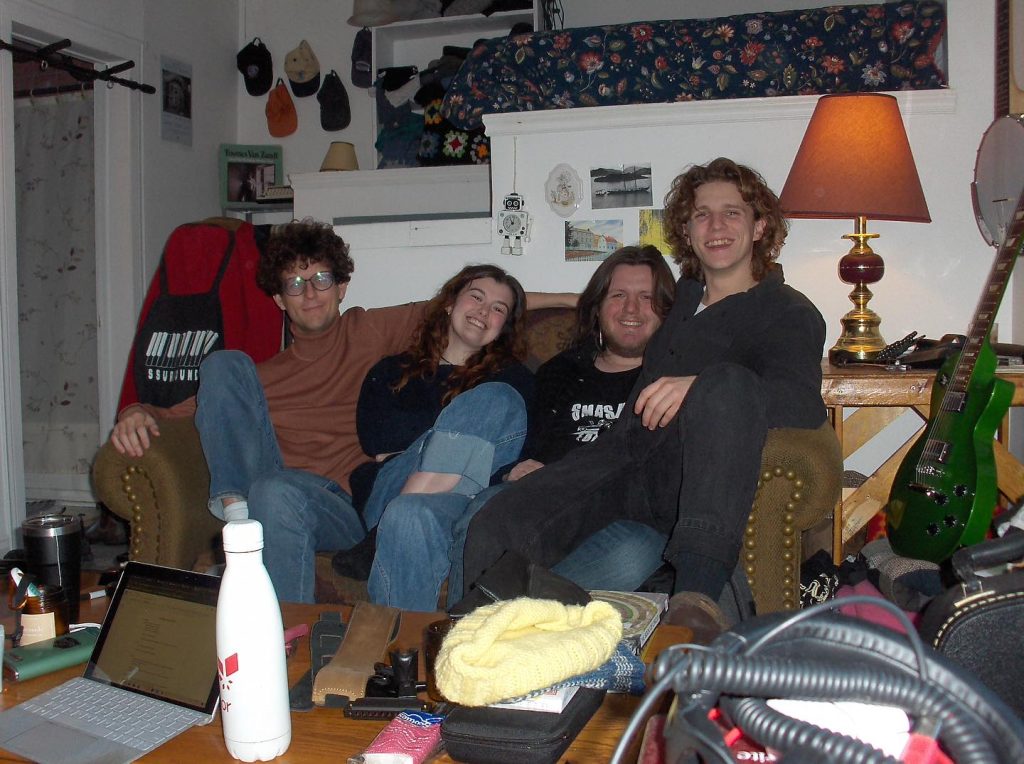
Toothcut is a literary journal that came into fruition in early 2025, and is run by their masthead of Caleb Browne (editor-in-chief), Jenna James (managing editor), Tanner Hudson (editor), and Nick Corcoran (editor).
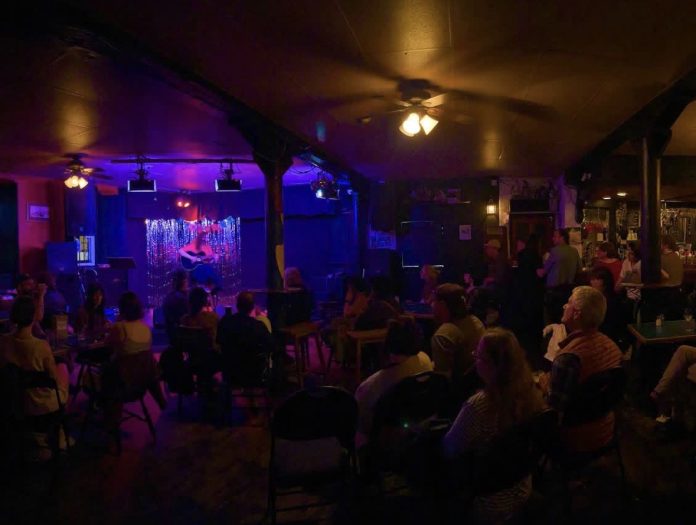
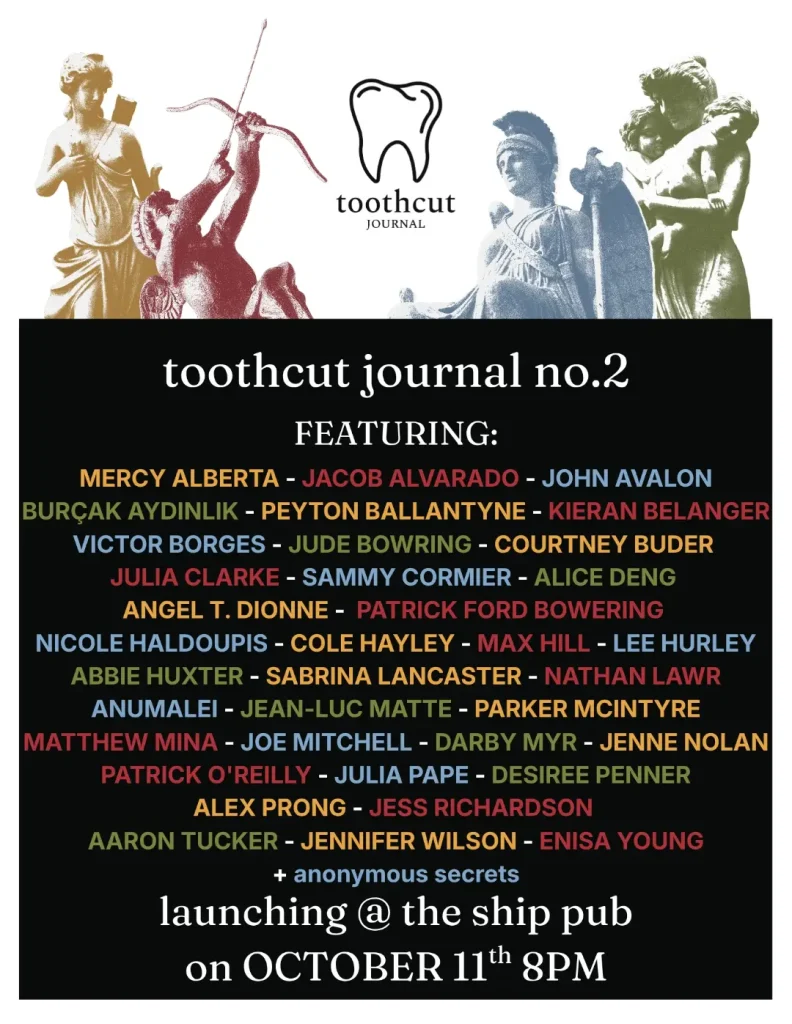
I had the opportunity to chat with Browne before their second journal hits the streets on Sunday, October 11th at The Ship Pub. A plethora of writers, poets, and other creative folk of Ktaqmkuk’s (Newfoundland and Labrador’s) diaspora will flourish on stage, transforming the usual boisterous pub into a cozy and methodical atmosphere.
Q: I want to ask about the second journal. How was your creative process this time around compared to the launch of your first journal?
A: I feel like this time we had our footing under us a bit more. We knew what we were doing going into it, so that was nice. We tried to double our submissions this time and succeeded in that.
Q: What can people expect that may be different from the launch of the first journal?
A: From the [first] launch, I think we’ve had a bit more funds to play around with this time. We have a photographer hired, so there’s gonna be some nice pictures. It’s something we kind of neglected the first time because we were trying to take pictures and run the event at the same time… We’ve got another musical act hired again, Len O’Neill is going to be playing at the launch.
Q: How did you narrow down your picks this time?
A: It was definitely hard to narrow down because there was a lot of stuff we loved. But our big priority was where we could try to get more writers rather than more submissions from less writers.
Q: I saw you have events in New Brunswick. How have they been compared to your Newfoundland events?
A: Pretty good. Our managing editor, Jenna James, is doing her master’s up there, so she’s been running those events. We’re actually doing a second launch in New Brunswick, so some of the writers in the second edition are from New Brunswick as well.
Q: How do you think toothcut has shaped the creative industry in St. John’s?
A: I think it’s been cool to give some more emerging writers the chance, not just have a space, but have a space that is not just for emerging writers… There’s a lot of people that are appearing in the journal that are already established writers, and getting to be on the same playing field as them, is important… So it’s been nice being able to get people space to come and share their work.
Q: Where/how did you come up with the idea for toothcut?
A: It kind of just started on a whim. I was like, “hey, I want to start a literary journal…” It really picked up when my friend and co-editor, Tanner Hudson, mentioned it to Jenna James. She was like, I want to be part of it. We then did a lot of brainstorming over that December and I came up with what we wanted to see in the St. John’s scene. In Newfoundland, there’s not really a whole lot of literary journals to begin with. There’s 2 that are affiliated with MUN, one here in St. John’s, one at Grenfell, there’s Riddle Fence, and that’s it. So there’s not really a space that prioritizes more emerging writers.
Q: What’s coming up for toothcut now? What can we expect after the second launch?
A: Submissions open back up in January, so we’re doing a third issue next year. We’ve got a new editor joining on board. I can’t reveal who yet because it’s still waiting for approval. We’re just looking to continue doing what we’re doing.
Q: What do you hope is in store for the future of toothcut in general?
A: There’s a few goals. I want us to get to publishing multiple issues a year… I’d like to see an artist getting paid for their work. It’s not a place we’re in right now with the current funding, but I think it’s important for artists to get paid for their work, and we’ve been pretty adamant that we aren’t going to charge a reader fee. It’s a pretty common practice among literary journals, but it’s one I don’t like. I don’t like the idea of a writer having to pay to get their work read, especially because writers are sending their work out to so many places to try and find a home for it. I don’t like the idea of paying writers with other writer’s money. So I’d like to get to the point where we can start giving them some money for work.