

The year is 1988. Canadian sprinter Ben Johnson has claimed gold in the men’s 100-metre final at the Summer Olympics in South Korea with a time of 9.79, beating the world record (previously set by himself) and solidifying himself as the world’s fastest man.
But the glory didn’t last long. Just a few days later, he tested positive for stanozolol, a type of steroid that helps with muscle building. Johnson was forced to give up his gold medal, which was then awarded to his American rival Carl Lewis. It was one of the biggest sporting scandals in Canadian history, turning Johnson from a hero to a “zero.”
It wasn’t the first time an Olympian had been stripped of their medal. In fact, it happened five other times at those very Olympics. Johnson’s was the most significant as the 100-metre final, advertised as crowning the fastest human in the world, was one of the top “glamour” events of the Olympics.
But it showed how far the International Olympic Committee goes to crack down on athletes using performance-enhancing drugs. There’s no tolerance for it. In fact, since 2000, the IOC has taken away 150 medals, and 95 percent of them were due to PED’s. They even banned Russia from the 2018 Olympics for their state-sponsored doping cover-ups during the 2014 Sochi Games, one of the biggest sporting scandals of this century.
The IOC isn’t the only organization that has cracked down on PED’s. In fact, most sports leagues around the world have had major PED controversies. The highest profile after the Olympics, I think a lot of people would agree, is Major League Baseball.
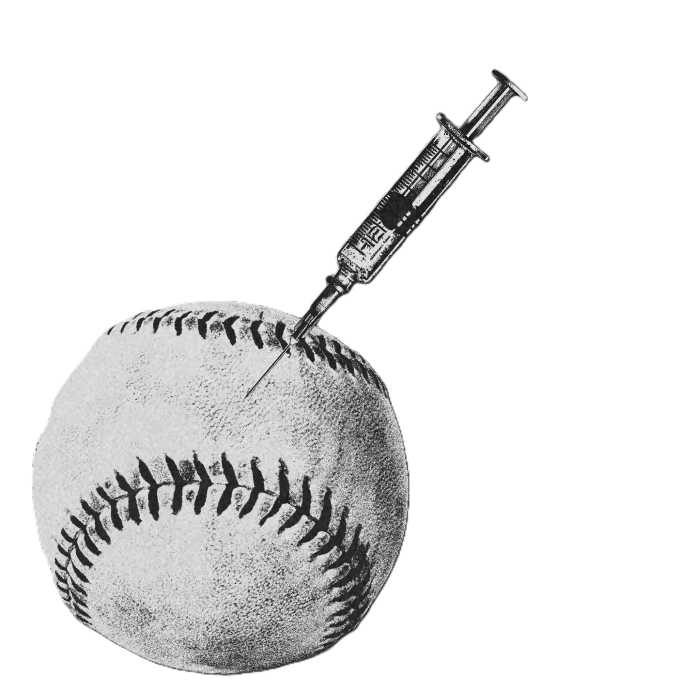
It’s impossible to talk about baseball without talking about the effect that ‘roids have had on the game. It’s actually a huge part of the game’s history, with one of the earliest known accounts dating back to 1889, when The Washington Post reported that pitcher Pud Galvin took a performance-enhancing drug before one of his team’s games. Ironically, it was one of the statistically worst seasons of his career (hence why he probably took PEDs). Notably, The Washington Post actually endorsed Galvin’s usage of PEDs, saying “the best proof yet furnished of the value of the discovery.”
The sport and how it views steroids has come a long way since then. Over a century later, steroids were banned, but it would be another decade until players had to be tested.
Suffice to say, there’s a point between Galvin’s PED usage and the early 2000’s where views on PEDs shifted. Steroids were such a big problem that we now look at parts of the 1980s, 1990s and early 2000s eras of pro baseball and coined them “the steroid era,” because so many of the game’s all-time greats used steroids, got caught, and are now paying the price. An obvious example is Barry Bonds, who is considered by many to be the G.O.A.T. of baseball, but tested positive for steroids during a trial and, as a result, has not been allowed into the Hall of Fame.
We’ve looked at a lot of specific instances and punishments surrounding PEDs, but we haven’t looked at the actual impacts. First of all, why are they bad?
Well, it’s cheating. It’s not fair that some athletes take performance enhancers while others compete ethically and put in actual work to be the best of the best.
Still, some pro-steroid arguments have emerged. Jose Canseco was one of baseball’s best power hitters and was named the most conspicuous steroid user in MLB by The Washington Post’s Thomas Boswell. This suspicion was correct, as Canseco wrote a controversial book in 2005 called Juiced: Wild Times, Rampant ‘Roids, Smash Hits & How Baseball Got Big. I won’t act like this book is the poster child for good arguments, because some of its contents are shocking, but the main argument it makes is that steroid use is not a bad thing, as long as it is done safely in small doses and tracked by a professional.
Aaron D’Souza, founder of The Enhanced Games, says that organizations like the IOC shouldn’t have a say in what athletes put in their bodies.
The Enhanced Games makes a similar argument to Boswell’s. It’s exactly what it sounds like: similar to the Olympics, except PED usage is not only allowed, but encouraged, and testing is only done to see how many PEDs are being taken.
The Enhanced Games also offered to pay its athletes, unlike the Olympics, especially those who broke world records, which only happened on one occasion, because most competing athletes actually aren’t good enough to compete at the highest level, and because athletes who do compete at the highest level do not take PED’s (that we know of, or if they do, they usually get caught and are punished). Though an interesting (and problematic) concept, The Enhanced Games didn’t offer much. There wasn’t a ton of interest.
While compelling to argue that large sports organizations shouldn’t dictate what athletes put in their bodies, it could set a dangerous precedent. The point of sports and why they captivate so many people is because the athletes push themselves to the absolute limit, limits people think aren’t possible. They do so ethically and properly, and encouraging athletes to take steroids takes that away.
*This article first appeared in The Muse’s Sex, Drugs, and Rock and Roll print edition, published September 2026.