*This article first appeared in The Muse’s 75th Anniversary Print Supplement magazine, published January 2026.
In the old science building, in a lesser-used hallway on the third floor, there’s a chalkboard. I walk by it most days.
The smooth green surface has never shown signs of use. I’ve wondered before why it was put there originally, and how long it has been since it became just another part of the wall.
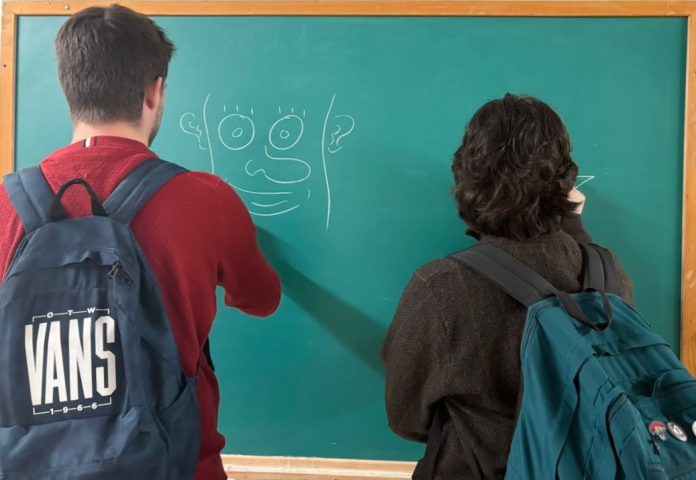
I was with friends one morning when I noticed something out of place — a small pink heart drawn on the board. Two pieces of chalk were sitting on the edge, just begging to be used.
We didn’t hesitate.
In only a couple minutes, we filled the board with drawings. Nothing elaborate, just some doodles.
It was nostalgic, but also a reminder that amidst the stress-filled monotony of academic life, this campus exists to be occupied by its community.
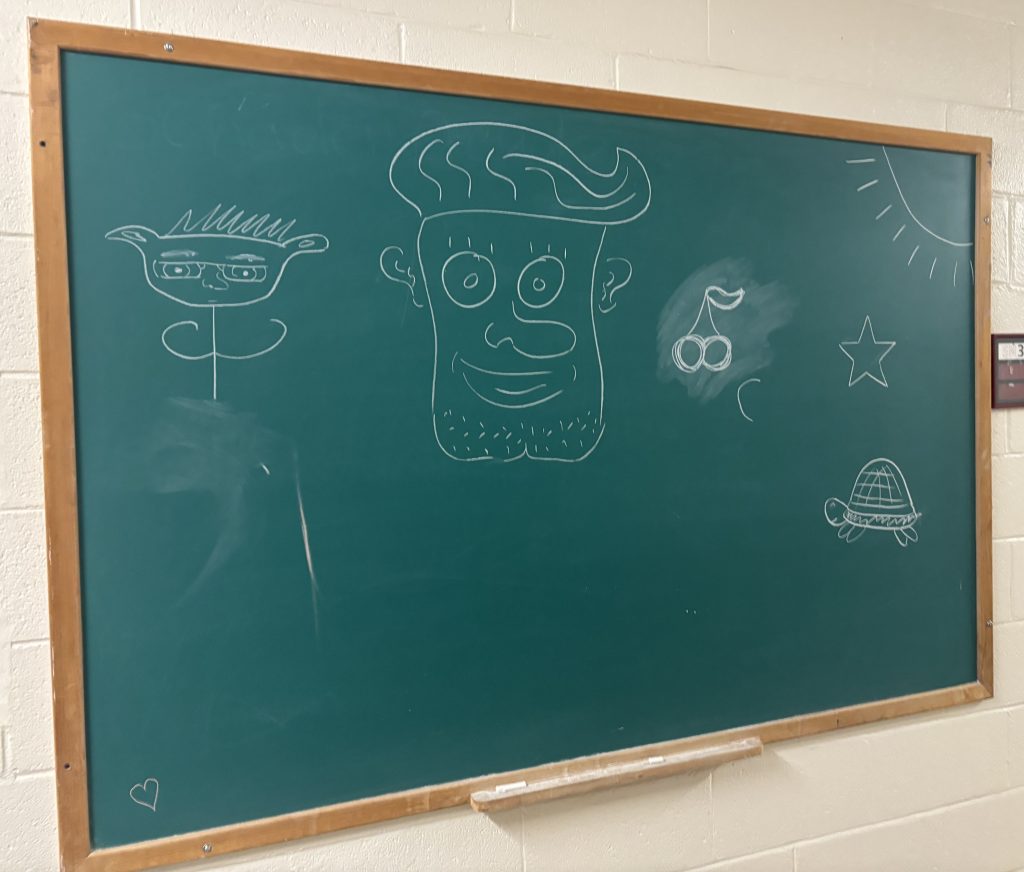
We put the chalk back in hopes that other students would add to our creations. If the board filled up and our drawings were erased to make room for something new, that would be okay.
It wasn’t the drawings themselves we were attached to, but the space for casual creation. It was a bid for connection. an acknowledgement that we are not just student numbers, GPAs, or passing figures, but that we all exist here as people.
But no more than 90 minutes later, the board was wiped completely clean and the chalk was gone. Not even a smudge or grain remained.
People create. No matter where, when, or how, people find ways to leave clues of their existence — something to say “I was here” — a sticker on a doorframe, a signature on a whiteboard, a doodle on the corner of a desk; it doesn’t matter if they’re given the space or the permission to do it, it’ll happen anyway, and it’s vital that it does.
Without these smaller forms of memory — these informal, day-to-day histories — what remains of student life? Of student culture? Yearbooks, award plaques, and newspapers reflect the academic lives of students, but what of their lives outside the classroom? Students are not the sum of their academic accomplishments.
Some students spend more time on campus than they do in their own homes, and their campus should welcome them as people, not just as students.
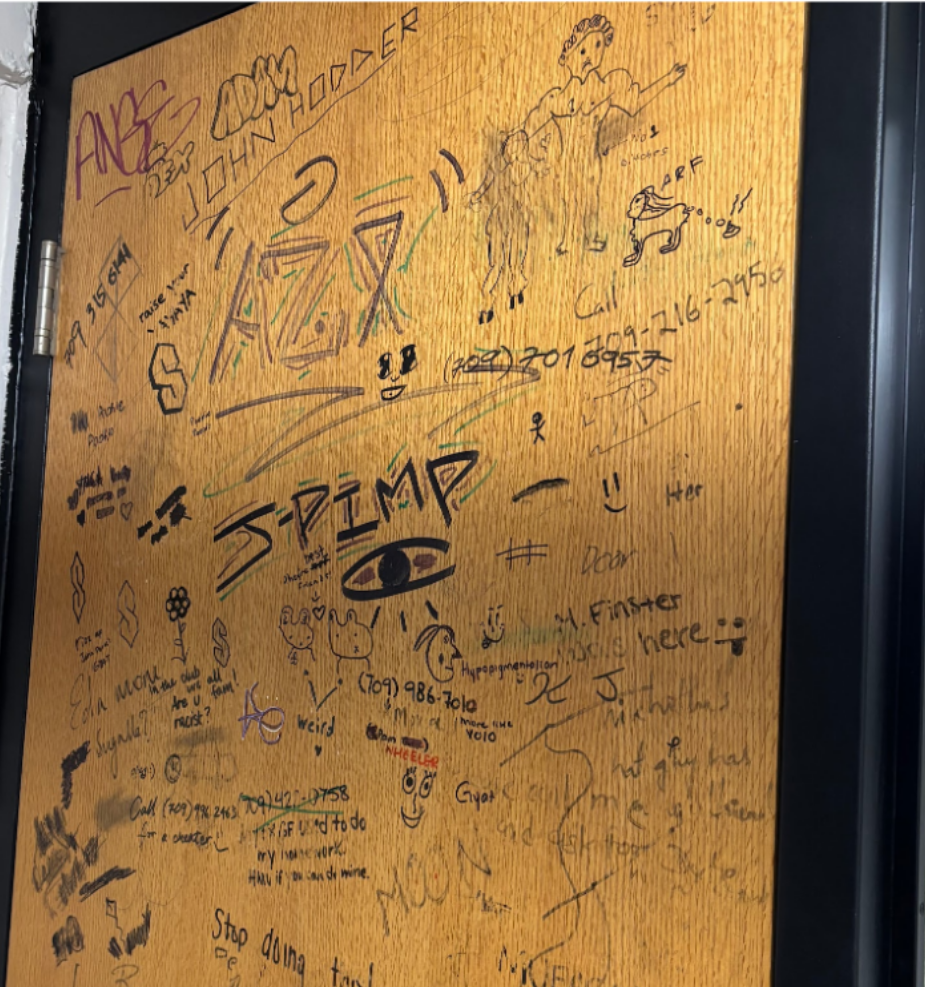
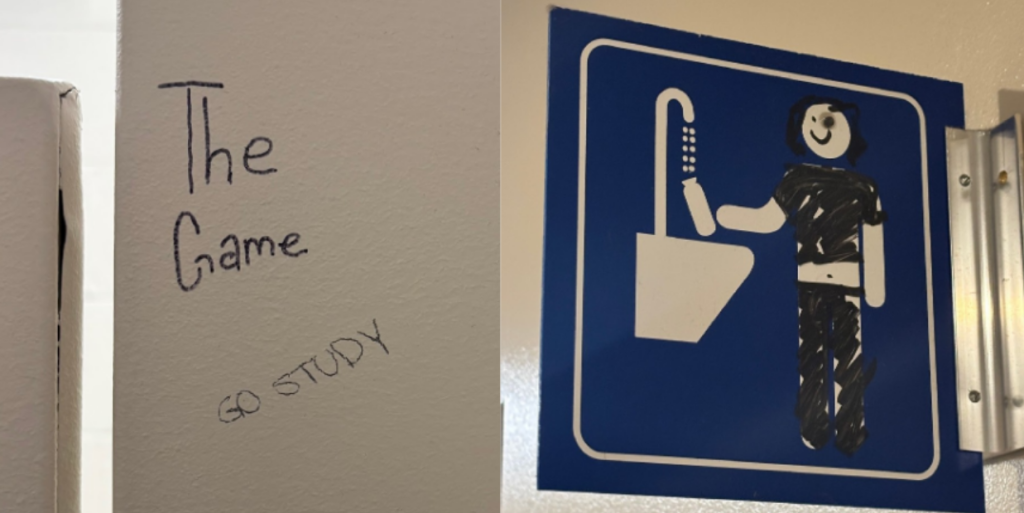
Despite efforts from Facilities Management to contain it, the QEII study rooms are covered with confessions, grudges, and drawings.
Many of the drawings are quite explicit, and I’ve found myself trying to settle on a video call angle where nothing unprofessional makes an unwanted cameo.
That being said, there’s a timeless culture of comedy that’s undeniable in these drawings and writings.
It’s a bizarre form of history, and one that cannot be dated. There’s no telling how long “ur mudder” has been written on the study room wall, or when the list of song recommendations began in the bathroom stalls.
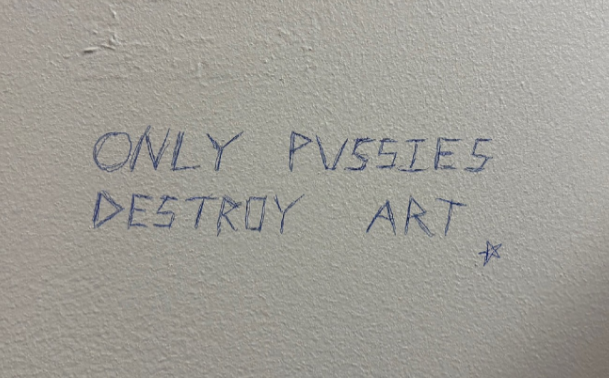
In a December 1969 issue of The Muse, an anonymous author called these writings and drawings “wall pollution” and opined that students must “take the responsibility of protecting the washroom walls.”
It’s not an uncommon sentiment, and it’s reflected in the way facilities are managed on campus: bathroom stalls are painted to cover conversations between students, corkboards are exchanged for clipboards, incapable of displaying more than one thing at a time; and chalkboards are not only erased, but wiped clean so no one notices any traces at all.
But in January 1970, in The Muse’s very next issue, a response by S. Phipps read: “For God’s sake, don’t supply the janitors with iron brushes! There is nothing drearier than an undecorated lavatory. The decorated lavatory, on the other hand, is a haven… the possibilities are limitless.”
And fifty-five years later, I’m writing to argue the same.
Some things are meant to be fleeting — the erasing of a chalkboard is not the problem — it’s the refusal to allow self-expression. Why not let people draw on a chalkboard that’s no longer in use? Why not give people the space to leave proof of their existence?
It’s so much more than small acts of vandalism; it’s the memory of student life from below.