


*This article first appeared in The Muse’s 75th Anniversary Print Supplement magazine, published January 2026.
Feminist journalism at The Muse was once alive and well, but throughout the last decade, since the editorial transitioned to digital publishing in 2017, submissions that once sparked campus-wide conversations have dropped significantly.
This might appear to be a sign that the situation for women has improved, but those who have been paying close attention know what isn’t the case.
This renewed silence is important because we are experiencing one of the most politically volatile moments in recent history, and women are disproportionately impacted by it: globally, reproductive rights are increasingly precarious, violent misogyny flourishes off and online, and emerging technologies from Big Tech threaten to entrench old structural hierarchies in novel ways.
A legacy worth inheriting
Feminist journalism is woven into the 75-year history of The Muse and the political history of Memorial University. Since the paper’s inception, although infrequent at first, students began writing boldly about misogyny, sexual violence, and the patriarchal policies demarking their lives.
This gained steam in the 1970s, and not long after, the Women’s Centre (now Intersections) opened on campus in 1981. In 1983, the Women’s Studies program (now Gender Studies) began, and feminist student journalism grew alongside them.
The 1980s marked a turning point for feminist journalism. Suddenly, submissions from all genders in all formats — news stories, opinion pieces, art, poetry and more — were distributed widely to the student body. And for the first time, Memorial University students were not only learning about how deep women’s oppression truly was, but also drawing attention to topics often deemed controversial.
Print journalism, as it does, became a form of consciousness-raising for students — a process in which strategic communicative organization leads to the sharing of lived experiences, debates over ideas, and organization for change.
By 1982, The Muse published its first special edition for International Women’s Day. Another followed in 1983, this time including contributions from male allies. In 1986, the annual Women’s Supplement began, a publication dedicated to honouring women’s achievements and highlighting the systems that continued to harm them, such as domestic violence, sexual assault, reproductive care access, wage inequality and much more.
Even at the height of this momentum, students wanted more. In 1983, in a letter to the Editor calling for more feminist coverage, Helen P. Croy wrote, “if the student press discontinues to expose the fight for equality, then so will everyone else. Our future generations will be ignorant of the past fights and victories of women toward equality.”
Why the decline?
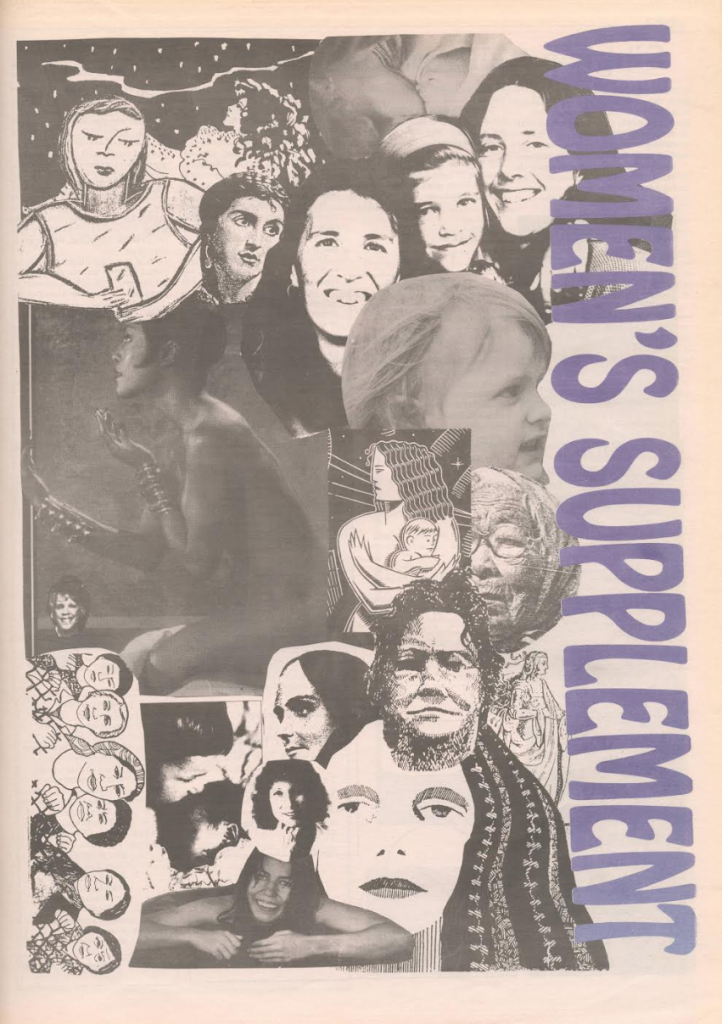
Unfortunately, 11 years later, in 1994, The Muse discontinued the Women’s Supplement along with all other supplements that focused on a specific issue, such as the Lesbian, Gay, Bisexual, Queer Supplements, the Arts and Expressions Supplements, and the Peace and the Environment Supplement.
The justification for the decision was that “the issues covered in these ‘Supplements’ tend to segregate the topic, preventing them from being received by a larger audience.”
Feminist submissions from students remained, though not as frequently. It wasn’t until the transition to web publishing that feminist writers at The Muse became slim to none. This decline doesn’t necessarily mean today’s students don’t care. Instead, the digital environments transformed how we engage and interact with political content.
Along with other forms of activism, the feminist project has been flattened by algorithmic culture. Long-form political writing has heeded ground to polarizing discourse, misinformation and performative social media activism. Politics still matters to students, but the platforms used to speak are increasingly hostile to nuance, solidarity and vulnerability, aspects fundamental to feminist activism.
New threats, same old patterns
The critical situation of women hasn’t improved much despite the shifting attitudes towards feminist discourse. The issues that affect women around the world are just as harmful, with new challenges emerging.
This isn’t to say that these new issues are more harmful than previous ones, or that previous issues are no longer relevant. History will show women’s liberation lies behind a web of structural dominions along the lines of sex, race, indigeneity, class, sexuality, gender, and ability–none of which can be overlooked.
As we evolve, though, these factors are intertwined with present challenges that affect all women in varying ways. Today, we face Big Tech and the widespread application of Artificial Intelligence (AI), which will further entrench these dominions. This situation makes feminist organization much more urgent.
Feminist student journalism might have a leg in the grave, but the issues themselves are still very pressing, and the line separating online harm from real-life harm is increasingly blurry. Technology-facilitated violence against women impacts approximately 16-58% of women and girls worldwide.
AI is also being used to target women in incredibly insidious ways. For example, abuse often occurs by malicious use of deepfake technology. 2023 research estimates 98% of all deepfake videos are nonconsensual pornography, with 99% of them featuring women. Past issues highlighted by feminists before us are still urgent, except now they have expanded to a digital terrain that is opaque and rapidly shifting.
The value of student journalism
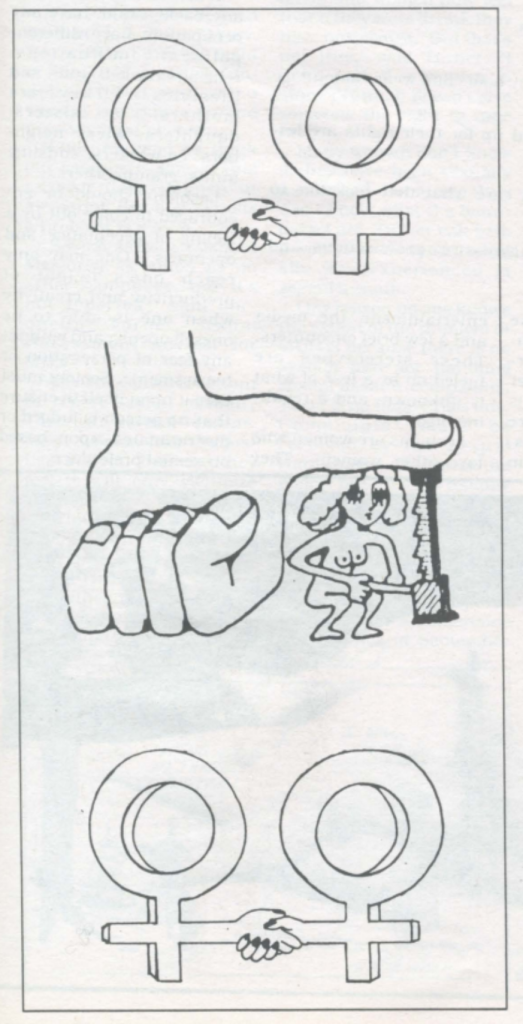
Collective organization is how movements begin. It’s how women in the past organized to secure their rights. But especially important to remember is that naming it is only the first step toward dismantling it. The Muse — despite current digital challenges — remains a key platform in the province where feminist thought can be developed, debated and documented.
Writers before us used their voices to expose misogyny, challenge institutions, and advocate for cultural and political transformation. We inherit a legacy of courage, insistence and refusal. Past and present women strive for a better world for all women, and it is a generational-long battle.
As Helen P. Croy said, “the feminist movement will cease to exist without the support of our future generations.” The torch has been passed down, but it risks being snuffed out.
The aforementioned issues are only the tip of the iceberg of the extent to which global misogyny operates.
If you consider yourself a feminist, write loudly and unapologetically. Write for the women who fought before us and for the girls who will come after. Write for the women in your community and globally. Write for the Missing and Murdered Indigenous Women and Girls. Write for women in Palestine, Sudan, Congo, and Afghanistan. Write for trans women. Write for the millions experiencing homelessness, a lack of reproductive care, child marriage, FGM, marital rape, sex trafficking, domestic violence and femicide.
But don’t stop there, write for all of those who cannot.